Languages
Friday, November 6, 2026



News and Views from the Global South
Energy
KYRGYZSTAN: Fast Melting Glaciers Threaten Biodiversity
Kyrgyzstan's glaciers are receding at what scientists say is an alarming rate, fuelled by global warming. And while experts warn of a subsequent catastrophe for energy and water security for Kyrgyzstan and neighbour states downstream reliant on its water flows, devastation to local ecosystems and the effects on plant and wildlife could be just as severe.China has New Wind in its Sails
The poppy argument between Chinese and UK politicians this week may not have escalated into a serious problem to derail British Prime Minister David Cameron's first official visit to Beijing but it was symbolic of how 150 years after the Opium wars the two powers are still talking across each other.Fresh Warnings Against EU Bio-Fuels Policy
Massive increase in carbon emissions will worsen climate change if the European Union does not urgently revise its energy policy, experts warn.Trade, Clean Energy Top Obama’s Asia Agenda
Just days after his party suffered defeat in the U.S. congressional elections, President Barack Obama is finally taking a twice-postponed trip to Asia.
NAMIBIA: Run-of-the River Power Stations Planned for Lower Orange River
Namibia's national power utility says plans are moving ahead to construct a series of hydro-electric power stations along the Lower Orange River.
TRADE-SOUTHERN AFRICA: EPA Talks Will Miss Latest Deadline
While a trade deal between the European Union and Southern African countries is close it will not be concluded before the end of this year. In the meantime, South Africa remains in pursuit of an ambitious regional integration agenda.Climate Change Denial Pervades U.S. Elections
In the run-up to the U.S. elections set to take place Nov. 2, the amount of money being spent and eccentricities on display have reached record levels. This has been particularly obvious in debates over energy and climate change.
PERU: A Highway Built to Be Flooded
Construction workers are fighting the clock to finish the last stretch of the Southern Inter-Oceanic Highway, in southeastern Peru, apparently unaware that about 100 kilometres of this road connecting to Brazil will be covered by water once the Inambari hydroelectric dam is built nearby.
SOUTHERN AFRICA: Strengthen Cooperation to Secure Power
Southern African nations need to agree on a common operational system to manage energy in the region, environmental experts advise. If they don’t, the region could experience power shortages and resulting economic deficits.
MALAWI: While the President Flies, the People Queue for Fuel
A public spat has developed between the Malawian government and organisations in the small south-eastern African country over foreign exchange being "wasted" on foreign trips undertaken by President Bingu wa Mutharika. The consequence has been repeated fuel shortages, organisations say.World Bank Pressured over Record Fossil Fuels Lending
With new figures showing a record amount of World Bank funding for projects relying on coal power and other fossil fuels, the issue of reforming the institution's energy lending was once again a hot topic at the World Bank and IMF annual meetings, which concluded over the weekend.ENERGY: Little Iceland Digs Deep and Far for More
Iceland's economy has been rocky since the bank collapse in October 2008, but one field has been expanding -- geothermal energy.
PERU: Jungle Residents Weigh Mega-Dam’s Promises and Pitfalls
In southeastern Peru, a message is circulating that has left some dubious, and others hopeful: "The Inambari hydroelectric dam will end illegal mining and coca crops, and bring development and jobs."AUSTRALIA: Solar Energy Gets a Boost, But Offers Much More
Proponents of renewable energy say that a planned large-scale solar power plant in Australia’s northern Victoria state, which will produce enough output to provide electricity to 60,000 homes, is just a fraction of what could be achieved if federal and state governments were fully committed to harnessing solar energy.
ECONOMY: Electrifying African Interest in Renewable Energy
Various countries in East Africa are making gradual progress in moving from a solely carbon-based electricity network to a cleaner power grid.ARGENTINA: Environmentalists Welcome New Law to Protect Glaciers
Environmental organisations in Argentina are celebrating the passage of a law restricting the extraction of minerals, oil and gas near glaciers, in order to protect these vast freshwater reserves.
BRAZIL: Oil Palm Industry Seeks to Atone for Its Sins
"Better 'dendê' than cattle," says Violeta dos Reis, who cooks and serves meals in the small eatery she runs with her husband in the community of Arauaí in Brazil's northern Amazon jungle. In this rural area, a new world is opening up for poor farmers.Fatal Blast Puts Focus on Web of Gas Pipelines
A natural gas explosion in San Bruno, California that almost decimated an entire city earlier this month has fuelled concerns about the outdated, aging, and dangerous gas pipelines that underlie many U.S. cities.
AFRICA: Can Research Strike a Balance Between Food and Fuel Crops?
While researchers and farmers are still divided on the benefits of growing crops for biofuel production as Africa grapples with food security, Senegal is steadily working to balance the growing demands for food and biofuels.Rising Energy Demand Hits Water Scarcity ‘Choke Point’
Meeting the growing demand for energy in the U.S., even through sustainable means, could entail greater threats to the environment, new research shows.
SPAIN: Renewable Energy a Remedy for Economic Crisis
One of the causes of Spain's deep economic crisis is the country's limited ability to export goods with high added value. But the pioneering renewable energy sector has the potential to fill that gap.« Previous Page — Next Page »





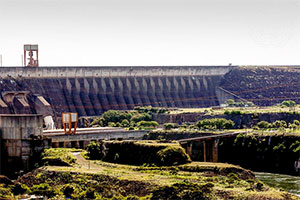 UN Power Plant, Paraguay. Credit: UN Photo/Evan Schneider
Energy has posed a great challenge for economies around the world. As global energy consumption skyrockets throughout the years, so does the need for sustainable solutions. The Sustainable Development Goals are essential in providing people with access to safe, affordable, and sustainable energy sources that minimize harm on the planet. Progress towards these goals opens the door for an advancement in modernization for communities on a global level and allows for a potential mitigation of tensions between nations.
The UN’s Summit of the Future in 2024 offered new initiatives that are being taken to achieve these goals, including a decreased reliance on fossil fuels, a switch to renewable energy sources, and improved climate financing.
IPS is well positioned to provide relevant, insightful, and compelling analysis of recent updates and measures being taken around the world to achieve a cleaner future.

The Week with IPS

NEXT STOP - SDGs
Tracking global progress towards a sustainable world
Tracking global progress towards a sustainable world
