Languages
Sunday, October 4, 2026



News and Views from the Global South
Food and Agriculture
Afghanistan’s Children in Dire Need of an ‘Acceleration in Nutrition Action’
Afghanistan is burdened with one of the highest rates of child wasting globally, with 3.5 million children under five years suffering from a severe form of malnutrition, leaving them dangerously underweight and unable to grow or thrive.
Tanzania Champions Aquatic Foods at UN Ocean Conference in Nice
With less than six harvest seasons left to meet the Sustainable Development Goals (SDGs), the urgency to find transformative solutions to end hunger, protect the oceans, and build climate resilience dominated the ninth panel session at the 2025 United Nations Ocean Conference in Nice, France.
Weaponizing Food Worsens Starvation
Wars, economic shocks, planetary heating and aid cuts have worsened food crises in recent years, with almost 300 million people now threatened by starvation.
The Risk of Famine Looms Throughout Multiple Sudanese Counties
Over the course of 2025, the food security situation in Sudan has taken a considerable turn for the worst. Compounded by the Sudanese Civil War, millions of civilians face alarming levels of food insecurity and are at risk of experiencing famine. Humanitarian experts have described the situation in Sudan as being the worst hunger crisis in the world today.
UNOC3: A Cry for Global Action to Save Small-Scale Fisheries
Just before dawn, the worn wooden dhows begin gliding toward the shore at Magogoni fish market in Tanzania’s port city of Dar es Salaam. Their tattered sails flutter against the orange sky. Exhausted fishers step out onto the muddy sand, hauling frayed nets and plastic crates, their sun-creased faces tight with fatigue.
Beating Plastic Pollution in Our Food Systems
Each year, more than 12.5 million tonnes of plastic are used in agriculture alone, and another 37 million tonnes become food packaging. Very little gets recycled.
‘We Are Witnessing Ecocide in West Papua, One of the World’s Richest Biodiversity Centres’
CIVICUS discusses the devastating impact of palm oil extraction in West Papua with Tigor Hutapea, legal representative of Pusaka Bentala Rakyat, an organisation campaigning for Indigenous Papuan people’s rights to manage their customary lands and forests.
Funding Shortfalls Threaten Haiti’s Future
The humanitarian situation in Haiti has deteriorated significantly in the recent weeks as rates of violence, hunger, and displacement soar amid a severe lack of funding. As armed gangs continue to seize more territory in the capital, Port-Au-Prince, as well as in areas in the Artibonite and Centre Department, humanitarian organizations have found themselves unable to keep up with the growing scale of needs.
Islands are Solutions: the Case for Island-Ocean Coalitions
As the world confronts escalating climate impacts, biodiversity loss, and ocean degradation, islands stand as critical test cases—not just as sites of vulnerability, but as living laboratories of resilience, restoration, and innovation. Too often, they are framed as victims of global circumstances, awaiting salvation from external forces.
Economic Growth is the Wrong Metric for Our Time
As the United States lurches toward isolationism and authoritarianism, its political problems are now bleeding into pocketbook anxieties that Trump's policies will torpedo economic growth, both domestically and globally.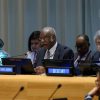
Human Life Hinges on the Preservation of Biological Diversity
Since 2000, the United Nations (UN) recognizes May 22 as the International Day for Biological Diversity, in hopes of promoting international cooperation and conversation surrounding biodiversity issues. Through the 2025 theme; Harmony With Nature and Sustainable Development, the UN seeks to increase public awareness around biodiversity loss and promote progress in the Sustainable Development Goals (SDGs).
In Harmony with Nature: A Dryland Perspective on Development and Biodiversity
Nowhere is this more apparent than in the world’s drylands. Covering 41% of the Earth’s land surface, these regions are home to over two billion people and support 50% of the world’s livestock and 44% of its cultivated systems (UNCCD). Far from being marginal, drylands are central to global food security, biodiversity, and climate resilience.
How Computational Biology Is Zoning in on the Future of Agriculture
When pioneering agronomist and father of the “Green Revolution” Norman Borlaug set out to breed a disease-resistant, high-yielding variety of wheat, he spent years laboriously planting and pollinating different specimens by hand. He manually catalogued every outcome until he landed on the variety that would transform farming and avert famine. The result was even greater than expected: it is estimated that he saved more than a billion people worldwide from starvation.
HeForShe Campaign Tackles ‘Sex for Fish’ Abuse Malawi’s Lakeshore Communities
Women in fishing communities in Malawi's lakeshore districts of Nkhotakota and Mangochi are frequently targets of sexual exploitation for fish, a practice commonly known as 'sex for fish.' A recent report by the Malawi Human Rights Commission (MHRC) has unearthed disturbing accounts of women being coerced into transactional sex to access fish from male boat owners, exposing a widespread violation of their rights.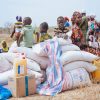
The True Cost of America’s Retreat: How USAID Cuts Threaten Millions of Lives
In January 2025, President Trump signed an executive order that upended humanitarian efforts globally, leaving millions of vulnerable people without lifesaving services. The administration's decision to slash American international aid by 83% is creating daily tragedies in the world's most fragile regions.
How Mangroves Save Lives, Livelihoods of Bangladesh Coastal Communities
Golenur Begum has faced 12 cyclones in her life. As a child, she witnessed her father’s house destroyed, and as an adult, she watched her home smashed. Saltwater brought by the tidal surges that accompanied the cyclones wrecked their farms and livelihoods. And with climate change, these impacts are becoming more intense and frequent.
Mask Off – Recapping the 2025 World Bank Land Conference
Last week, at its annual Land Conference in Washington D.C., (May 5-8), the World Bank showed allegiance to the new US administration by dropping the pretense of promoting land reform for climate action and confirming that its land agenda is about boosting corporate profits.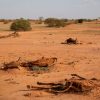
A Natural Disaster that Has Affected More People Worldwide Than Any Other
Here’s a question: Over the past 40 years, what natural disaster has affected more people around the globe than any other?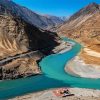
The Indus Water Treaty Suspension: A Wake-Up Call for Asia–Pacific Unity ?
On April 23, India suspended the Indus Water Treaty (IWT), a 65-year-old agreement that had been a rare symbol of cooperation between India and Pakistan despite decades of hostility. The suspension came a day after militants attacked civilians in Jammu and Kashmir, a disputed region, killing 26 people, most of them Indian tourists. India accused Pakistan of supporting “cross-border terrorism” and responded by halting the treaty. Pakistan denied involvement in the attack and called India’s move an “act of war.”

In Zimbabwe, Farmers Are Leading Scientific Research on Conservation Agriculture
Migren Matanga grew up shying away from small and traditional grains in Rushinga, in northern Zimbabwe. The 58-year-old mother of four from Toruzumba village relied on maize and cotton, one of the major cash crops in the area at the time.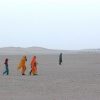
Underfunding Threatens Sahrawi Refugees in Algeria
Since the Western Sahara War in 1975, Sahrawi refugees have resided in a collection of refugee shelters in the Tindouf province of Algeria. For over 50 years, these communities have struggled to develop self-sufficiency and have been solely dependent on humanitarian aid for survival, marking one of the most protracted refugee crises in the world.« Previous Page — Next Page »


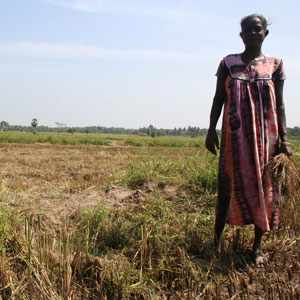
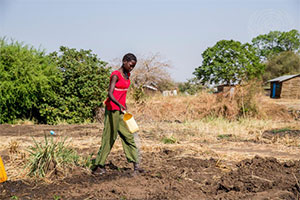 Farming on the Outskirts of Juba. Credit: UN Photo/JC McIlwaine
Promoting human and planetary health is a central focus of the United Nations, as laid out in the 2030 Sustainable Development Goals (SDGs). World hunger and unsustainable farming practices continue to be pressing concerns for the world. According to the 2025 State of Food Security and Nutrition in the World report by the Food and Agriculture Organization (FAO), 673 million people faced hunger in 2024. There are stark regional disparities, with the FAO projecting that 60% of the world population facing hunger will reside in Africa by 2030. Globally, the prevalence of food insecurity has remained consistently higher for women than men.
Sustainable and efficient national food systems are essential in preserving health, education, environmental well-being, peace, economy, and security. However, creating sustainable food systems can be a challenging endeavor, as food production takes a heavy toll on the environment. The agricultural sector accounts for a significant portion of greenhouse gases. Finding safe, sustainable, and ethical strategies to feed the world is crucial in ensuring planetary longevity. A recent initiative from 2023, the EU Regulation on Deforestation-free Products (EUDR), seeks to advocate for sustainable food systems. The main driver of deforestation is the expansion of agricultural land used to produce commodities like cattle, wood, cocoa, coffee, etc. The EUDR is part of the 2020 European Green New Deal and the EU Biodiversity Strategy for 2030 and aims to limit Europe’s consumption of products linked with deforestation by requiring that companies prove that their products are deforestation-free. Despite aiming to achieve major strides in sustainability, policies such as EUDR also raise socioeconomic concerns for targeted countries. Many emerging Latin American economies are impacted by the policy, and have raised the question of how developing countries can grapple with the tensions between economic development and advancing sustainability.
IPS has been at the forefront of providing compelling and insightful stories on communities facing hunger as well as the cost of food production. IPS uses statistics from FAO, the World Food Programme (WFP) and the International Fund for Agricultural Development (IFAD) to bring relevant and hard-hitting facts to readers. This gathering of information and data from such organizations helps bring the best stories from IPS journalists working in the different regions in consultation with experts on the ground.

The Week with IPS

NEXT STOP - SDGs
Tracking global progress towards a sustainable world
Tracking global progress towards a sustainable world