Languages
Saturday, November 21, 2026



News and Views from the Global South
Food and Agriculture

AGRICULTURE-AFRICA: Livestock Vital to Rural Livelihoods
The Nairobi-based International Livestock Research Institute estimates 250 million people in Africa - a quarter of the population - rely on livestock for their livelihoods, yet African governments invest almost nothing to support the sector.AFRICA: A Lot More Needed to Make South-South Trade Work
Trade experts are sceptical about the United Nations Conference on Trade and Development’s renewed emphasis on South-South trade to counter the global economic crisis.TRADE: Southern Africa Buckling Before EU Pressure to Sign EPA?
While South Africa plays for time, the signing of a finalised economic partnership agreement (EPA) between the European Union (EU) and the southern African countries seems imminent - despite regional trade fragmentation remaining a danger.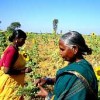
ENVIRONMENT-INDIA: Women Farmers Ready to Beat Climate Change
A collective of 5,000 women spread across 75 villages in this arid, interior part of southern India is now offering a chemical-free, non-irrigated, organic agriculture as one method of combating global warming.
MEXICO: Cradle of Maize Rocked by Transgenics
Mexico has lifted the ban on experimental cultivation of transgenic maize imposed in 1999 in this country where the crop was first domesticated and shaped human culture. Biotech giants have put forward two dozen projects for approval and have announced investments of 382 million dollars up to 2012.BOTSWANA: Retrenchments Turn Villages Into “Little Hells”
The closure of two major mines and the scaling down of operations at most mines in Botswana have had a knock-on effect beyond miners in this southern African producer of diamonds.
EAST AFRICA: Milk Trade War Spills Over Uganda and Kenya
Ugandan exporters of dairy products to Kenya are bitter. They are accusing their bigger neighbour of imposing non-tariff trade barriers to block their produce from entering markets in Kenya and elsewhere.
ZAMBIA: Food Vouchers Not Enough to Fight Hunger
In an attempt to mitigate rising food insecurity and malnutrition, the Zambian government and the World Food Programme (WFP) have started to hand out food vouchers to the country’s urban poor.AGRICULTURE-AFRICA: Food Security Requires Increased Fertiliser Use
A mix of organic and inorganic fertilisers, together with good seed could help Africa to replenish depleted soils and to grow more food in the fight against hunger and food insufficiency.
AGRICULTURE-AFRICA: ‘Bring Back a Culture of Sharing’
"Africa has the singular and tragic distinction of being the only place in the world where overall food security and livelihoods are deteriorating," reads the website of the Alliance for a Green Revolution in Africa (AGRA), an initiative to boost food security and agricultural productivity on the continent.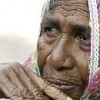
CLIMATE CHANGE: A Little Equality Could Save a Lot of Lives
When ministers and government officials meet at the end of this year for a critical U.N. climate change conference in Copenhagen, they should bear in mind that the mortality rate for women during climate-related natural disasters is an average of 14 times higher than for men.
TRADE: Middle-aged Women Keeping Zimbabwean Economy Afloat
Her small tattered book is full of lists of orders for goods such as beer, maize-meal and chemicals. On another page are addresses and phone numbers of store managers while, on another, a list of names has been jotted down along with corresponding amounts.HAITI: Stability May Rest in Donors’ Pockets
A series of crises in 2008 have pushed more Haitians into poverty and increased the potential for serious instability in the Caribbean nation of nearly 9 million, said the latest update briefing from the International Crisis Group (ICG).ARGENTINA: Countryside No Longer Synonymous with Healthy Living
Once a serene refuge from urban pollution and chaos, the Argentine countryside has now become a place fraught with risks for many local residents. The massive use of pesticides on fields of soy, the country’s top export, is creating a "health catastrophe" in the rural sector, environmentalists warn.DEVELOPMENT: High-Protein Pea Ideal for Drought-Hit Farmers
Agricultural researchers are reporting a major breakthrough in the development of a new, high-yielding variety of pigeonpea, a protein-rich legume that can be grown in marginal lands and is highly resistant to drought.
ENVIRONMENT: ‘‘Climate Change Does Not Wait For Recessions’’
Lack of money and technical know-how makes it difficult for poor farmers to participate in the Kyoto Protocol’s carbon trading mechanism aimed at reversing global warming. Meanwhile, the global economic crisis may further undermine investment in carbon trade in African countries.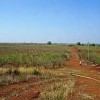
ENERGY-INDIA: Biofuelling Confusion
A cactus-like plant spread over acres of red, laterite soils in the Tree Oils research farm, in this arid part of southern India, is at the centre of huge divisions over India’s ambitious biofuel programme.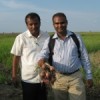
DEVELOPMENT: Mauritians Also Competing For Land in Africa
Soaring food prices and lack of land have forced Mauritius, a net food importing country, to launch an ambitious initiative. The island state is starting to grow its food in other African states where land is lying fallow and labour is cheap.
CLIMATE CHANGE: New Thinking to Tackle Old Problems
Organic and eco-friendly farming can feed the world, contrary to the common belief that biotechnology and chemical-intensive farming are indispensable, modern strategies to increase production, agricultural experts say.DEVELOPMENT: Food Is Not Another Commodity
Food should be treated differently to other economic goods during international trade talks, a new United Nations report has recommended.TRADE: 'Gulf States’ Technology Can Be Swapped for Africa’s Food'
Countries in the Gulf and in Africa can form mutually beneficial partnerships, with Africa supplying fertile arable land and the Gulf investing in technology, fertiliser and other agricultural inputs.« Previous Page — Next Page »


 Farming on the Outskirts of Juba. Credit: UN Photo/JC McIlwaine
Promoting human and planetary health is a central focus of the United Nations, as laid out in the 2030 Sustainable Development Goals (SDGs). World hunger and unsustainable farming practices continue to be pressing concerns for the world. According to the 2025 State of Food Security and Nutrition in the World report by the Food and Agriculture Organization (FAO), 673 million people faced hunger in 2024. There are stark regional disparities, with the FAO projecting that 60% of the world population facing hunger will reside in Africa by 2030. Globally, the prevalence of food insecurity has remained consistently higher for women than men.
Sustainable and efficient national food systems are essential in preserving health, education, environmental well-being, peace, economy, and security. However, creating sustainable food systems can be a challenging endeavor, as food production takes a heavy toll on the environment. The agricultural sector accounts for a significant portion of greenhouse gases. Finding safe, sustainable, and ethical strategies to feed the world is crucial in ensuring planetary longevity. A recent initiative from 2023, the EU Regulation on Deforestation-free Products (EUDR), seeks to advocate for sustainable food systems. The main driver of deforestation is the expansion of agricultural land used to produce commodities like cattle, wood, cocoa, coffee, etc. The EUDR is part of the 2020 European Green New Deal and the EU Biodiversity Strategy for 2030 and aims to limit Europe’s consumption of products linked with deforestation by requiring that companies prove that their products are deforestation-free. Despite aiming to achieve major strides in sustainability, policies such as EUDR also raise socioeconomic concerns for targeted countries. Many emerging Latin American economies are impacted by the policy, and have raised the question of how developing countries can grapple with the tensions between economic development and advancing sustainability.
IPS has been at the forefront of providing compelling and insightful stories on communities facing hunger as well as the cost of food production. IPS uses statistics from FAO, the World Food Programme (WFP) and the International Fund for Agricultural Development (IFAD) to bring relevant and hard-hitting facts to readers. This gathering of information and data from such organizations helps bring the best stories from IPS journalists working in the different regions in consultation with experts on the ground.

The Week with IPS

NEXT STOP - SDGs
Tracking global progress towards a sustainable world
Tracking global progress towards a sustainable world

