Languages
Monday, October 5, 2026



News and Views from the Global South
Food Systems

Kenyan Court Restores Seed Freedom: Landmark Ruling Boost for Food Security and Sovereignty
For years, smallholder farmers across Kenya have been engaged in a legal battle with the government over a law that criminalizes the practice of saving, sharing and exchanging indigenous seeds.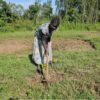
Farmers Earn While Reviving Native Forests Through a Blockchain-Powered App
For years, Morris Onyango had been trying to reforest his degraded land on the shores of River Nzoia, in Siaya county, 430 kilometers from Kenya’s Capital, Nairobi. But every time he planted trees on his farm, his efforts bore little fruit, as floodwaters would not only wash away his tree seedlings but also fertile topsoil on his land.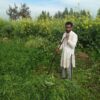
Evaluation Finds Food Systems Programs Deliver Results but Warns of Missed Transformation Chances
A new independent evaluation of the Global Environment Facility’s food systems programs says they are delivering strong environmental and livelihood gains in many countries but warns that a narrow focus on farm production, weak political analysis, and shrinking coordination budgets are holding back deeper transformation.
COP30: Urgent Financing to Transform Agrifood Systems
Climate change is no longer a future threat; it is a reality that is reshaping agrifood systems and compromising global food security. Its impacts are evident in both the quantity and quality of food, affecting agricultural yields, water availability, pest emergence, disease spread, and fundamental processes such as pollination. Even changes in atmospheric CO₂ concentration are altering crop biomass and nutritional value.
Beyond Buzzwords: COP30’s Opportunity to Deliver on Sustainable Food Systems
The language of agricultural sustainability changes like the seasons—from “climate-smart” to “regenerative,” “agroecological,” and “nature-positive.” Each term reflects good intentions, but the growing list risks duplication, confusion and delays.
Why Food and Agriculture Should Be at the Centre of COP30 Agenda
As the COP30 entered its second week in Brazil, the urgency to tackle climate change has never been greater, as is the appetite to feed a growing world population.
Kashmir’s Small Farmers Endless Wait for Climate Justice
In the fertile fields of Jammu's R.S. Pura, rice farmer Mohd Yaseen Khan stares at a cracked irrigation canal, battered by erratic rainfall. “One day heavy rain, next week a dry spell,” he says, dusting his palms. “Our crop suffers. Our costs rise.”
Belém’s Hunger, Poverty Declaration Places World’s Most Vulnerable Populations at Centre of Global Climate Policy
A young woman at COP30 speaks about retracing her father’s footsteps. At only 16, her father and her grandfather were among the first families displaced by an unfolding climatic crisis of erratic weather and worsening climate conditions that goes on to date from their ancestral village in Sundarbans. Nearly 60 years later, she is on a mission to reclaim her ancestral lands.
As COP30 Takes Place, Can Africa Draw Lessons from Brazil on How It Develops Its Livestock Sector?
As the world gathers in Brazil for the UN climate talks, the country’s livestock sector - one of the largest in the world - is understandably in the spotlight.
The World Social Summit in Doha: Time to Act
Qatar hosted the Second World Summit for Social Development from 4–6 November. According to the United Nations, more than 40 Heads of State and Government, 230 ministers and senior officials, and nearly 14,000 attendees took part. Beyond plenaries and roundtables, more than 250 “solution sessions” identified practical ways to advance universal rights to food, housing, decent work, social protection or social security, education, health, care systems and other public services, international labor standards, and the fight against poverty and inequality.
Food Systems Are the Missing Link in Social Development
Food has always been political. It decides whether families thrive or fall into poverty, whether young people see a future of opportunity or despair, whether communities feel included or pushed aside. Food is also a basic human right – one recognized in international law but too often unrealized in practice. Guaranteeing that right requires viewing food not as a form of emergency relief, but as the cornerstone of sustainable social development.
Guatemalan Peasants Overcome Drought in the Dry Corridor
Water scarcity that relentlessly hits the rural communities in eastern Guatemala, located in the so-called Central American Dry Corridor, is a constant threat due to the challenges in producing food, year after year. But it is also an incentive to strive to overcome adversities.
Desalination is Booming in Chile, but Farmers Hardly Benefit
Desalination projects are booming in Chile, with 51 plants planned to process seawater and a combined investment of US$ 24.455 billion. However, these initiatives hardly benefit small-scale farmers, who are threatened by the prolonged drought, and cause environmental concerns.
A Hungry World Knows No Borders
When crops fail, people move not by choice, but by necessity. As families are displaced by droughts and failed harvests, the pressures do not always stop at national boundaries. In short, hunger has become one of the most powerful forces shaping our century.
Urban Food Insecurity Is Surging – Here’s How Cities Can Respond
Millions of people in the United States and around the world continue to face food insecurity, meaning they cannot access safe and nutritious food necessary for living their fullest lives, and they often do not know where their next meal will come from. According to Feeding America, 47 million people in the United States are food insecure. Worldwide, 673 million people experience food insecurity.
Food Insecurity Rising in Africa, Falling in Latin America and Caribbean
The 2025 State of Food Security and Nutrition in the World (SOFI) report shows a modest global decline in hunger since 2022, with 673 million people facing hunger in 2024, indicating a decrease of 22 million compared to 2022. While progress is seen in Asia and South America, hunger is rising in Africa and Western Asia.
Frontline of a Planetary Emergency: Africa Demands Climate Justice and Action
The room at the Swiss Inn Nexus Hotel in Bole was silent but tense as Sunita Narain, one of the world’s most influential environmental voices, fixed her gaze on rows of African journalists, scientists, and policymakers. Her tone was gentle, but the words cut deep.
Inside Africa’s Big Bet on Youth to Feed the Continent and Who’s Actually Getting Funded
Winnie Wambui leans forward on the panel stage, microphone in hand, scanning the room until she spots a raised hand.
Seeding Strength: Farmer Cooperatives and the Future of Food Systems
“The future of agriculture lies not in the hands of a few giants, but in the joint hands of many.” This quote captures the spirit of farmer cooperatives—values-driven, collectively run enterprises rooted in solidarity and self-help. As global food systems grow more fragile and inequitable, cooperatives offer a compelling model: putting people before profits, and communities before corporations, while advancing social equity, economic empowerment, and environmental sustainability.
Africa’s Moment: From Addis to the World, Food Systems Must Change Now
The global food system is under pressure from every direction – climate, conflict, inequality, and economic instability. But in Addis Ababa this July, something shifted. At the UN Food Systems Summit +4 Stocktake (UNFSS+4), over 3,500 people from 150 countries came together to confront the lack of progress and push forward solutions that can no longer wait.
Bending the Curve: Overhaul Global Food Systems to Avert Worsening Land Crisis
Current rates of land degradation pose a major environmental and socioeconomic threat, driving climate change, biodiversity loss, and social crises. Food production to feed more than 8 billion people is the dominant land use on Earth. Yet, this industrial-scale enterprise comes with a heavy environmental toll.« Previous Page — Next Page »





The Week with IPS

NEXT STOP - SDGs
Tracking global progress towards a sustainable world
Tracking global progress towards a sustainable world
