Languages
Friday, November 20, 2026



News and Views from the Global South
Health

CHILE: Maternity Leave – Longer, or for All Working Mothers?
"In Chile, women carry the entire burden of maternity," says teacher Fabiola Quiñones, who applauds the government's proposal to extend pre- and post- natal leave to six months -- but only if all new mothers who work can have that option.
U.S. Lawns Getting an Eco-Makeover
A radical, underground movement is growing in the suburbs of the United States.
U.S. Bill Would Outlaw FGM “Holidays”
The U.S. currently lags behind several Western European countries in closing a legislative loophole banning the practice of Female Genital Mutilation (FGM) beyond its borders to protect U.S. citizens and residents. But this may soon change.HEALTH-ASIA: New Infectious Diseases a Challenge to MDG Success
While successful immunisation programmes worldwide have saved millions of lives, the threat of new infectious diseases and drug-resistant strains of existing diseases is posing a major challenge to governments, especially in developing regions like Asia, in meeting their commitment to the Millennium Development Goals (MDGs).Health Agency Urged to Probe CIA Torture Claims
Human rights groups are turning to an obscure government agency to investigate allegations that medical professionals on the payroll of the Central Intelligence Agency (CIA) helped the agency to perform experiments on detainees in U.S. custody following the terrorist attacks of Sep. 11, 2001, in an effort to make "enhanced interrogation techniques" more efficient and provide them with legal cover.
THAILAND: Scientists Race to Find Microspecies Useful for Medicine
She spends so much time immersed in water that she may soon turn into a mermaid. But Jariya Sakayaroj looks like she does not mind even if she ends up developing scales.Keeping the Pressure on to Invest in Women’s Health
Men, women, NGOs, governments, the Gates Foundation. Everyone agrees – women are awesome. More importantly, protecting the health of the people that make up more than half of the human population and do far more than half of the work to sustain it should be everyone's priority.
ZIMBABWE: Learning to Survive the Mean Streets
Twelve-year-old Tapuwa Bakare* darts through the traffic as irate motorists hoot at him and the tyres of speeding vehicles screech to a halt to avoid hitting him. Miraculously, the box filled with sweets and chewing gum that he carries does not fall from his grasp.NEPAL: Under-Five Deaths Show Robust Decline But Hurdles Remain
With still five years left before the expiry of the Millennium Development Goals’ (MDGs) 2015 deadline to reduce under-five mortality rate by two-thirds from the 1990 level, a mid-term survey of Nepal Family Health Program (NFHP) II shows the country has already achieved the target.
Rewriting 195 Million Stories of Childhood Malnutrition
In a vast field, a sinewy, dark-skinned man bends at the waist, slicing stalks of wheat with a small machete. In a village, a mother gently places her infant son, slung in a piece of blue fabric, onto a vegetable scale housed in a makeshift clinic.
AFRICA: Less Funds Will Cause Unnecessary AIDS Deaths
Backtracking by international donors in funding the fight against HIV/AIDS risks widening the treatment gap in Africa, undermining years of positive achievements in the field, warns a new Medecins Sans Frontières report. And many more unnecessary HIV-related deaths will be caused by these shifts in international donor fundingASIA: Green Revolution Has Little to Offer New Hungry Mouths
As it took root in the rice fields across Asia, it was hailed as the solution to the hunger afflicting millions of people in the region. But four decades on, the much vaunted Green Revolution appears to have reached its limits, unable to meet new demands, to feed new mouths.
HEALTH-SOUTHERN AFRICA: Community Mobilisation Key to Fight TB
African medical experts have realised they need to make a much bigger effort to educate rural communities if they want to effectively contain the continent’s tuberculosis (TB) epidemic.
SOUTH AFRICA: Tuberculosis in Children Neglected
Even though tuberculosis (TB) is a major cause for illness and mortality in children, South Africa lacks the political will to tackle the disease, health experts say.BURMA: HIV Infection on the Rise Among Men Who Have Sex with Men
The only son in his family, Maung Maung Oo was forced to marry when he was 24 years old. By then he had been carrying on a sexual relationship with a man for four years – which he continued even after his marriage.
Are Namibian Women Being Forcibly Sterilised?*
A landmark court case, alleging that HIV-positive women were forcibly sterilised in Namibian state hospitals begins in Windhoek's High Court on Jun. 1. Human rights groups claim the practice has continued long after the authorities were notified.ITALY: Daring to Put Mafia Assets to Social Utility
In the small town of Corleone in central Sicily, 13 people, five of whom suffer from psychiatric distress, run a farm on lands confiscated from the Cosa Nostra, the Sicilian mafia.
SOUTH AFRICA: Lack of Quality Health Care Causes Rise in Orphans
Two small boys play quietly on a jungle gym, some distance away from other children. The six-year-old twins, who live at the Masigcine children's centre in Mfuleni township, 35 kilometres out of Cape Town, are severely traumatised from being orphaned at the age of one and have difficulty relating to their peers.Child Mortality Rates Falling Faster than Expected
With only five years left to meet the Millennium Development Goals' 2015 deadline for reducing child mortality, progress toward that goal may be coming faster than was previously thought.
BIODIVERSITY: Watching Over the Future
Her husband died last year, but "he will be forever a guardian of biodiversity."
BIODIVERSITY: Saving the Planet Can Be Fun
Saving the planet from environmental catastrophe is undoubtedly very important, but one of the reasons many people are not doing their bit could be that being green does not seem much fun.« Previous Page — Next Page »


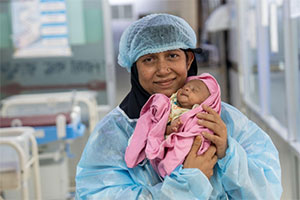 Bangladesh: Sarid, born one month early, receives specialized newborn care and grows stronger every day. Credit: UNICEF/UNI944397/Mojumder
Since the onset of the 2000s, global life expectancy has seen an overall rise, attributed to significant technological and scientific innovations in healthcare. Due to an increased understanding of different conditions as well as a rise in cooperation among healthcare experts around the world, there have been major strides made in ensuring that as few people die from chronic illnesses as possible. Despite the belief that healthcare is a fundamental human right, people from low- or middle-class backgrounds, marginalized groups, and underdeveloped countries have far more limited access to basic healthcare services.
The COVID-19 pandemic showed how marginalized communities are disproportionately affected by health crises, proving that we have much work to do in ensuring that no one dies of terminal conditions. While the global response to the coronavirus saw significant strides in immunization and vaccine development, the global outbreak of mpox in 2022 and its upsurge in parts of Africa in 2024 must remind us to remain vigilant.
Other major disease outbreaks in recent years have been linked to the destruction of infrastructure during warfare. Notably, in 2024, the Gaza Strip witnessed a return of the poliovirus since its eradication in the region 25 years ago. Israel’s blockade on Gaza has resulted in the collapse of the region’s sewage plants and desalination plants, and also destroyed healthcare capacities. The UN stated that this lack of clean water and sanitation would lead to an outbreak of cholera and other deadly infectious diseases. The 2026 OCHA Humanitarian Situation Report confirmed that the over two years of conflict in Gaza has produced a catastrophic health emergency, with millions remaining dependent on relief aid amid tight restrictions and no functioning public health system.
IPS is committed to providing full and comprehensive coverage on healthcare challenges around the world. IPS seeks to address the multifaceted causes of such challenges, including unprecedented pandemics, conflict-driven disease outbreaks, as well as socioeconomic barriers to equal healthcare access. IPS is also dedicated to reporting on innovations in the healthcare industry.

The Week with IPS

NEXT STOP - SDGs
Tracking global progress towards a sustainable world
Tracking global progress towards a sustainable world
