Languages
Friday, November 20, 2026



News and Views from the Global South
Health
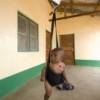
MOZAMBIQUE: Building Awareness to Reduce Maternal Mortality
In the Niassa province of northwest Mozambique, one doctor has been working with local communities to overcome the delays responsible for three-quarters of maternal deaths each year.ASIA: Region Lags Behind in Reducing Maternal Mortality Rates
In landlocked Laos, pregnancy brings with it the spectre of death. South-east Asia’s poorest country has recorded over 700 women dying every year due to complications during childbirth.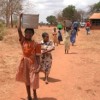
MALAWI: Questions Over Water Stats
A set of new research data contests the Malawian government's claims that nearly all of the country’s urban citizens have access to clean water and sanitation.POPULATION: 'Time to Shelve the ICPD Plan of Action’
At least 1.5 billion people aged 10 to 25 — the largest generation of young people in history — will need sexual and reproductive health services, says the United Nations Population Fund (UNFPA).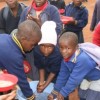
SWAZILAND: Sunshine Brings the Gift of Water
It is break time. A handful of pupils of Sitsatsaweni Primary School are crowded around a 25-litre bucket to wash their hands before tucking into a meal of samp and beans.HEALTH-KENYA: A Glove To Save a Mother’s Life
The need for gloves for health workers assisting with childbirth may be obvious, but in Yala Sub-District Hospital in western Kenya, obvious does not mean available.
HEALTH-SOUTHERN AFRICA: Learning From Criticism, U.S. Committed to AIDS Fight
The United States has embarked on a mission to restore Africa's trust in U.S. commitment to global AIDS relief.HEALTH: WHO Data Underscores Pneumonia’s Deadly Toll
New data released by the World Health Organisation (WHO) sheds light on the leading causes of pneumonia and provides the first country-level information about the effects of pneumonia, the world's leading killer of children under five.
SOUTH AFRICA: Redouble Efforts to Reduce Maternal Mortality
For Katriena Anthony, being four months pregnant comes with hazards particular to her living conditions.
RIGHTS-PAKISTAN: ‘The Problem Is We All Work in Silos’
As secretary-general of the International Conference on Population and Development (ICPD) in September 1994, Nafis Sadik had described this groundbreaking event as a "quantum leap" in reinforcing commitments to addressing infant and maternal mortality, education and reproductive health and family planning.HEALTH: Asian Countries Race to Produce Vaccine for H1N1 Virus
The race to mass-produce vaccines for the lethal H1N1 virus has attracted contenders from Asia’s developing countries, confirming a noticeable expansion of a field that has been dominated by flu vaccine production centres in Europe and North America.
HEALTH: Diabetes Wreaks Havoc in Mauritius
Every year 400 Mauritians undergo amputations, another 400 have heart surgery; 175 people's eyes are under the knife every week - all due to a disease that is easily prevented, Type 2 diabetes.DEVELOPMENT-INDIA: Muslim Community Leaders Join AIDS Fight
Muslim religious leaders may seem too conservative to promote the message of safe sex to combat the HIV/AIDS pandemic. But that image seems to be changing. Thanks to community-based organisations and young social entrepreneurs working quietly in villages.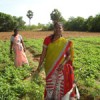
INDIA: HIV-Positive Women Get User Rights to Till Land
Till four months back, 33-year-old Mugil hardly ventured out of her parent’s home, preferring to stay indoors and tend to the household chores.ENVIRONMENT-CHINA: What Makes A Good Dam?
The Chinese government needs to engage local communities in harnessing its vast water and hydropower resources and pursuing sustainable development, says environmental advocate Yu Xiaogang, recipient of the 2009 Ramon Magsaysay Award for Participatory Social Impact Assessment for Watershed Management.MIDEAST: Israelis Target Medical Teams
Fourteen-year-old Muhammad Nayif's mother broke down as she spoke to IPS. Nayif died after being shot three times in the chest by Israeli soldiers Monday night.RIGHTS-AUSTRALIA: ‘Many Child Abuse Cases Remain Unreported’
Geoff Bahnert, 46, had been holding on to a secret until he decided it was time to speak out to ease the agony and pain of keeping it: As a child he was sexually abused, first by his female babysitter and then by an old man involved with his baseball club. All along he thought it was his fault and no one would believe him if he told his story.DEVELOPMENT: Dying at Childbirth Every Minute
Fifteen years after 179 nations agreed to implement a plan of action on sexual health, a woman still dies every minute because of inadequate pregnancy and birth services, according to the World Health Organisation.HEALTH-NIGERIA: Maternal Mortality, a Rural Community’s Example
Women, their children strapped to their backs, defy the mid-morning sun and converge on the Primary Healthcare Centre, located on the outskirts of Farasinme village, the Badagry West Council Development Area of Lagos State.TRADE: 2010 Soccer World Cup May See More Snorting than Kicking
It is the middle of the day but 25-year-old Lyle Arendse of Athlone on the Cape Flats, Cape Town’s sprawling hinterland, is at home. He left school nearly 10 years ago and has since been unemployed. "It is because of drugs -- tik (methamphetamine or "crystal meth") and heroin -- that I left school," he acknowledges.SWAZILAND: Bringing Men on Board to Reduce Maternal and Child Mortality
Swazi men have very little involvement in caring for newborns and mothers, yet they are critical partners in ensuring their well being.« Previous Page — Next Page »


 Bangladesh: Sarid, born one month early, receives specialized newborn care and grows stronger every day. Credit: UNICEF/UNI944397/Mojumder
Since the onset of the 2000s, global life expectancy has seen an overall rise, attributed to significant technological and scientific innovations in healthcare. Due to an increased understanding of different conditions as well as a rise in cooperation among healthcare experts around the world, there have been major strides made in ensuring that as few people die from chronic illnesses as possible. Despite the belief that healthcare is a fundamental human right, people from low- or middle-class backgrounds, marginalized groups, and underdeveloped countries have far more limited access to basic healthcare services.
The COVID-19 pandemic showed how marginalized communities are disproportionately affected by health crises, proving that we have much work to do in ensuring that no one dies of terminal conditions. While the global response to the coronavirus saw significant strides in immunization and vaccine development, the global outbreak of mpox in 2022 and its upsurge in parts of Africa in 2024 must remind us to remain vigilant.
Other major disease outbreaks in recent years have been linked to the destruction of infrastructure during warfare. Notably, in 2024, the Gaza Strip witnessed a return of the poliovirus since its eradication in the region 25 years ago. Israel’s blockade on Gaza has resulted in the collapse of the region’s sewage plants and desalination plants, and also destroyed healthcare capacities. The UN stated that this lack of clean water and sanitation would lead to an outbreak of cholera and other deadly infectious diseases. The 2026 OCHA Humanitarian Situation Report confirmed that the over two years of conflict in Gaza has produced a catastrophic health emergency, with millions remaining dependent on relief aid amid tight restrictions and no functioning public health system.
IPS is committed to providing full and comprehensive coverage on healthcare challenges around the world. IPS seeks to address the multifaceted causes of such challenges, including unprecedented pandemics, conflict-driven disease outbreaks, as well as socioeconomic barriers to equal healthcare access. IPS is also dedicated to reporting on innovations in the healthcare industry.

The Week with IPS

NEXT STOP - SDGs
Tracking global progress towards a sustainable world
Tracking global progress towards a sustainable world
