Languages
Friday, November 20, 2026



News and Views from the Global South
Health
HEALTH: Gender Finally Moving to Forefront of AIDS Fight
With women now comprising 61 percent of all people infected with HIV in Sub-Saharan Africa, international donors, governments and advocacy organisations are looking more closely at the connections between HIV/AIDS and gender inequality.WATER-MAURITANIA: Govt Needs to Invest
Ndey Sall, a resident of Sixième, one of the poorest suburbs in the Mauritanian capital Nouakchott, spends the equivalent of a dollar a day on water. That's almost half of her income - not much left to pay for food, rent, or medicine if a family member falls sick.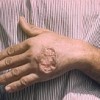
HEALTH-AFRICA: Neglected Diseases Under the Microscope
Neglected diseases, neglected people. Marcel Tanner uses the phrase to emphasise the attitude of drug developers towards tropical diseases that primarily affect the marginalised poor.ECONOMY: Zimbabwe Can’t Repay Loans; Insisting on "Debt Strategy"
The Zimbabwean coalition government cannot afford to repay debts incurred when President Robert Mugabe’s ZANU-PF was ruling on its own and will not repay those debts.CHINA: Chinese Question Government’s One-Child Policy
When China’s population control was imposed in 1980, it was meant to be a temporary measure which the government promised to phase out in three decades. It was intended to halt the baby boom of the 1950s and 1960s.HEALTH: Sri Lanka’s Battle With Dengue
Sri Lankan health authorities have had to combat an upsurge in cases of the lethal Dengue flu in the island nation this year. They have used mass man-power, public awareness campaigns and even threatened incarceration to stem the spread of the killer disease that has touched epidemic levels in the past six months. But it won’t be easy to stop the disease from spreading.HEALTH: ‘Global Response Needed for Global (Flu) Challenge’
Health ministers and representatives of 43 countries and the World Health Organisation (WHO) began to meet Thursday in the Mexican resort city of Cancun to discuss a common strategy to curb the spread of the H1N1 flu virus.US-ECUADOR: Chevron Fails in Effort to Lift Trade Benefits
In the latest in a string of setbacks that could cost the U.S. oil giant Chevron billions of dollars in damages, President Barack Obama decided this week to extend trade preferences for Ecuadorean exports for another six months under the 1991 Andean Trade Preferences Act (ATPA).PARAGUAY: President and Congress Face Off Over Agrochemicals
"Silvino was riding his bike on a dirt road near our home when he was poisoned by toxic agrochemicals, sprayed on a nearby field of soybeans. He died soon afterwards. He was 11," said his mother, Petrona Villasboa, a rural activist in southern Paraguay.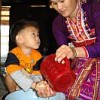
HEALTH-LAOS: Inadequate Sanitation Denting GDP
Poor sanitation and hygiene costs the Lao People's Democratic Republic 193 million dollars per year, an estimated 5.6 percent of gross domestic product, according to figures from the Water and Sanitation Programme (WSP) of the World Bank.
AFRICA: Maternal Mortality, A Human Rights Catastrophe
The right to the highest attainable standard of health: not the most fashionable of human rights, but the limits on people's enjoyment of their right to health often coincide with continuing inequalities behind claims of economic growth or political reform.
HEALTH-SENEGAL: Fistula Sufferers Left To Their Fate
In Senegal's southern region, 58 percent of deliveries take place at home without any medical assistance, according to state reproductive health officials in Kolda, a town 425 km from the capital, Dakar. Women in the region suffer from exceptionally high rates of fistula.BALKANS: Church Hands Out Shock Treatment
The torture of drug addicts who had turned to the Serbian Orthodox Church for help has sent shock waves across the country.
CHILE: When Being a Woman is a “Health Risk”
As a woman of childbearing age, "I pay more than double what a man my age pays for the same health plan," 27-year-old Carolina Leyton told IPS.MIDEAST: Lest We Don’t Forget
They are little white, yellow or green pills and are available almost anywhere. At the pharmacies or in the market, they are accessible, addictive and cheap.ARGENTINA: Experts Put H1N1 Flu Outbreak in Perspective
Doctors at the forefront of the battle against the H1N1 influenza virus in Argentina point out that the number of cases is far larger than the official figures reflect. But they also stress that the mortality rate, as a proportion of the much higher number of cases, is lower than people assume.HUMAN RIGHTS-SLOVAKIA: Barriers Go Up For Abortion
Rights groups in Slovakia have attacked new abortion legislation they say not only breaches women's rights to privacy and regulations on medical confidentiality but could force some women into undergoing risky, illegal abortions.POLITICS: Some Drug Trades Easing Up, U.N. Says
While worldwide production of heroin and cocaine appears to be slowing, there has been an increase in the use of synthetic drugs, especially in the Middle East, according to the latest report by the U.N. Office on Drugs and Crime (UNODC) released Wednesday.FIJI: Swine Flu Spreads to Vulnerable Pacific Island Nations
Fiji has become the second Pacific island nation to confirm cases of the H1N1 flu virus following two positive tests returned over the weekend.RIGHTS-NAMIBIA: 'Cut, Cut Again and Now Tie Tightly'
Anna Shikongo* wanted many more children, but five-month old Johannes, perched on her lap, will forever be her lastborn. She was sterilised by doctors at a government hospital. Now she is ready to take the government to court.HEALTH-BRAZIL: Birth Centres vs. Hospitals
The recent closure of a birth centre, which offered a more "human" touch with its focus on natural childbirth, in this Brazilian city revived the controversy over such practices, which have the backing of the Health Ministry but are opposed by the medical associations.« Previous Page — Next Page »


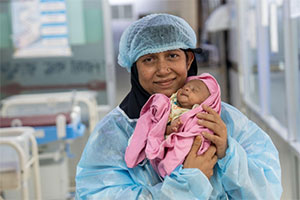 Bangladesh: Sarid, born one month early, receives specialized newborn care and grows stronger every day. Credit: UNICEF/UNI944397/Mojumder
Since the onset of the 2000s, global life expectancy has seen an overall rise, attributed to significant technological and scientific innovations in healthcare. Due to an increased understanding of different conditions as well as a rise in cooperation among healthcare experts around the world, there have been major strides made in ensuring that as few people die from chronic illnesses as possible. Despite the belief that healthcare is a fundamental human right, people from low- or middle-class backgrounds, marginalized groups, and underdeveloped countries have far more limited access to basic healthcare services.
The COVID-19 pandemic showed how marginalized communities are disproportionately affected by health crises, proving that we have much work to do in ensuring that no one dies of terminal conditions. While the global response to the coronavirus saw significant strides in immunization and vaccine development, the global outbreak of mpox in 2022 and its upsurge in parts of Africa in 2024 must remind us to remain vigilant.
Other major disease outbreaks in recent years have been linked to the destruction of infrastructure during warfare. Notably, in 2024, the Gaza Strip witnessed a return of the poliovirus since its eradication in the region 25 years ago. Israel’s blockade on Gaza has resulted in the collapse of the region’s sewage plants and desalination plants, and also destroyed healthcare capacities. The UN stated that this lack of clean water and sanitation would lead to an outbreak of cholera and other deadly infectious diseases. The 2026 OCHA Humanitarian Situation Report confirmed that the over two years of conflict in Gaza has produced a catastrophic health emergency, with millions remaining dependent on relief aid amid tight restrictions and no functioning public health system.
IPS is committed to providing full and comprehensive coverage on healthcare challenges around the world. IPS seeks to address the multifaceted causes of such challenges, including unprecedented pandemics, conflict-driven disease outbreaks, as well as socioeconomic barriers to equal healthcare access. IPS is also dedicated to reporting on innovations in the healthcare industry.

The Week with IPS

NEXT STOP - SDGs
Tracking global progress towards a sustainable world
Tracking global progress towards a sustainable world
