Languages
Saturday, November 21, 2026



News and Views from the Global South
Health
POLITICS-US: “No Surrender” for Hardline Abortion Foes
While the "March for Life - held annually on Jan. 22, memorialising the United States Supreme Court's 1973 Roe v. Wade decision - has always been one of the high points of the year for anti-abortion organisations and activists, next month's 36th annual gathering may be a much more somber affair.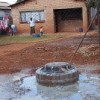
HEALTH-ZIMBABWE: Cholera Now a National Emergency
"Funerals of people dying of cholera are a common feature of our daily lives," said Tapiwa Hove, a resident Budiriro, a high-density suburb of Harare. "But it seems no one cares. Sewage is flowing all over. It's like living in hell."ENVIRONMENT: Modified Habitats Pose Threat of Zoonotic Diseases
A breakout of yellow fever among monkeys caught authorities in Argentina and Brazil, and the Pan-American Health Organisation (PAHO), off-guard in October.Q&A: Masculinity Doesn't Mean Macho
The rules for "being a man" that predominate in Latin America include "never saying no" to temptations out on the street, being "macho" - hanging tough - no matter what the risks, and above all, avoiding any characteristics or feelings that might be seen as feminine or cast doubts on one's masculinity.ENVIRONMENT: Health – a Victim of Climate Change
More malaria, diarrhea, and asthma: these diseases are on the rise around the world because of environmental destruction and kill some three million children under five and two million adults a year.HEALTH-AFRICA: Breaking the Cycle of HIV Transmission
According to the United Nations Children's Fund, early diagnosis and treatment greatly increase survival rates for HIV-positive newborns. but fewer than one in ten infants born to HIV-positive mothers in 2007 was tested for HIV within two months of birth.
Q&A: “Less Funding Could Lead to Millions of AIDS Deaths”
The global economic crisis is threatening to undermine yet another key development goal set by the United Nations: reversing by 2015 the AIDS epidemic still devastating millions of people worldwide.AUSTRALIA: Do More Regionally to Stop HIV/AIDS Gov’t Told
While HIV infection rates remain relatively low in Australia, the peak non-governmental organisation representing the country’s community-based response to HIV/AIDS wants the government to do more to fund prevention measures here and in the region to counter rising infection rates.Q&A: Escalating Violence Against Women in Swaziland
Still wearing a campaign t-shirt with the slogan "FED UP: with violence against women", Dlamini-Shongwe, the public relations officer for the Swaziland Action Group Against Abuse (SWAGAA) is fresh from the Nov. 25 launch of the16 days activism against gender-based violence at Jubilee Park in Manzini.PARAGUAY: Mixed Results for Lugo’s First 100 Days
Amid social demands, political conflicts and uncertainty over Paraguay's economic future, President Fernando Lugo has completed the first 100 days of his term, during which positive achievements have been made in the fields of health and fighting corruption.RIGHTS-AUSTRALIA: Abortion Decriminalised But Stays Controversial
While pro-choice groups have welcomed the recent decriminalisation of abortion in Victoria - Australia’s second most-populous state, where around 20,000 abortions are believed to be performed annually - anti-abortionists have vowed to continue opposing termination of pregnancies.HEALTH-AFRICA: Research and Policies Lack Civil Society Input
Health experts and activists have heavily criticised African governments for failing to collaborate with civil society organisations (CSOs) on health research and health policy development.HEALTH-AFRICA: Who Is To Blame for the Crisis?
Health systems on the continent are riddled with inadequate policies, strategies, lack of institutional capacity, poor scientific review mechanisms and weak funding for research in the public and private sector, said Luis Sambo, regional director of the World Health Organisation (WHO) in Africa.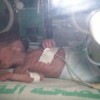
MIDEAST: On Top of Humanitarian Disaster, A News Blackout
Israel has imposed a virtual news blackout on the Gaza Strip. For the last ten days no foreign journalists have been able to enter the besieged territory to report on the escalating humanitarian crisis caused by Israel's complete closure of Gaza's borders for the last two weeks.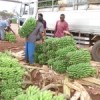
TRADE: Kibuzi Bananas Follow Ugandans to London
‘‘We have lots of orders for apple banana. There is a ready market for kibuzi in London. It is eaten from Monday to Monday. But how to get it there is the issue. Almost 60 percent of the cost goes to freight.’’POLITICS-US: Vets See Hope for a Broken System
Thirty-three-year-old Walter Williams was among the thousands of revelers who flooded into the streets of Oakland on Nov. 4 to celebrate Barack Obama's election as the 44th president of the United States.ZAMBIA: New Spending On Rural Health
In an attempt to drastically reduce child mortality rates and boost maternal health, the Zambian government last year allocated a substantial budget to the public health sector. This move has resulted in a notable drop in child deaths, researchers say.HEALTH-AFRICA: Cervical Cancer Strikes Poor Women Hardest
Of the 490,000 women worldwide who are diagnosed with cervical cancer each year, 80 percent live in the developing world. Every year, 55,000 women in sub-Saharan Africa alone develop this disease, which is ten times more likely to affect women living with HIV.BOOKS: Finding Humour and Tragedy in That Daily Ritual
We each spend, on average, three years of our lives going to the toilet - assuming we have one, that is.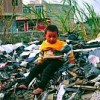
ENVIRONMENT: Where That “Recycled” E-Waste Really Goes
Is your old TV poisoning a child in China? Or your old computer contaminating a river in Nigeria?CHILE: 512 HIV-Positive People Not Notified
Chilean Health Minister Álvaro Erazo reported Thursday that 512 people who tested positive for HIV were not notified by the public health system.« Previous Page — Next Page »


 Bangladesh: Sarid, born one month early, receives specialized newborn care and grows stronger every day. Credit: UNICEF/UNI944397/Mojumder
Since the onset of the 2000s, global life expectancy has seen an overall rise, attributed to significant technological and scientific innovations in healthcare. Due to an increased understanding of different conditions as well as a rise in cooperation among healthcare experts around the world, there have been major strides made in ensuring that as few people die from chronic illnesses as possible. Despite the belief that healthcare is a fundamental human right, people from low- or middle-class backgrounds, marginalized groups, and underdeveloped countries have far more limited access to basic healthcare services.
The COVID-19 pandemic showed how marginalized communities are disproportionately affected by health crises, proving that we have much work to do in ensuring that no one dies of terminal conditions. While the global response to the coronavirus saw significant strides in immunization and vaccine development, the global outbreak of mpox in 2022 and its upsurge in parts of Africa in 2024 must remind us to remain vigilant.
Other major disease outbreaks in recent years have been linked to the destruction of infrastructure during warfare. Notably, in 2024, the Gaza Strip witnessed a return of the poliovirus since its eradication in the region 25 years ago. Israel’s blockade on Gaza has resulted in the collapse of the region’s sewage plants and desalination plants, and also destroyed healthcare capacities. The UN stated that this lack of clean water and sanitation would lead to an outbreak of cholera and other deadly infectious diseases. The 2026 OCHA Humanitarian Situation Report confirmed that the over two years of conflict in Gaza has produced a catastrophic health emergency, with millions remaining dependent on relief aid amid tight restrictions and no functioning public health system.
IPS is committed to providing full and comprehensive coverage on healthcare challenges around the world. IPS seeks to address the multifaceted causes of such challenges, including unprecedented pandemics, conflict-driven disease outbreaks, as well as socioeconomic barriers to equal healthcare access. IPS is also dedicated to reporting on innovations in the healthcare industry.

The Week with IPS

NEXT STOP - SDGs
Tracking global progress towards a sustainable world
Tracking global progress towards a sustainable world
