Languages
Saturday, November 21, 2026



News and Views from the Global South
Health

DEVELOPMENT: Wasted Food Is Also Wasted Water
The world's growing food crisis - which triggered riots and demonstrations in over 30 developing nations early this year - is being aggravated primarily by wastage and overconsumption.POLITICS-US: McCain’s Plan to Privatise Veterans’ Health Care
If John McCain is elected the next U.S. president, wounded veterans could be in for a world of hurt.HEALTH: Global Agenda Increasingly Disease-Driven
At the end of last month, U.S. President George W. Bush signed a global health package that effectively tripled U.S. spending over the next five years to fight HIV/AIDS, malaria and tuberculosis in poor countries, to 48 billion dollars.
NICARAGUA: US Fourth Fleet Treads Fine Line
The newly reactivated U.S. Fourth Fleet began its operations in Latin American waters with a humanitarian mission that made its first stop in Nicaragua, before heading on to six other countries of the Caribbean and Central and South America.DEVELOPMENT: South Africa Beats Deadline on Water, Sanitation
South Africa and Madagascar, two African nations participating in the Stockholm International Water Conference currently underway in the Swedish capital, provide a contrasting picture of where they stand - or fall - in achieving the U.N.'s heavily-trumpeted Millennium Development Goals (MDGs).
TRADE-TANZANIA: Cheap Imitation Goods Are Flooding Markets
The mishmash of shops in Tanzania's central Kariakoo market in Dar es Salaam stock an infinite array of brand name fakes. Throngs of customers snap up mobile phones, designer gear, high-tech electronics and gadgets - all imitations being sold at unbelievably low prices.DEVELOPMENT: Wastewater Crops Feeding Millions
Vegetables, rice and other cereals in at least 53 cities in Asia, Africa and Latin America may someday come with warning labels that read "this is a byproduct of raw sewage".
DEVELOPMENT: Water Progresses, Sanitation Regresses
The world's poorest nations are making halting progress in water, but little or no tangible improvement in sanitation - two of the basic necessities of life.DEVELOPMENT-UGANDA: Looming Problems With Kampala's Water
The water supply for two million residents of the Ugandan capital Kampala is threatened by a combination of ill-planned urbanisation and changing rainfall patterns.
HEALTH-LATIN AMERICA: Free Rein for Biobanks?
Four years ago, when Guillermo Soberón - one of Mexico’s most prominent scientists - became a grandfather, the newborn's parents received a letter requesting a donation of biological material to be used for medical research.HEALTH-MEXICO: Local Drug Companies Protest Opening of Market
Mexico’s pharmaceutical industry, which thanks to laws that have been labelled protectionist has grown into the most powerful in Latin America, warns that the unrestricted importation of medicines decided by the government will expose the public to "a possible health catastrophe."
HEALTH: Safe Sex With HIV – and Without a Condom?
The Swiss Federal Commission for HIV/AIDS set off a small firestorm of debate by asserting that people living with the virus can have sexual relations without a condom and without endangering their uninfected partners, under certain conditions.HEALTH-US: HIV On The Rise
A new study shows that the annual number of HIV infections in the United States is greater than was previously believed. The findings place increased scrutiny on the country’s lack of a national HIV/AIDS program as well as the current Presidential candidates’ plans to combat the epidemic.HEALTH-UGANDA: Fight Against AIDS Faltering?
Uganda's approach to the fight against HIV/AIDS is under scrutiny by activists. The country has won international acclaim for its 20-year campaign against the AIDS pandemic, but the latest numbers lead some activists believe Uganda is now losing ground.HEALTH: AIDS Meet – Fine Words, Few Concrete Actions
Governments, international bodies and civil society renewed their commitment to fighting HIV/AIDS at the 17th International AIDS Conference, but they will have to work hard in order for this commitment to be reflected in concrete policies, especially on prevention.
Q&A: “Latin America Needs a Regional Agenda” on AIDS Funding
If the economic status of Latin America and the Caribbean continues to improve, the region’s share of assistance from the Global Fund to Fight AIDS, Tuberculosis and Malaria is likely to drop to half the present level, under the current eligibility requirements, says Lelio Mármora, the Fund’s portfolio manager for this region.
MIDEAST: On HIV and AIDS, the Good News from Palestine
Palestinians from all ranks of society have pulled together to tackle the issue of AIDS, despite the increasing factional violence and chaos in the Palestinian territories.HEALTH: Conflicts Make Women More Vulnerable to HIV
"I’m a survivor, and if I can live through all that has happened to me, so can other women," said Floride Nyiraneza, 42, who is HIV positive and a widowed mother of four.HEALTH: Keeping Hope Against AIDS Alive in the Labs
"We need to get away from this home-run mentality to research. Science is incremental," said Alan Bernstein, executive director of the Global HIV Vaccine Enterprise, referring to unrealistic public expectations with regard to the search for an AIDS vaccine and for vaginal microbicides that could help prevent infection.HEALTH: Indigenous People Speak Out Clearly on AIDS
"In my community, living with HIV is synonymous with death," Fernando Solís, a 34-year-old member of the Cuna ethnic group in Panama, told IPS. Solís, who was diagnosed four years ago, is now working in prevention efforts among other young indigenous people, which he described as "the key to eradicating the epidemic in our communities."
CHINA: Greening of the Games
Though human rights and environmental issues - such as censorship and pollution in Beijing - have been the two major focuses of criticism levelled against the Chinese government during the lead up to the Olympic games, Achim Steiner, the Executive Director of the United Nations Environment Programme (UNEP), is expected to address some of Beijing’s environmental successes during the opening ceremonies.« Previous Page — Next Page »


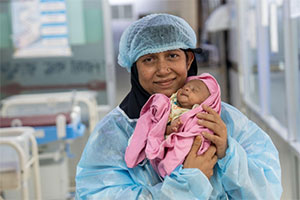 Bangladesh: Sarid, born one month early, receives specialized newborn care and grows stronger every day. Credit: UNICEF/UNI944397/Mojumder
Since the onset of the 2000s, global life expectancy has seen an overall rise, attributed to significant technological and scientific innovations in healthcare. Due to an increased understanding of different conditions as well as a rise in cooperation among healthcare experts around the world, there have been major strides made in ensuring that as few people die from chronic illnesses as possible. Despite the belief that healthcare is a fundamental human right, people from low- or middle-class backgrounds, marginalized groups, and underdeveloped countries have far more limited access to basic healthcare services.
The COVID-19 pandemic showed how marginalized communities are disproportionately affected by health crises, proving that we have much work to do in ensuring that no one dies of terminal conditions. While the global response to the coronavirus saw significant strides in immunization and vaccine development, the global outbreak of mpox in 2022 and its upsurge in parts of Africa in 2024 must remind us to remain vigilant.
Other major disease outbreaks in recent years have been linked to the destruction of infrastructure during warfare. Notably, in 2024, the Gaza Strip witnessed a return of the poliovirus since its eradication in the region 25 years ago. Israel’s blockade on Gaza has resulted in the collapse of the region’s sewage plants and desalination plants, and also destroyed healthcare capacities. The UN stated that this lack of clean water and sanitation would lead to an outbreak of cholera and other deadly infectious diseases. The 2026 OCHA Humanitarian Situation Report confirmed that the over two years of conflict in Gaza has produced a catastrophic health emergency, with millions remaining dependent on relief aid amid tight restrictions and no functioning public health system.
IPS is committed to providing full and comprehensive coverage on healthcare challenges around the world. IPS seeks to address the multifaceted causes of such challenges, including unprecedented pandemics, conflict-driven disease outbreaks, as well as socioeconomic barriers to equal healthcare access. IPS is also dedicated to reporting on innovations in the healthcare industry.

The Week with IPS

NEXT STOP - SDGs
Tracking global progress towards a sustainable world
Tracking global progress towards a sustainable world
