Languages
Thursday, October 8, 2026



News and Views from the Global South
Humanitarian Emergencies

Mamdani’s Stand on Genocide is More Important than the Dynamics of Arresting Netanyahu
No leader responsible for mass atrocities enjoys greater impunity on the international stage than Benjamin Netanyahu. This is due to the strange stranglehold of the pro-Israel lobby on the two major political parties in the United States.
Frontline of a Planetary Emergency: Africa Demands Climate Justice and Action
The room at the Swiss Inn Nexus Hotel in Bole was silent but tense as Sunita Narain, one of the world’s most influential environmental voices, fixed her gaze on rows of African journalists, scientists, and policymakers. Her tone was gentle, but the words cut deep.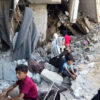
World Leaders Should Commit to Human Rights, International Justice
World leaders gathering at the United Nations General Assembly from September 22-30, 2025, should commit to protecting the UN from powerful governments seeking to defund and undermine the organization’s capacity to promote human rights and international justice, Human Rights Watch said today.
Loss and Damage at COP30: Indigenous Leaders Challenge Top-Down Finance Models
As climate-induced disasters continue to devastate the Global South, nations are steadily mounting pressure at the United Nations for wealthier countries to deliver on long-promised climate reparations through the Loss and Damage Fund. For Indigenous peoples, whose territories are often the most ecologically intact yet most damaged by climate change, these negotiations define survival, sovereignty and recognition as rights-holders in global climate governance.
UN Independent Commission Finds That Israeli Forces Have Committed Genocide in Gaza
On September 16, the Israeli military began its ground offensive in Gaza City, accompanied by intensified bombardment of residential areas and a surge in civilian displacement. Concurrently, the United Nations Independent International Commission of Inquiry on the Occupied Palestinian Territory, including East Jerusalem and Israel, issued a report in which it found that Israel is responsible for committing genocide in Gaza, citing deliberate efforts to destroy Palestinian life, carried out with near-total impunity.
Struggle For Water Continues Following Israeli Attacks on Lebanon
Just under a year into a fragile ceasefire, 150,000 people in southern Lebanon continue to deal with the potentially lethal aftermath of Israeli bombing, highlighting the devastating long-term effects of conflict.
When Civil Society is Kept Outside, We Should Build a Bigger Room
The recent IPS article, "UNGA’s High-Level Meetings: NGOs Banned Again," served as a stark and painful reminder of a long-standing paradox: the United Nations, an organization founded on the principle of "We the Peoples," often closes its doors to the very communities it was created to serve.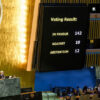
The Cruel Deceptions of Peace in Palestine
In a long past due move, the UN General Assembly voted 142-10 to approve a plan called “The New York Declaration” that hopes to revive the long dead Two State Solution for Palestinian Independence.
NGOs on a Virtual Blacklist at UN High-Level Meetings of World Leaders
When the high-level meeting of over 150 world political leaders takes place September 22-30, thousands of non-governmental organizations (NGOs) and their accredited UN representatives will either be banned from the UN premises or permitted into the building on a strictly restricted basis-- as it happens every year.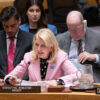
UN Warns of Escalating Humanitarian Emergency in Haiti As Armed Gang Violence and Aid Deepen Crisis
In recent months, the humanitarian crisis in Haiti has taken a considerable turn for the worse, with armed gangs continuing to exert dominance over nearly 90 percent of the capital, Port-Au-Prince. Rising violence, the collapse of essential services for millions, and severe cuts to humanitarian funding have left the international community struggling to provide immediate relief and find a sustainable, long-term solution.
Israel, Hamas, the US and Qatar—Unraveling the Mess
Israel’s brazen attack on Hamas’ negotiating team in Qatar while they were deliberating a new ceasefire with Israel raises serious questions not only about the legality of the attack, which violated international laws and norms, and concerns over Qatar’s sovereignty, but also the potential regional and international fallout.
Afghanistan’s Overlapping Crises Deepen Following 6.0 Magnitude Earthquake
Over the past week, Afghanistan’s humanitarian situation has deteriorated significantly following the August 31 earthquake, which measured over 6.0 in magnitude and caused an immense loss of life and widespread destruction of critical infrastructure. Compounded by the nation’s fragile economy, severe shortages of essential resources, and persistent access challenges, humanitarian organizations have found it increasingly difficult to reach vulnerable communities—especially women and children.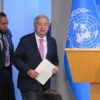
Global Military Spending Shows Misalignment of Priorities, says UN Secretary General
Global military spending has been on the rise for more than 20 years, and in 2024, it surged across all five global regions in the world to reach a record high of USD 2.7 trillion. Yet, such growth has come at the cost of diverting financial resources away from sustainable development efforts, which the United Nations and its chief warn puts pressure on an “already strained financial context.”
Nepal Faces Political Crisis after Deadly Gen-Z Protests
Nepal entered into a new era of constitutional and political crisis after deadly protests by the deeply frustrated young generation (Gen-Z). Prime Minister KP Sharma Oli resigned on Tuesday after protests grew out of control.
Palestinians Pushed into Deeper Crisis with Israeli Displacement Order on Entire Gaza City
Israel’s intent to displace around 1 million civilians, half of whom are living in famine, is impossible and illegal Oxfam said, while the Israeli military continued to flatten Gaza City building by building as its mass forced displacement of civilians in the city gains terrifying momentum.
Translating Recognition of a Palestinian State into Reality
During the upcoming annual UN General Assembly, several key European countries are expected to recognize a Palestinian state. The question that looms is how to translate such a significant development into reality, whereby the Palestinians will realize their national aspiration for statehood
North Worsens Tropical Catastrophe
Greenhouse gas (GHG) emissions have risen over the last two centuries, with current and accumulated emissions per capita from rich nations greatly exceeding those of the Global South.
Japan Backs Africa’s Health Future at TICAD
At a time of great transformation for global health, solidarity is more important than ever. As other countries have retreated from their commitments, Japan has instead continued its steadfast investment in a shared future that prioritizes human dignity and security.
Is Western Support for Israel Beginning to Crumble?
When the high-level meeting of over 150 world leaders takes place at the United Nations, September 22-30, one of the political highlights would be the announcement by at least 10 Western nations to recognize Palestine as a sovereign nation state. The 10 countries-- some already announcing their recognition ahead of the UN meeting -- include UK, France, Canada, Australia, Portugal, Malta, Belgium, Spain, Ireland and Norway-- proving the longstanding support for Israel is gradually diminishing in the Western world.
UN Mobilizes Amid Cascading Earthquakes in Eastern Afghanistan, Aiming to ‘Build Back Better’
United Nations aid organizations are rallying after a series of earthquakes and powerful aftershocks wreaked unprecedented havoc across eastern Afghanistan—particularly in the mountainous provinces of Kunar and Nangarhar.
‘Tell Us When the Next Storm Will Come’—Human Stories From Kashmir’s Deadliest August
The relentless rain that battered the mountains and valleys of Jammu and Kashmir this August shattered lives and records.« Previous Page — Next Page »





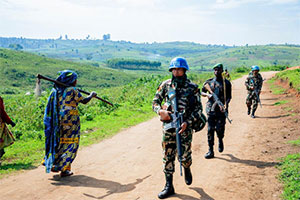 MONUSCO Peacekeepers and FARDC Soldiers Patrol Fataki Area. Credit: UN Photo/Jorkim Jotham Pituwa
Conflict, human rights violations, natural disasters, and famine have been at the forefront of concerns for humanitarian organizations. The escalation of humanitarian crises has led to over 239 million people in need of humanitarian assistance at the start of 2026, as estimated by OCHA’s Global Humanitarian Overview. The 2025 humanitarian appeal received only $12 billion, the lowest funding in over a decade, which has left 24 million fewer people reached in comparison to 2024. Conflict has remained the primary driver of crisis.
Humanitarian emergencies massively impact progress towards the Sustainable Development Goals (SDGs), adversely affecting economic development, inequality, education, planetary well-being, and poverty. Millions of people are faced with reduced access to essential services, including shelter, food, healthcare, and access to clean drinking water. UN Organizations such as UNHCR and the United Nations Children’s Fund (UNICEF) are committed to providing direct relief to affected communities when state governments cannot.
The United Nations 2024 Summit of the Future discussed measures that will be taken to reduce global inequality and promote peacekeeping efforts around the world. The recent UN Climate Change Conference (COP30) in Belém, Brazil, agreed to mobilize $1.3 trillion annually for climate action by 2035, operationalize the loss and damage fund, and triple adaptation finance. However, a fossil fuel transition commitment was not secured, despite climate change and the greenhouse effect being major contributors to humanitarian crises worldwide.
Countries across the world have also rallied to end humanitarian crises, as witnessed in conflicts such as Palestine and Ukraine. IPS is committed to providing relevant and in-depth reports of humanitarian emergencies around the world and their implications.

The Week with IPS

NEXT STOP - SDGs
Tracking global progress towards a sustainable world
Tracking global progress towards a sustainable world