Languages
Sunday, October 18, 2026



News and Views from the Global South
Humanitarian Emergencies
Building Resilience and Mental Health Capacity of Youth
Sri Lankan lawmaker Hector Appuhamy, in conversation with IPS ahead of a two-day conference aimed at educating and involving university students in mental health issues, said parliamentarians were concerned about gaps in the programmes and financing for youth mental health. They were looking beyond the country's health budget for support in ensuring that youth were able to access mental health facilities in a supportive environment.
Taliban Rule Exacerbates Malnutrition Crisis: Afghan Women and Children Hardest Hit
Malnutrition in Afghanistan has reached an unprecedented level, according to United Nations humanitarian organizations. It is estimated that half of the country's population grapples with severe hunger year-round, placing Afghanistan among the top ten nations globally with the highest rates of maternal and infant mortality due to malnutrition.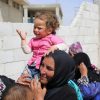
After 13 years in Conflict & Displacement, Syrian Women & Girls Must not be Forgotten
“I don’t think the world understands what it means to be a woman living in Syria today,” explains Shatha, a woman from Deir-ez-Zor, Syria, who is a survivor of gender-based violence. “It is a life filled with danger, grief, and daily struggle.”
ECW Announces New Grant Funding for Ukraine’s Education Programs for Children Impacted by War
Education Cannot Wait and the government of Ukraine launch new multi-year program to support education for children impacted by the conflict in Ukraine.
Thailand’s ‘Humanitarian Corridor’ for Myanmar Faces Pushback
The Maung family is rebuilding their lives in a foreign land. A freshly painted signboard with a play on the word Revolution declares their small restaurant is open for business, and breakfast features traditional Myanmar mohinga—rice noodles and fish soup.
State Fails to Stem Kidnapping For Ransom Crisis in Nigeria
Lilian Eze still shivers when she recalls the frequent attacks by kidnappers in the Kaduna community she once lived in, in north-central Nigeria. In February 2022, she fled with her children to Abuja, the nation's capital, to ensure their safety. In an interview with IPS, she explained that the kidnappers would invade the community on foot and with a horde of motorbikes in the evenings with little or no resistance from security agencies.
UNWRA Chief Warns Agency’s Fate ‘Hangs in the Balance’
UNRWA Commissioner-General Philippe Lazzarini asked the UN General Assembly to urge member states to support the organization's mandate during this period of unprecedented crisis for the region and the agency. He also called for member states to facilitate a “long-overdue political process” for the two-state solution for Israel and Palestine. Only then, in this context, should UNRWA be allowed to transition.
‘I Haven’t Forgotten Where I Came From,’ says Yvonne Pinto, Incoming IRRI Chief
Growing up on a small farming station in Holetta (Ethiopia), Yvonne Pinto would accompany her agriculturist father to the farm, where she would spend her time cross-fertilizing plants. Her tiny fingers making the task easier, as she would marvel at the end product of a prospective new and higher yielding variety. These formative years laid the foundation for her career in agricultural science.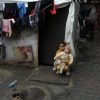
No Ceasefire Gaza Threatens Humanitarian Aid, Raises the Palestinian Question
As negotiations within the UN Security Council and internationally continue, the humanitarian response to Gaza continues to be under threat.
Parcels for Prisoners: Exiled Myanmar Activists Keep the Revolutionary Faith
Rangoon Nights is rocking. The bar is on its feet and the cocktail shaker is shaking in abandon as the band Born In Burma starts pumping out its beat. Except we’re not in Rangoon or Burma (officially called Myanmar), but in the northern Thai town of Chiangmai which has evolved into a hub for activists, fugitives, and those taking a break from the war tearing their country apart.
Call for Scaled Up Funding for Much-Needed, Successful Joint Program in Nigeria
Nigeria is home to 15 percent of the world’s out-of-school children. More than 7.6 million girls are not in school, and only nine percent of the poorest girls in the country are in secondary school. The Boko Haram insurgency and other armed groups fuel the out-of-school crisis in northeast Nigeria, disrupting the education of nearly two million school-age children.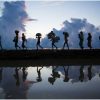
Funding, Policy Changes Could Result in Countries Reaping Benefit of Migration
Amid an escalation of global conflict and climate change-induced displacements, the International Organization for Migration (IOM) is escalating its donor campaign. For the first time since the organization’s formation in 1951, the IOM says it is "proactively approaching all partners to fund this vital appeal," at a time when the number of migrants making perilous intercontinental journeys has increased.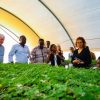
Smallholder Farmers Are Key to CGIAR Response to Hunger Crisis
Dr Ismahane Elouafi has her work cut out. As the new executive managing director of CGIAR, a global network of agricultural research centers, her mandate, simply put, is to tackle the world’s most severe hunger crisis in modern history. And it is in Africa that the former Chief Scientist of FAO with a PhD in durum wheat genetics faces her greatest challenges, both in terms of developing science-based innovations and technologies and lobbying governments to adopt responsible policies.
South Africa vs Israel: ICJ Declines SA’s New Application But Says Israel Duty Bound to Protect Civilians
The International Court of Justice has declined the South African government's urgent application for further measures to prevent an "unprecedented military offensive against Rafah,” but reiterated that Israel is bound to protect civilians in the country. South Africa argued in an urgent application that this military offensive “announced by the State of Israel, has already led to and will result in further large-scale killing, harm, and destruction in serious and irreparable breach both of the Genocide Convention" and of the Court's Order of January 26, 2024.
Tracking Global Development in Child Benefits Through New Monitoring and Information Platform
Inclusive social protections for children would be a positive signifier of social development in a time where 1.4 billion children globally are denied them. A step towards realizing this has been taken through a new monitoring tool on current social protection and child poverty statistics.
Last Chance Saloon? Myanmar Junta Imposes Military Conscription
The news travelled like wildfire. In the teashops, bars, and market stalls that make Thailand’s border town of Mae Sot feel far more Burmese than Thai, the feared rumours circulating at the weekend were suddenly confirmed. Military conscription would be imposed on young men and women for two to five years, regime-controlled broadcasters in Myanmar announced on the Saturday night airwaves. Details were sparse.
Nepal Farmers Face Another Year of ‘Agricultural Drought’, Threatening Food Security
Najboon Khatun looks up at the sky every day, searching for the possibility of rain. Clouds come and go without a drop of water. “Winter crops like wheat and vegetables need water, but like last year, there has been no rainfall yet,” says 65-year-old Khatun, expressing her anguish. In her village in Dhanusha, one of the agricultural hubs in the southern plains of Nepal, farmers mostly depend on rain as a source of irrigation. However, they are facing yet another year of drought, affecting winter crops, including wheat, mustard, lentils, and vegetables.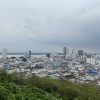
What Is It Like to Live in Ecuador, One of the Most Violent Countries?
"For a couple of years now we've been seeing the violence growing so fast," said José, who asked not to give his last name for fear of reprisals he may face in Monte Sinai, a low-income neighborhood in Ecuador's most populous city, Guayaquil.
Yangon—A Junta-Ruled Bubble in a Fragmenting Myanmar
Landing in Rangoon nearly 100 years ago, a young Chilean poet described “a city of blood, dreams, and gold” with “leprous streets”. The flourishing capital of then British-ruled Burma and its major port were a must-see staging post on an Asian tour.
Proven Vector Control Interventions Needed to Stem Malaria Infections in Africa
Experts recommend that the current prevention of malaria in highly endemic countries in Africa should integrate "locally appropriate" control measures to cope with the highest burden of mosquito-borne disease on the continent.
Female Genital Mutilation and Cutting in Asia Remain a Neglected Problem
Significant advances have been made in Africa towards ending female genital mutilation/cutting (FGM/C). Unfortunately, the same cannot be said for Asia, where FGM/C occurs in at least ten countries, but governments across the region are failing to take effective action. Women’s rights organizations are calling for states to introduce much-needed laws to criminalize FGM, provide national data on the extent and nature of the practice, and adequately fund efforts to tackle this regionally neglected problem.« Previous Page — Next Page »





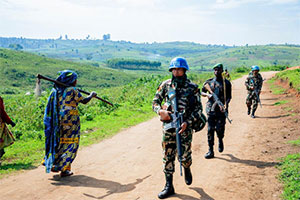 MONUSCO Peacekeepers and FARDC Soldiers Patrol Fataki Area. Credit: UN Photo/Jorkim Jotham Pituwa
Conflict, human rights violations, natural disasters, and famine have been at the forefront of concerns for humanitarian organizations. The escalation of humanitarian crises has led to over 239 million people in need of humanitarian assistance at the start of 2026, as estimated by OCHA’s Global Humanitarian Overview. The 2025 humanitarian appeal received only $12 billion, the lowest funding in over a decade, which has left 24 million fewer people reached in comparison to 2024. Conflict has remained the primary driver of crisis.
Humanitarian emergencies massively impact progress towards the Sustainable Development Goals (SDGs), adversely affecting economic development, inequality, education, planetary well-being, and poverty. Millions of people are faced with reduced access to essential services, including shelter, food, healthcare, and access to clean drinking water. UN Organizations such as UNHCR and the United Nations Children’s Fund (UNICEF) are committed to providing direct relief to affected communities when state governments cannot.
The United Nations 2024 Summit of the Future discussed measures that will be taken to reduce global inequality and promote peacekeeping efforts around the world. The recent UN Climate Change Conference (COP30) in Belém, Brazil, agreed to mobilize $1.3 trillion annually for climate action by 2035, operationalize the loss and damage fund, and triple adaptation finance. However, a fossil fuel transition commitment was not secured, despite climate change and the greenhouse effect being major contributors to humanitarian crises worldwide.
Countries across the world have also rallied to end humanitarian crises, as witnessed in conflicts such as Palestine and Ukraine. IPS is committed to providing relevant and in-depth reports of humanitarian emergencies around the world and their implications.

The Week with IPS

NEXT STOP - SDGs
Tracking global progress towards a sustainable world
Tracking global progress towards a sustainable world