Languages
Saturday, October 17, 2026



News and Views from the Global South
Humanitarian Emergencies

Amid Record Displaced Persons, Migrant Remittances Spike—New IOM Report
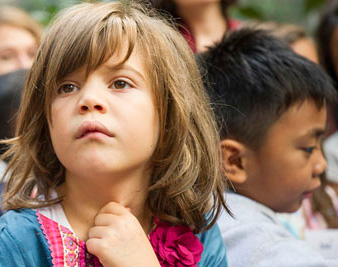
While there have been a record number of displaced people worldwide, according to a new report by the International Organization for Migration (IOM), migrant remittances are promoting human development.
1.8 Million More Palestinians Doomed to Poverty if Gaza War Persists
Nearly seven months into the Gaza war, the UN warns that to rebuild and restore the buildings lost in this period, it would take several decades, and to revitalize Palestine’s economy, it would be a great undertaking. Meanwhile, the great losses in housing and public services and the economic stall only threaten to push even more Palestinians into poverty.
LDCs Need Concessional Grants, Not Loans, Say Experts
Olaide Bankole was born and raised in Nigeria, and he observed how climate change was evident in the country with temperature rises and rainfall variability and how drought, desertification, and sea level rises have been affecting its people. He is also aware of how rising sea levels threaten southern Nigerian cities like Lagos and coastal areas, increasing their vulnerability to flooding and waterborne diseases.
Transgender Health Rights Boosted by Hospitals’ ‘Separate Room’ Policy
Transgender people and civil society organizations have welcomed the decision of the chief minister in Khyber Pakhtunkhwa, Pakistan, to allocate separate rooms in hospitals for the transgender community so they can avail themselves of uninterrupted healthcare. “We demand that all provinces follow suit and announce facilities for more than 500,000 transgender people in the country,” Farzana Shah, president of the Khyber Pakhtunkhwa (KP) Transgender Association, told IPS.
WHO Africa Advances African Science by Promoting Peer-Reviewed Research
The World Health Organization's African regional office and partners published over 25 peer-reviewed articles in scientific journals in 2023 as part of efforts to address the imbalance in global research and ensure that Africa was better represented in the production of health research academic literature, a new report shows.
Niger’s Military Coup Triggers Child Marriages, Sex Work in Neighboring Countries
A group of young girls aged between 15 and 17 sit tight, following attentively a lesson being taught by a Mualim (Islamic teacher) in a makeshift madrassah (Qur’anic school) located in one of the impoverished townships of Benin’s economic capital, Cotonou. They arrived in Benin recently, fleeing poverty, hunger, climate change, and rising insecurity in their home country, Niger, in the aftermath of the military coup that toppled democratically-elected president Mohamed Bazoum.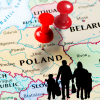
Conditions Worsen for Belarus Migrants Stuck in ‘Death Zone’ on EU Border
As the refugee crisis on the Belarus/EU borders approaches its fourth year, a crackdown on activism in Belarus is worsening the situation for migrants stuck in a “death zone” as they attempt to leave the country. Groups working with refugees say the repression of NGOs in Belarus has led to many organizations stopping their aid work for migrants, leaving them with limited or no humanitarian help.
Pioneering Digital Initiative Empowers Pacific Islands to Tackle Climate Disasters
Winning a battle for survival requires understanding the opponent. And, for the peoples of 22 island nations and territories scattered across more than 155 million square kilometres of Pacific Ocean, the volatility and wrath of the climate are their greatest threats.
IPCI 2024: Oslo Commitment Protects Sexual and Reproductive Rights Across All Contexts
Parliamentarians from 112 countries have adopted the IPCI statement of commitment to protect and promote sexual and reproductive health rights, committing to the principle that "life or death is a political statement." As IPCI Oslo drew to a close on Friday, April 12, 2024, parliamentarians adopted a new Statement of Commitment that was “the collective effort of every single delegate,” said Alando Terrelonge, MP from Jamaica and chair of the drafting committee.
IPCI 2024: Technology as a Tool to Advance and Threaten Sexual and Reproductive Health Rights
Technology emerged as a core theme of IPCI Oslo for its relevance in advancing the objectives of the Cairo Programme of Action. When channeled for good, it is an effective tool that can fill accessibility gaps in the health sector and spread awareness of sexual and reproductive health rights. Yet, the way in which digital technology has been weaponized against SRHR is of great concern for parliamentarians, especially for women.
Women Affected by ‘Gender-Biased’ Climate Change Deserve Justice
While research into the unequal impacts of climate change on women is growing, more is needed to enable them to realize their rights to climate justice. Researchers argue that women and girls have unequal access to food, water, health, education, and even income, thanks to climate change. This makes them more vulnerable.
IPCI 2024: Oslo Conference Focuses on Parliamentary Power over Reproductive Rights
Gearing up for the 30th anniversary of the International Conference on Population and Development (ICPD), the world’s parliamentarians and ministers are meeting in Oslo to determine the course of action needed to promote sexual and reproductive human rights (SRHR).
30 Years On, Genocide Survivors Embark on a Journey To Build a Resilient Future
A minute of silence was observed on April 7 across Rwanda as the country held a memorial ceremony to mourn more than one million people, overwhelmingly Tutsis, who were systematically killed in the 100 days of atrocities between April and July 1994.
Following Asian Countries’ Leads, Climate Action Opportunity for Developing Nations
In the deserts of Gujarat, something remarkable is happening. On my recent visit I saw hundreds of trucks moving under the warm Indian sun. Thousands of hardworking young people from all corners of Bharat, as Indians now often call their nation, are turning around the previously empty and harsh landscape.
‘Scattered Measures’ in Humanitarian Aid for Gaza Are Not Enough – UN Secretary General
As the humanitarian crisis in Gaza drags into its sixth month on Sunday, April 7, the UN Secretary-General calls for a “true paradigm shift” in the delivery of humanitarian aid. On Friday April 5, 2024, Secretary-General António Guterres spoke before reporters to mark six months since the October 7 attacks, where 1,200 civilians in Israel were killed in a terrorist attack led by Hamas, which has since led to a military campaign by the Israel Defense Forces (IDF) into Gaza.
‘The World Is Bigger than 5’
The title of this piece is not mine. It’s from the President of Turkiye calling for a reform of the United Nations Security Council. It has since become a motto in the UN reform campaign encapsulating the shared resentment at a global system that gives the five Permanent members – The P5 of the UN Security Council – the United States, France, Britain, China and Russia – unfair and often destructive veto powers that undermines the very ideals for which the UN was established.
Why Farmers in India and Pakistan Are Shifting to Natural or Regenerative Farming
Nine years ago, farmer Sultan Ahmed Bhatti gave up tilling the soil and using most fertilizers and pesticides on his farm in Doober Bhattian, Pakistan. His brothers at first derided him. But soon, his first experiment with growing wheat on raised beds was a runaway success. “We produced more wheat than what we grew on ploughed, flat land,” he said.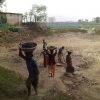
Revival of Hope: How a Remote Indian Village Overcame Water Scarcity
The people of Patqapara Village, a hamlet in India's West Bengal State, were until recently reeling under absolute distress due to water scarcity. The lack of irrigation facilities in this far-flung and inaccessible hamlet had resulted in a steady decline in agricultural activities. With a population of around 7,000, as per government estimates, the village primarily depends on agriculture for its livelihood. However, in recent years, drastic changes in weather patterns, including unseasonal rainfall, delayed monsoons, and soaring temperatures above normal levels, led to the drying up of irrigation canals and wells in the village. This left the local population in chaos, as their cultivable fields were bereft of any irrigation facilities.
Abandoned Children Growing Problem in Northern Syria
Wael Al-Hassan was returning from work in the Syrian city of Harim when he heard the sound of a baby crying. He was returning from work on December 10, 2023. He stopped momentarily, turned on his mobile phone flashlight to investigate, and spotted a baby girl, around one month old, wrapped in a white blanket, lying by the roadside.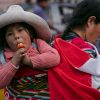
Child Malnutrition in Peru Driven Up by Poverty and Food Insecurity
Quechua farmer Felipa Noamesa, who lives in the southern Peruvian department of Cuzco, prepares a cream of fava bean soup for breakfast every morning with bread and vegetable soup with noodles. Her children are grown up, so her priority is that her five-year-old granddaughter does not suffer from anemia or malnutrition, two problems she frequently sees in her community.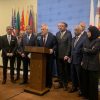
UN Security Council’s Ceasefire Resolution in Gaza Welcomed
After nearly six months of a devastating war in Gaza, the UN Security Council has at last adopted a resolution calling for an immediate humanitarian ceasefire. The resolution calls for the ceasefire to come into effect for the month of Ramadan, demands the unconditional release of all hostages and ensures humanitarian access.« Previous Page — Next Page »





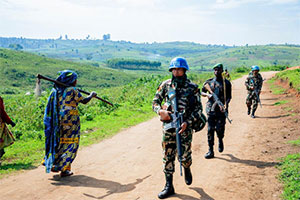 MONUSCO Peacekeepers and FARDC Soldiers Patrol Fataki Area. Credit: UN Photo/Jorkim Jotham Pituwa
Conflict, human rights violations, natural disasters, and famine have been at the forefront of concerns for humanitarian organizations. The escalation of humanitarian crises has led to over 239 million people in need of humanitarian assistance at the start of 2026, as estimated by OCHA’s Global Humanitarian Overview. The 2025 humanitarian appeal received only $12 billion, the lowest funding in over a decade, which has left 24 million fewer people reached in comparison to 2024. Conflict has remained the primary driver of crisis.
Humanitarian emergencies massively impact progress towards the Sustainable Development Goals (SDGs), adversely affecting economic development, inequality, education, planetary well-being, and poverty. Millions of people are faced with reduced access to essential services, including shelter, food, healthcare, and access to clean drinking water. UN Organizations such as UNHCR and the United Nations Children’s Fund (UNICEF) are committed to providing direct relief to affected communities when state governments cannot.
The United Nations 2024 Summit of the Future discussed measures that will be taken to reduce global inequality and promote peacekeeping efforts around the world. The recent UN Climate Change Conference (COP30) in Belém, Brazil, agreed to mobilize $1.3 trillion annually for climate action by 2035, operationalize the loss and damage fund, and triple adaptation finance. However, a fossil fuel transition commitment was not secured, despite climate change and the greenhouse effect being major contributors to humanitarian crises worldwide.
Countries across the world have also rallied to end humanitarian crises, as witnessed in conflicts such as Palestine and Ukraine. IPS is committed to providing relevant and in-depth reports of humanitarian emergencies around the world and their implications.

The Week with IPS

NEXT STOP - SDGs
Tracking global progress towards a sustainable world
Tracking global progress towards a sustainable world