Languages
Wednesday, May 6, 2026



News and Views from the Global South
Humanitarian Emergencies

Syria’s Children Remain at Immense Threat of Rape and Recruitment by Army: Report
Children in Syria are facing the brutal brunt of the ongoing civil war in the country, now rendered further paralysed owing to the COVID-19 pandemic and United States sanctions. At the Sept. 15 launch of the report investigating human rights violations in Syria by the Commission of Inquiry on Syria, experts warned that in addition to the already ongoing conflict, “newer forms of violence” was on the rise.
COVID-19 Worsens Mozambique’s Hunger
Like many Mozambicans in the agricultural sector, 39-year-old Fatima Matavele, a commercial farmer in the district of Chokwe, some 213 kilometres north of the capital, Maputo, has had a tough year. Although the last few years have been hard, 2020 has proven to be the most difficult of all.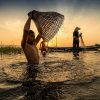
Maritime Security in Asia-Pacific Region Under Threat
Maritime security in Asia Pacific is often viewed through a traditional security lens, where the main responsibility falls on maritime law enforcement agencies to protect maritime borders and territorial sovereignty.
INTERVIEW: the top diplomat shepherding the General Assembly through its 75th year
The Turkish diplomat elected to be the president of the 75th session of the UN General Assembly, Volkan Bozkir, is taking on the role as the Organization grapples with an unprecedented pandemic, and questions surrounding the future direction it should take.
Statement by UN Deputy Secretary-general Amina J. Mohammed at ECW High-level Steering Group
As a friend and strong advocate of Education Cannot Wait, I welcome this opportunity to convey my support for ECW’s critical work and my solidarity with the millions of children and youth who are still being deprived of the opportunity to obtain a quality education because they are caught up in conflict, crisis or disaster.
The Debt the Government Does Not Want to Recognize
The national occupation and employment survey prepared by INEGI, with figures updated to July 2020, shows an improvement that has occurred in the last two months. However, the employment situation, compared with the data existing before the pandemic still shows serious problems:
No ‘Business as Usual’ for Children Post-COVID-19, say Laureates & Leaders
Addressing delegates at the end of the virtual 3rd Fair Share for Children Summit, 2014 Nobel Peace Laureate Kailash Satyarthi told global citizens that “business as usual” in dealing with COVID-19 is not going to be tolerated. “We’re not going to accept the miseries of child labour and trafficking to continue to be normal,” he said.
Hold Corporates Accountable for Using Child Labour, Nobel Laureates Urge World Leaders
The COVID-19 pandemic should give governments across the world an opportunity to hold corporates accountable against child labour. Kailash Satyarthi, the 2014 Nobel Peace Laureate, made this submission at the virtual 3rd Fair Share for Children Summit.

COVID-19 Pandemic an Opportunity to Re-evaluate How we Treat World’s Starving Children
While COVID-19 pandemic has affected the entire world, Nobel Laureates and world leaders have today expressed concern that ongoing crisis is far from being an equaliser. The pandemic has revealed that the most vulnerable and marginalised populations, including and especially children, remain largely unprotected against the virus and its impacts.
Caring for Poorest and Most Underserved Children Vital for Creating a Better World
Kerry Kennedy has a clear mission – along with Nobel laureates and leading international figures – she wishes to ensure that hard-won gains in children’s rights are not destroyed by the economic fallout from the COVID-19 pandemic.
Financing Economic Recovery
As the socio-economic impacts of the COVID-19 pandemic spread across the length and breadth of Asia and the Pacific, finance ministries are continuing their relentless efforts to inject trillions of dollars for emergency health responses and fiscal packages. With continued lockdown measures and restricted borders, economic rebound seems uncertain.
Nobel Laureate Kailash Satyarthi on Where to Find the $1 trillion Needed for Marginalised Children
 Nobel Laureate Kailash Satyarthi says that $1 trillion can solve many of the problems the world's most marginalised communities are facing.
Exclusive: Kailash Satyarthi Warns over a Million Children Could Die Because of COVID-19 Economic Crisis
Nobel Laureate Kailash Satyarthi warns of the danger that over one million children could die, not because of the COVID-19 pandemic, but because of the economic crisis facing their families. In an exclusive interview with IPS, Satyarthi said that without prioritising children we could lose an entire generation as evidence mounts that the number of child labourers, child marriages, school dropouts and child slaves has increased as the COVID-19 pandemic spread across the globe.
COVID-19: Lessons from the Losses
If countries considered Universal Health Coverage (UHC) a central policy in their health systems, the COVID-19 has surely demonstrated the need for its urgent and widespread roll out. The pandemic has upended world systems in a manner that no scientists or sophisticated global intelligence could have foreseen.
World Risks Losing Entire Generation of Children, Nobel Laureates Warn
The COVID-19 pandemic has upended the lives of millions of people worldwide, accounted for over 869,000 deaths, destabilised the global economy and triggered a marked rise in poverty and hunger in the developing world. But the fallout from one of the most devastating consequences of the spreading virus is on the lives of a growing new generation: children.UNESCO urges action to meet rampant $200 billion annual funding gap for education in poorest countries due to COVID-19
New research by the Global Education Monitoring Report at UNESCO shows an increase in the annual funding gap for education in the poorest countries to as much as US$200 billion a year. These findings are published in the new paper, Act Now: Reduce the impact of COVID-19 on the Cost of Achieving SDG4.
Nobel Laureates and Global Leaders Call for Urgent Action to Prevent COVID-19 Child Rights Disaster
Regina Njagi’s four children, aged between 11 and 17, have not benefitted from online learning since the COVID-19 led to the closure of all schools in Kenya, earlier in March. With the closure, Njagi lost her job as a teacher at a local private school.
Navigating Safely Through The Pandemic
Having reported on SARS, Ebola, Bird Flu (H5N1) outbreaks, as well as writing about efforts to combat HIV, I was horrified by what was going on in Wuhan, China last Jan mainly because of how fast this new SARS-CoV-2 virus spread. By early Feb it seemed likely there’d be a global pandemic and by the end of Feb I started to freak out as the pandemic took hold. I’ve never been to Wuhan or China nor seen anyone who had; and I hadn’t travelled any where recently. It was nearly impossible for me to have encountered the virus but that didn’t keep me from getting sick with fear and dread knowing that a goddamn microscopic parasite was going to turn our lives upside down when we already had multiple crisis of on our plate. (You know, climate, ecological collapse, rise of populism and authoritarianism.) I refused to write about the virus or the disease it causes — COVID-19 — until I had to face the little bastard personally.
Women’s access to stimulus packages and post Covid-19 gender equality
All crises—natural disasters, wars, pandemics—affect different sections of people in different ways. Like any other crisis, Covid-19 has differing impacts on society. It has affected men and women, rich and poor, and adults and children differently. Since the ramifications of the coronavirus pandemic vary across people, measures towards the recovery from this crisis should also be focused towards each section of society distinctively.
Technology Meets Creativity on Women’s Empowerment Platform
Eight years ago, at the age of eleven, Fuzia co-founder Riya Sinha decided to start a writing club for school girls. Stemming from this initiative a few years later Sinha, along with co-founder Shraddha Varma, decided to start the online platform for women. Their story and Fuzia's DNA are intrinsically wrapped around each other – and highlight how even in the age of feminism where women’s voices tend to be drowned out, a platform for them can become a global success.
South Sudan – COVID-19 and Ongoing Violence has Catastrophic Impact on Civilians
Large-scale intercommunal violence on civilians in the Jonglei and greater Pibor regions in South Sudan has led to the mass displacement of thousands of people who are living in the open without health care, adequate food, shelter, water or sanitation in the middle of the rainy season.« Previous Page — Next Page »