Languages
Sunday, November 8, 2026



News and Views from the Global South
Humanitarian Emergencies
Rules of War Widely Flouted, 70 years on: Red Cross
World governments are not doing enough to stop armed groups from committing mass rape, torture and other war crimes, the head of the Red Cross aid group head Peter Maurer said on Tuesday.
Canada Effectively Addresses Children in Armed Conflict
More than 24,000 violations have been committed against children across the globe, including recruitment into armed forces, abduction, sexual violence, deprivation of basic needs, attacks on schools and hospitals-- and even murder.
U.S. Sanctions Imperil Aid to Iran’s Flood Victims
Two major humanitarian groups have warned that United States sanctions on Iran are stopping cash flows for vital humanitarian work in the country, adding another complication to the growing rift between Washington and Tehran.
Environmental Migration a Global Challenge
The Atlas of Environmental Migration, which gives examples dating as far back as 45,000 years ago, shows that environmental changes and natural disasters have played a role in how the population is distributed on our planet throughout history.
Protect, Support and Empower Girls in Lake Chad Region
As Lake Chad enters its 10th year of conflict, millions of young girls are being used and manipulated in grotesque ways. Maria Sole Fanuzzi, Lake Chad Child Protection Specialist at Plan International, said: “New York City has 8.25 million people, so when we talk about the girls in the Lake Chad crisis, you have to imagine the whole city where we are now is completely filled by children, and half of that would be girls.”
Extreme Weather Events are Just the Tip of Rapidly Melting Icebergs
First August. It is the middle of summer in the northern hemisphere. We are witnessing not only record global warming but global political tensions are also heating up.
Migration and Human Solidarity
The migrant and refugee crisis has become a serious test for the unity of Europe as a political project. The inflow of destitute migrants and refugees has tested Europe’s political unity to an unprecedented extent. With a long-term solution to the migrant and refugee crisis nowhere in sight, the adverse impact of the current situation has the potential to unfold further and to give rise to a broader crisis with long-term implications, affecting Europe and the MENA region alike.
Horn of Africa Drought Threatens Re-run of Famines Past
Humanitarian groups and the United Nations are warning of another drought in the Horn of Africa, threatening a repeat of the deadly dry spell and famine that claimed lives in Somalia and its neighbours eight years ago.
Floods Havoc in North Bangladesh
 Floods are quite common in Bangladesh - blame it on climate change, the control and discharge of river waters at source or poor disaster management. The damage to property to livestock is colossal.
How Best to Tackle Inequality in the 21st Century? Start with Climate Change
Do you prefer to hear good news or bad news first? I will begin by giving you the (unsurprisingly) bad news. Today’s world is an unequal place. Standards of living vary massively both between and within countries.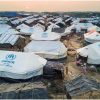
Treaty Violators Make Mockery of Refugee Convention
With the rise of rightwing nationalism, primarily in the Western world, an increasingly large number of countries are not only abandoning multilateralism but also violating international treaties and conventions signed and ratified in a bygone era.
Here’s How the World Can Be Better Prepared to Handle Epidemics
The 2019 G20 Summit was held recently in Osaka, Japan. The Summit ended with the “G20 Osaka Leaders’ Declaration”, which identifies health as a prerequisite for sustainable and inclusive economic growth, and the leaders committed to various efforts to improve epidemic preparedness.
Parts of Kenya are Already Above 1.5˚C
Kenya’s getting hotter. Much hotter than the 1.5˚C increase that has been deemed acceptable by global leaders, and it is too hot for livestock, wildlife and plants to survive. Thousands of households, dependent on farming and livestock, are at risk too.
Heatwaves are a ‘New Normal’, Says Red Cross
It is barely the middle of the month, but the verdict is in: July has been hot.
Desperation and Fear on the Mexican Border
On the 2,000-mile journey from San Pedro Sula, Honduras, to the US-Mexico border, the 20-year-old asylum seeker and her 16-year-old brother took turns sleeping every time they managed to catch a ride or get on a bus. She told me they kept each other safe that way.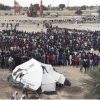
Migrants, Militias & the Mediterranean Sea
When the Italian police recently arrested Carola Rackete, captain of the Sea-Watch 3 search and rescue vessel, the Central Mediterranean Sea suddenly entered the international limelight once again.
Let’s Talk About Sex – and Why Power Matters
Every year on World Population Day (July 11), UNFPA receives queries from journalists about the total number of people around the world. Numbers are indeed important because they help governments develop policies that respond to evolving needs for services such as education and health.
Climate Change Victims: What Will You Do Next?
Contemporary politics generates a lot of noise and smoke, with little attention devoted to understanding, analysing and fixing the causes of the noise and smoke. The global public discourse is dominated by statements made by politicians and aspirants to power, designed to shock, awe and draw support.
Libya Tragedy: Why Lock up Migrants in the First Place?
A military strike on a detention centre for migrants in Libya that claimed dozens of lives on Wednesday Jul. 3 has reignited a debate over the poor treatment of the mainly African people who transit through the turbulent country.
Why Environmental and Humanitarian Action Must Be Linked
Environmental and humanitarian action is often understood as two different sectors. However, the lack of awareness regarding its intersections could lead to further long-term devastation.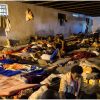
“Unimaginable Horrors” in Libya’s Migrant Detention Centers
For over 10,000 migrants fleeing to Libya from war and violence, their fate often comes down to the mercy of human traffickers or the dark unknown awaiting in detention centers.« Previous Page — Next Page »





 MONUSCO Peacekeepers and FARDC Soldiers Patrol Fataki Area. Credit: UN Photo/Jorkim Jotham Pituwa
Conflict, human rights violations, natural disasters, and famine have been at the forefront of concerns for humanitarian organizations. The escalation of humanitarian crises has led to over 239 million people in need of humanitarian assistance at the start of 2026, as estimated by OCHA’s Global Humanitarian Overview. The 2025 humanitarian appeal received only $12 billion, the lowest funding in over a decade, which has left 24 million fewer people reached in comparison to 2024. Conflict has remained the primary driver of crisis.
Humanitarian emergencies massively impact progress towards the Sustainable Development Goals (SDGs), adversely affecting economic development, inequality, education, planetary well-being, and poverty. Millions of people are faced with reduced access to essential services, including shelter, food, healthcare, and access to clean drinking water. UN Organizations such as UNHCR and the United Nations Children’s Fund (UNICEF) are committed to providing direct relief to affected communities when state governments cannot.
The United Nations 2024 Summit of the Future discussed measures that will be taken to reduce global inequality and promote peacekeeping efforts around the world. The recent UN Climate Change Conference (COP30) in Belém, Brazil, agreed to mobilize $1.3 trillion annually for climate action by 2035, operationalize the loss and damage fund, and triple adaptation finance. However, a fossil fuel transition commitment was not secured, despite climate change and the greenhouse effect being major contributors to humanitarian crises worldwide.
Countries across the world have also rallied to end humanitarian crises, as witnessed in conflicts such as Palestine and Ukraine. IPS is committed to providing relevant and in-depth reports of humanitarian emergencies around the world and their implications.

The Week with IPS

NEXT STOP - SDGs
Tracking global progress towards a sustainable world
Tracking global progress towards a sustainable world

