Languages
Sunday, November 8, 2026



News and Views from the Global South
Humanitarian Emergencies
Holding Transnational Corporations Accountable for Human Rights Abuses
In Geneva this week, a treaty process is underway that promises to usher in a new era for human rights around the globe. The process—the intergovernmental working group on the binding treaty on transnational corporations and human rights—could mean that for the first time, human rights would be prioritized above corporate profits.14 aid agencies warn of humanitarian crisis in North-East Syria
Civilians in north-east Syria are at risk and humanitarian aid could be cut off following the launch of a new military operation in the area, leading aid agencies are warning.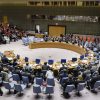
Aid Groups Warn of Humanitarian Crisis from Turkey’s Assault on Syria
Aid groups operating in northeastern Syria have been raising the alarm about civilian casualties and an impending humanitarian crisis this week, as Turkey began a military assault on the turbulent region’s Kurdish militants.
“Window of Opportunity to Avoid Catastrophic Climate Change is Fast Shrinking”
 “The window of opportunity to avoid catastrophic climate change is fast shrinking,” executive director of the Green Climate Fund (GCF), Yannick Glemarec, tells IPS.

South Sudan’s Authorities Allow Serious Human Rights Abuses to Flourish and go Unpunished – Report

Human rights movement Amnesty International has accused South Sudanese authorities for lack of independence as they have allowed allowing human rights abuses, war crimes and crimes against humanity to go unpunished.
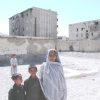
Afghan War Deadly for Children Despite Peace Process: UN
The United Nations has warned that the past four years were among the deadliest for children in Afghanistan since the United States-led invasion of 2001, with nearly 13,000 youngsters killed and injured in that period.
Barbados Prime Minister Warns of Mass Migration Backlash Because of Climate Crisis
The Prime Minister of Barbados Mia Mottley tells IPS her patience is running thin, as she challenges the world to tackle the climate crisis.
Caribbean Adopts Remote Sensing to Prepare for Hurricanes
The Caribbean is currently deploying a new technology to help it build resilience to natural disasters. Known as LIDAR, the acronym for light detection and ranging, the technology is being used to gather data that will help regional governments better predict the impacts of climate-related events and determine how best to prepare for them. 
Oceans in Crisis as they Absorb the Brunt of Climate Change
Warnings of strong winds, high waves and reduced visibility along the East African coastline are increasingly common. But local fisher folk like Ali Sombo from Kwale County, situated along Kenya's Indian Ocean Coastline, don't always heed the warnings by the Kenya Meteorological Department (KMD) to stay clear of the open sea during rough waters.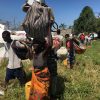
Climate Emergency: A Humanitarian Call to Action
We saw this coming. As humanitarians, our risk assessments in different parts of the world have always factored in the potential for extreme weather events and the spread of vector-borne diseases, of drought, desertification, and mass displacement. Emergency first responders like us work up scenarios for interventions and gain experience each time we put our planning to the test in real crises.
Confronting the New Climate Reality in Asia and the Pacific
In less than ten days world leaders will be gathering at the United Nations in New York for the Climate Action Summit. Their goal is simple; to increase ambition and accelerate action in the face of a mounting climate emergency. For many this means ambition and action that enables countries to decarbonize their economies by the middle of the century. But that is only half the equation. Equally ambitious plans are also needed to build the resilience of vulnerable sectors and communities being battered by climate related disasters of increasing frequency, intensity and unpredictability.
What Research Reveals about Drivers of Anti-immigrant Hate Crime in South Africa
Mobs have attacked foreign-owned businesses on the streets of at least three South African cities in recent days. This has caused outrage across Africa. There have even been retaliatory attacks. The South African government, under pressure to protect her large international migrant community, quickly defused the attacks.
Is America Defeated in Afghanistan?
Following the 11 September 2001 terrorist attacks on American soil, the United States and their allies went to Afghanistan to “smoke out” Osama bin Laden and his Taliban protectors. The most fundamental primary mistake was to let all terrorists flee to Pakistan instead of sealing the border and capturing their main figures.
UNICEF’s Goodwill Envoy a Messenger of ill-Will, Complain Critics
When two-time Wimbledon tennis champion Boris Becker, a UNICEF goodwill ambassador, refused to make a commitment not to play in South Africa, a country blacklisted for its apartheid policies, the UN children’s agency stripped him of the prestigious title, back in October 1987.
Our Food Systems Need Transformation
The right to food is a universal human right. Yet, over 820 million people are going hungry, according the latest edition of the State of Food Security and Nutrition in the World (SOFI 2019). In addition, 2 billion people in the world are food insecure with great risk of malnutrition and poor health” 1.
Malaysia Vastly Undercounting Poverty
Malaysia lays claim to the world’s lowest national poverty rate by using an unduly low poverty line that does not reflect the cost of living and by excluding vulnerable populations from its official figures.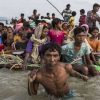
After Two Years of Horrors in Burma, the U.S. Is Still Doing Too Little, Too Late
Monsoon season is currently wreaking havoc on the more than 911,000 Rohingya refugees displaced from their homeland in Burma (Myanmar) to the ramshackle camps of Cox’s Bazar, Bangladesh.
Two Million Children in West and Central Africa Robbed of an Education Due to Conflict
Fourteen-year-old Fanta lives in a tent in a settlement in Zamaï, a village in the Far North Region of Cameroon with her mother and two brothers. They came here more than a year ago after her father and elder brother were murdered and her elder sister abducted by the extremist group Boko Haram.
Little Hope of Justice for Rohingya, Two Years after Exodus
Two years after the start of an exodus of Rohingya civilians from genocide-like attacks in Myanmar, members of the mainly Muslim minority have little hope of securing justice, rights or returning to their homes, according to the United Nations and aid groups.
A ‘Cure’ for Ebola but Will it Stop the Outbreak if People Won’t Get Treatment?
While people in the Democratic Republic of Congo (DRC) are slowly being made aware that scientists have discovered two drugs that are effective in treating Ebola, letting go of the fear and anxiety that has prevailed across the country this year will require more work.
The Role of Women’s Organisations in Crisis-Settings
To mark World Humanitarian Day, we celebrate the overlooked women leaders who are first responders, unwavering advocates, and powerful change-makers in humanitarian emergencies.« Previous Page — Next Page »





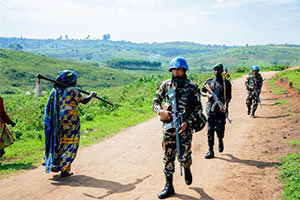 MONUSCO Peacekeepers and FARDC Soldiers Patrol Fataki Area. Credit: UN Photo/Jorkim Jotham Pituwa
Conflict, human rights violations, natural disasters, and famine have been at the forefront of concerns for humanitarian organizations. The escalation of humanitarian crises has led to over 239 million people in need of humanitarian assistance at the start of 2026, as estimated by OCHA’s Global Humanitarian Overview. The 2025 humanitarian appeal received only $12 billion, the lowest funding in over a decade, which has left 24 million fewer people reached in comparison to 2024. Conflict has remained the primary driver of crisis.
Humanitarian emergencies massively impact progress towards the Sustainable Development Goals (SDGs), adversely affecting economic development, inequality, education, planetary well-being, and poverty. Millions of people are faced with reduced access to essential services, including shelter, food, healthcare, and access to clean drinking water. UN Organizations such as UNHCR and the United Nations Children’s Fund (UNICEF) are committed to providing direct relief to affected communities when state governments cannot.
The United Nations 2024 Summit of the Future discussed measures that will be taken to reduce global inequality and promote peacekeeping efforts around the world. The recent UN Climate Change Conference (COP30) in Belém, Brazil, agreed to mobilize $1.3 trillion annually for climate action by 2035, operationalize the loss and damage fund, and triple adaptation finance. However, a fossil fuel transition commitment was not secured, despite climate change and the greenhouse effect being major contributors to humanitarian crises worldwide.
Countries across the world have also rallied to end humanitarian crises, as witnessed in conflicts such as Palestine and Ukraine. IPS is committed to providing relevant and in-depth reports of humanitarian emergencies around the world and their implications.

The Week with IPS

NEXT STOP - SDGs
Tracking global progress towards a sustainable world
Tracking global progress towards a sustainable world