Languages
Sunday, November 8, 2026



News and Views from the Global South
Humanitarian Emergencies

The World had an ‘Unprecedented’ Number of People in Humanitarian Need this Year
The world had an unexpected number of people in crisis this year, which exceeded projected numbers the United Nations had expected, with climate change being one of the key crises that led to “needs to unprecedented levels” according to a new report.
Climate Refugees Refused UN Protection & Denied Rights Under International Law
The term “environmental refugee” has gained prominence in recent years as climate change and desertification have threatened the livelihoods of millions of people, causing many to re-locate.
The Economic & Humanitarian Catastrophe Threatening Pacific Island Communities
When UN Secretary-General Antonio Guterres addressed the Economic and Social Commission for Asia and the Pacific (ESCAP) last month, he pointed out the dramatic impact of climate change triggering natural disasters around the world--- from glaciers that melt, ice caps that disappear and corals that bleach.
Gains and Losses of Irregular Migration
While opening a newspaper or watching a TV program we are every day made aware of the plights of irregular migrants. Some recent examples among many – on 24 October, 39 Chinese nationals were found dead in a lorry trailer in Essex. They had apparently frozen to death within a refrigerator container with temperatures as low as -25C (-13F). This while tragedies occur almost daily on the Mediterranean Sea. On 26 November, a rescue vessel found a boat almost completely sunken. It had three dead bodies aboard. Fifty-five migrants were saved. Three of them were in a critical condition, and one died after reaching Melilla in Spain, where the migrants were brought in. Three children were among the survivors, though a further ten individuals were reported missing. Nowadays, such news items pass by almost imperceptibly. Every day, thousands of unfortunate human beings are trafficked all over the world to suffer underpaid, hazardous work, or prostitution.
Forced to Flee. Displaced with a Dream. Time for Action.
Genesis smiles and holds her hand up proudly to answer questions in class. She claps her hands in support of her classmates when they answer the teachers’ questions correctly. “I miss my cousins and aunts in Venezuela, she says.” Her smile fades and her lips tighten. She struggles to hold back her tears. “I can’t return. I want to stay here in my school, with my new friends.” Her smile returns, as she resolutely states: “I want to become a lawyer, so I can help solve problems.”
African Politicians Asked to Develop Legal Instruments to Fight Climate Change
African legislators have been challenged to come up with legal frameworks for climate change to enable countries avoid catastrophes and reactionary emergencies that eat up their budgets.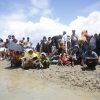
The Story Behind The Gambia’s Lawsuit against Myanmar over the Rohingya Genocide
On Nov. 11, the Gambia filed a lawsuit against Myanmar in the International Court of Justice for the southeast asian country’s atrocities against the Rohingya population.
Running from the Storm – How Bangladesh’s Climate Migrants are Becoming Food Secure
It was almost a decade ago when Ruma Begum and her family left their home in Bangladesh’s coastal Tazumuddin upazila or sub-district and travelled some 50 km away to start a new life. They had been driven out of their home by an extreme and changing climate that has continued to ravage the district of Bhola.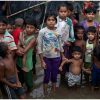
With the UN Security Council in Paralysis, Are there New Hopes for Rohingya Muslims?
The 15-member UN Security Council (UNSC) stands virtually paralyzed in the face of genocide charges against the government of Myanmar where over 730,000 to one million Rohingya Muslims have been forced to flee to neighboring Bangladesh since a 2016 crackdown by Myanmar’s military.
ICC Gives Greenlight for Probe into Violent Crimes Against Rohingya
Judges of the International Criminal Court (ICC) on Thursday authorized an investigation into alleged crimes against humanity, namely deportation, which have forced between 600,000 and one million Rohingya refugees out of Myanmar, into neighboring Bangladesh since 2016.
How can Taps, Toilets & Good Hygiene Help Ensure Sustainable & Resilient Agricultural Supply Chains?
Water underpins the global economy and agriculture is by far the world’s largest water consumer, accounting for 70% of freshwater withdrawals. Global water demands are projected to increase by 55% by 2050 and climate change will present further pressures on water accessibility.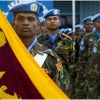
UN Peacekeeping Should Not Violate Charter or Principles of Sovereignty of Member States
Given the political, economic and social exigencies of contemporary peacekeeping, it is important that the Department of Political and Peacebuilding Affairs (DPPA) remains engaged in the process.
UN Agency for Palestinians in Crisis as Chief Quits
The United Nations agency for Palestinian refugees was in “crisis mode” on Wednesday after director Pierre Krahenbuhl resigned amid a misconduct probe over whether he fast-tracked his girlfriend into a top aid job, analysts said.
Urgent Need to Replace Competition with Cooperation in the Aral Sea Basin
The water resources in Central Asia’s Aral Sea Basin support the lives and livelihoods of about 70 million people — a population greater than Thailand, France, or South Africa.
Europe’s Green Deal is Turning Red
Global temperatures are set to rise by a catastrophic 3°C by the end of the century unless we take major action. The next 10 years in particular are crucial.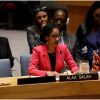
The Fight for Bread Became a Fight for Freedom
My name is Alaa Salah. I am 22 years old and I grew up in Khartoum. Before the revolution, I was a student of architectural engineering. I did not grow up around politics, but in an ordinary middle-class family—my mother is a designer and my father owns a construction company.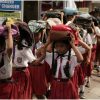
Prepare to Win: Tsunami Awareness and Preparedness
Once considered rare in their occurrence, in the last 10 years tsunamis have struck nearly every year: from Samoa to Chile, and from Iceland to New Zealand.
Red Alert for Blue Planet and Small Island States
Barely a week passes without alarming news of the most recent scientific research into the global climate crisis compounding a growing sense of urgency, particularly the impact on small island states from rising sea levels and extreme weather.
World’s Spreading Humanitarian Crises Leave Millions of Children Without Schools or Education
As massive protests escalated worldwide last month, millions of children walked out of schools to demonstrate against the lackadaisical response – primarily from world leaders --to the ongoing climate emergency resulting in floods, droughts, typhoons, heat waves and wildfires devastating human lives.
Insurance Scheme Offers Hope for Drought-stricken African Farmers
A partnership between United Nations and African Union (AU) agencies will help African economies insure themselves against the droughts and other extreme weather events that plague the continent, organisers say.
Displaced by the Desert: An expanding Sahara leaves Broken Families and Violence in its Wake
Abdoulaye Maiga proudly displays an album showing photos of him and his family during happier times when they all lived together in their home in northern Mali. Today, these memories seem distant and painful.« Previous Page — Next Page »





 MONUSCO Peacekeepers and FARDC Soldiers Patrol Fataki Area. Credit: UN Photo/Jorkim Jotham Pituwa
Conflict, human rights violations, natural disasters, and famine have been at the forefront of concerns for humanitarian organizations. The escalation of humanitarian crises has led to over 239 million people in need of humanitarian assistance at the start of 2026, as estimated by OCHA’s Global Humanitarian Overview. The 2025 humanitarian appeal received only $12 billion, the lowest funding in over a decade, which has left 24 million fewer people reached in comparison to 2024. Conflict has remained the primary driver of crisis.
Humanitarian emergencies massively impact progress towards the Sustainable Development Goals (SDGs), adversely affecting economic development, inequality, education, planetary well-being, and poverty. Millions of people are faced with reduced access to essential services, including shelter, food, healthcare, and access to clean drinking water. UN Organizations such as UNHCR and the United Nations Children’s Fund (UNICEF) are committed to providing direct relief to affected communities when state governments cannot.
The United Nations 2024 Summit of the Future discussed measures that will be taken to reduce global inequality and promote peacekeeping efforts around the world. The recent UN Climate Change Conference (COP30) in Belém, Brazil, agreed to mobilize $1.3 trillion annually for climate action by 2035, operationalize the loss and damage fund, and triple adaptation finance. However, a fossil fuel transition commitment was not secured, despite climate change and the greenhouse effect being major contributors to humanitarian crises worldwide.
Countries across the world have also rallied to end humanitarian crises, as witnessed in conflicts such as Palestine and Ukraine. IPS is committed to providing relevant and in-depth reports of humanitarian emergencies around the world and their implications.

The Week with IPS

NEXT STOP - SDGs
Tracking global progress towards a sustainable world
Tracking global progress towards a sustainable world

