Languages
Monday, November 9, 2026



News and Views from the Global South
Development & Aid

International Women’s Day, 2023
Unleashing Our Region’s Most Untapped Potential: Harnessing the Digital Age to Empower Women & Girls
New technologies and innovations are reshaping our world and its future, often at a dizzying pace. Yet women and girls continue to be left behind in this burgeoning digital universe. How, then, can we harness these developments to create a better future for all of us?

Earthquake Relief Efforts in Syria Shouldn’t Overlook Those With Disabilities
A few days ago, I saw a photo shared to Twitter of Sham, a young Syrian girl rescued from under the rubble in northwest Syria, sitting upright in her hospital bed, According to the Syrian Civil Defense, a volunteer humanitarian group also known as the White Helmets, Sham will lose both her legs because of injuries from the quake.
Climate Displacement & Migration in South East Asia
Global warming and climate breakdown are going to be disruptive to say the least. Humanity’s insistence on unsustainable development and rising greenhouse gas emissions will make the settlements of millions of people increasingly prone to extreme weather events and full-blown natural disasters.
Management Areas Protect Sustainable Artisanal Fishing of Molluscs and Kelp in Chile
Management areas in Chile for benthic organisims, which live on the bottom of the sea, are successfully combating the overexploitation of this food source thanks to the efforts of organized shellfish and seaweed harvesters and divers.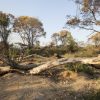
Forests Disappearing in Energy Poor Zimbabwean Cities
In New Ashdon Park, a medium-density area in the Zimbabwean capital, Harare, at new homes that have replaced a once thriving forest, makeshift fireplaces have become common sights as residents solely depend on firewood for energy.
Venezuela Drafts Legal Stranglehold on NGOs
The Venezuelan parliament, in the hands of the ruling party, is moving towards passing a law to control non-governmental organizations (NGOs) so that, in practice, they could not exist independently.
Welcome To the Vegetable Garden of Europe – ‘The Greenhouses of Death’
Chances are that the fruits and vegetables sold in European supermarkets have been picked and packed by a migrant worker in southern Spain. By the tens of thousands, they work there, in sweltering hot plastic greenhouses - often underpaid and without residence permit - in the vegetable garden of Europe. "Cheap vegetables, yes. But at what price?"
The Brutal War on Ukraine Must End
Today with heavy hearts we mark 365 days of a brutal against Ukraine. Through this illegal act of aggression, over 450 children have been killed and another 900 injured. The shelling and bombing has damaged 3,000 educational institutions, and completely destroyed 420 schools and learning centers. As many as 5.7 million children have had their education disrupted, with no end in sight.
Beyond Zero Discrimination: A New Social Contract for Health and Care Workers
While its origins may be rooted in the discrimination faced by people living with HIV, Zero Discrimination Day has evolved to celebrate commitments to the fundamental human right of being treated equally in law and in practice.
Gender Central to Parliamentarians’ Programme of Action
The post-COVID-19 period has been a crucial one for members of parliament who have their work cut out to ensure that issues that arose during the pandemic are addressed, especially concerning the ICPD25 commitments and programmes of action for universal access to sexual and reproductive rights, gender-based violence and building peaceful, just and inclusive societies. Across the world, progress toward achieving the SDGs by 2030 was impacted during the pandemic.
‘Ticking Time Bombs’ for the Most Defenceless: The Children (II)
While the world’s biggest powers and their giant private corporations continue to attach high priority to their military –and commercial– dominance, both of them being shockingly profitable, entire generations are being lost to deadly armed conflicts, devastating climate catastrophes, diseases, hunger and more imposed impoverishment.
How Emerging Economies Are Reshaping the International Financial System
It’s been 25 years since the 1997 Asian financial crisis led to the creation of the G20 forum for finance ministers; and 15 years since this became a leader-level meeting following the global financial crisis. During this period, there has been significant shift in the global finance and economic landscape.
BRAC ‘Resets’ Program Aimed at Empowering Adolescent Girls in Africa
BRAC’s Empowerment and Livelihood Program (ELA) has benefitted tens of thousands of girls, and its recently released report shows an organization willing to adapt to the circumstances to continue to ensure adolescent girls and young women receive meaningful sexual and reproductive health rights support.
‘Ticking Time Bombs’ for the Most Defenceless: The Children (I)
Today, there are more children in need of desperate humanitarian assistance than at any other time since World War II.
Pakistan’s Free Healthcare Insurance Benefits Women, Poor
A free health insurance initiative started in Pakistan has benefited poor patients, especially women who have outnumbered men in using the cashless health services under the Sehat Card Plus programme. "The initiative is in line with the ICPD25 Programme of Action, under which 4.5 million people have received free services, with 62 percent of them women. In the last three years, we have been able to cut down maternal mortality rate from 186 deaths per 100,000 live births to 172," Dr Muhammad Riaz Tanoli, CEO of the Sehat Card Plus (SCP), told IPS.
A Vital Partnership for the 2030 Agenda
Flexible and predictable funding allows UN agencies to respond promptly and with agility in times of crisis. In countries such as Afghanistan, Yemen, and Ukraine, UNDP implements projects and programmes that help protect livelihoods and enhance the resilience of vulnerable communities.
Fear of Population Ageing
Fear of population ageing is all over the news media and in government offices of country capitals worldwide. Planet Earth is becoming “planet ageing”.
Role of Regional Economic Cooperation in Inclusive Digital Transformation in Asia
Digitalization is a key driver of competitiveness and development. As the world takes the path to unprecedented digital advancement, Asia continues to be a powerhouse of digital transformations in a wide range of areas from microchip manufacturing to electric vehicles, from digital currency to e-commerce.
UN Hobbled by Junta and Under Pressure Over Myanmar Aid Crisis
Nearly 18 million people – about one-third of Myanmar’s population – need humanitarian aid this year because of civil war and the post-coup economic crisis, according to the latest United Nations estimates.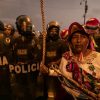
Privilege and Centralism in Lima Goad Protesters in Peru
The current political and social upheaval in Peru is not a temporary problem, but has to do with deeply-rooted inequality and social hierarchies, according to historian José Carlos Agüero.
Climate Crisis is a Child Crisis and Climate-Resilient Children, Teachers and Schools Must Become Top International Agenda
From southern Ethiopia to northern Kenya and Somalia, the most severe drought in the last 40 years is unfolding. It is simply too hot to go to school on an empty stomach, and close to 3 million children are out of school, with an additional 4 million at risk of dropping out entirely across the Horn of Africa.« Previous Page — Next Page »





 2026 High-level Political Forum on Sustainable Development. Credit: UN Photo/Eskinder Debebe
In 2015, the United Nations and its Member States adopted the Sustainable Development Goals (SDGs) in an effort to make the world a more sustainable and peaceful place for future generations. Progress on the 17 SDGs has been uneven, and inequality persists across the globe. 10 years after adoption, the 2025 UN SDGs Report revealed that only 35% of the SDG targets are on track, with more than half moving too slowly, and 18% moving backwards from the 2015 baseline. Poverty remains one of the world’s most pressing issues, with hunger, violence, and inequality impeding the opportunities for all people to achieve success. In September 2024, the United Nations Summit of the Future introduced a new goal: to eradicate global poverty by 2030, ensure universal rights to basic services, and increase the overall standard of living in terms of industrialization, economic well-being, citizen health, and literacy. Furthermore, recent shifts in United States foreign aid policy – notably, major budget cuts to USAID and the termination of thousands of development programmes– have severely threatened vital lifelines of financial aid to impoverished communities around the world. Additionally, the United States’ withdrawal from the Paris Climate Agreement has undercut international efforts at sustainable development. With the upcoming 2030 deadline, the UN Secretary-General has called for urgent multilateralism across six priority areas: food systems, energy, digital connectivity, education, jobs and social protection, and climate and biodiversity. IPS sheds light on marginalized communities that struggle on a daily basis to survive and have their stories heard and respected.
Updated by Yilan Batista and Shuli Wong August 2026

The Week with IPS

NEXT STOP - SDGs
Tracking global progress towards a sustainable world
Tracking global progress towards a sustainable world
