Languages
Tuesday, November 10, 2026



News and Views from the Global South
Development & Aid

Climate Crisis is a Child Crisis and Climate-Resilient Children, Teachers and Schools Must Become Top International Agenda
From southern Ethiopia to northern Kenya and Somalia, the most severe drought in the last 40 years is unfolding. It is simply too hot to go to school on an empty stomach, and close to 3 million children are out of school, with an additional 4 million at risk of dropping out entirely across the Horn of Africa.
Taking a Stance on Feminists’ Prejudice Against Religious Minority Women
Since researching the experiences of gender discrimination against women in poverty who belong to religious minorities, many fellow feminists have turned their back on me.
Act on the Taliban and Secure Our Right to Education, Afghan Women and Girls’ Plea
It has been more than 500 days since the Taliban regime in Afghanistan shut down schools and shattered the education dreams of girls and women like Somaya Faruqi, who has been forced to leave her homeland to continue her education.
ECW High-Level Financing Conference Raises More than 826 Million USD to Keep Crisis-Impacted Children in School
As an unparalleled, unprecedented global education crisis unfolds, an estimated 222 million crisis-impacted children are desperate to learn. As barriers to accessing education increase, darkness beckons, and education is their last hope.
One Year Later: The Impact of the Russian-Ukrainian Conflict on Africa
In today’s interconnected world, shots fired in one corner of the globe create ripple effects in other, seemingly far, places. One year since the Russian invasion of Ukraine, African countries, although physically miles away, have not been spared its aftershocks.
Driven by the War, Russian Women Arrive en Masse to Give Birth in Argentina
They began to arrive en masse in Argentina in the second half of 2022, a few months after the Russian invasion of Ukraine. They are pregnant Russian women who land in the capital to give birth, with the hope of gaining an Argentine passport, given the fact that so many countries refuse to let in people with Russian passports today.
How the Privatization of Eletrobras May Lead To an Uncertain Future in Brazil’s Energy Transition and Favor Price Increase to the End-Consumer
Eletrobras is Latin America’s biggest electricity company, responsible for around 30% of Brazil’s power capacity and 50% of all its transmission lines. In 2021, the Brazilian government announced it would reduce its controlling shares in this state-owned company from 72% to 10%. Given Eletrobras’ dominant role in Brazil’s power sector, this divestment in the government’s controlling shares merits a more complete understanding of the implications for Brazil’s energy transition and energy security.
World Leaders, Private Sector Urged to Establish an International Green Bank to Win Climate Change Battle
As the effects of climate change escalate and natural disasters such as earthquakes, floods, and droughts become more frequent and severe, threatening lives and livelihoods, humanity is losing the climate battle.
China and Russia Fail to Defund UN Human Rights Work
United Nations member states agreed to fully fund UN human rights mechanisms that China, Russia, and their allies had sought to defund in the 2023 budget. This should set a precedent for UN human rights funding in the future.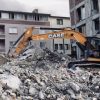
Turkey’s Shaky Foundations
Geology explains the terrible earthquake that shook Turkey and Syria on February 6 with academic coldness: the Arabian, Eurasian and African plates pressure the Anatolian plate. On the surface, geopolitics resorts to concepts like "fault", "tension" or "fracture" to explain things too. When one looks at Turkey, both disciplines’ maps can easily overlap each other, with a death toll calculated in the tens of thousands.
Outlook for 2023: Children in ‘Polycrisis’
The year 2022 was incredibly difficult for people around the world. We were confronted by a series of major crises, including a continuing pandemic, a major war in Europe, an energy crisis, rising inflation and food insecurity.
Sierra Leone’s Gender Law Boosts Women’s Participation in Politics, Business
Sierra Leone's new gender equality law will benefit women with political aspirations – as well as stimulate development, say analysts.
World’s Deadliest Earthquake Leaves over 33,000 Dead
Almost over 33,000 people have been killed and thousands injured by the 7.8 earthquake which struck south-eastern Turkey and Syria in the early hours on Monday, February 6th. The first images that came out were of collapsed buildings, rubble strewn across streets, people trapped under rubbles, screaming for help. What followed was the unusually strong aftershock - including one quake which was almost as large as the first.
Let’s Eat Plastics!
With one in ten people in the world going hungry, food prices hitting record highs, and the worsening conditions of the environment and climate, it’s time for the world’s population of 8 billion to eat something that is available, abundant and inexpensive: plastics.
Pakistan Floods: Need for Tackling Development from a Different Perspective
Last year’s devastating floods in Pakistan cost the country more than US$30 billion, about 6.4 trillion rupees. The entire Public Sector Development Programme (PSDP) for 2021-2022 was valued at 900 billion rupees. This means that the floods wiped out development gains worth more than six PSDPs. This disproportionately affects the vulnerable segments of society, especially women, girls, the elderly and persons with disabilities.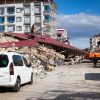
Humanitarian Aid to Earthquake Victims Hindered by Politics– & Limited Access
As the toll in last week’s earthquakes in Turkey and Syria exceeds a staggering 28,000 people dead and more than 78,000 injured--and counting-- the United Nations is in an emergency-footing struggling to provide humanitarian aid, along with several international humanitarian organizations.
Education Cannot Wait Appoints New Global Champion Somaya Faruqi on International Day of Women and Girls in Science
In celebration of the International Day of Women and Girls in Science, Education Cannot Wait (ECW) today named Somaya Faruqi as a new ECW Global Champion.
Expanding E-bus Networks in Latin America Can Further Decarbonization Goals
Latin America’s (LATAM) transportation sector produces the largest share of regional emissions and is a large source of air pollution, making transforming transportation technology systems key to energy transition and decarbonization. In particular, electrifying public transportation systems across the region through a transition to electric bus (e-bus) fleets will reduce fossil fuel demand and greenhouse gas (GHG) emissions.
Food Industry Exposes Five Billion People to Toxic Chemicals that Kill
The food industry continues to intensively use toxic chemicals in their products, some of them provoking heart diseases and death. Trans fat is just one of them, adding to contaminating fertilisers, pesticides, microplastics and a long etcetera.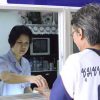
The Opioid Addiction Crisis & U.S. National Security
The opioid addiction crisis in the United States is an acute public health emergency and a profound threat to national security – which is caused by the over-prescription, misuse, illegal production, and criminal trafficking and sale of opioid pharmaceutical drugs to Americans. It is estimated that over 130 people die every day from opioid overdoses in the U.S.
Mental Health Must Be Addressed in Medical Facilities and in Communities
Patients who visit public clinics in Abu Dhabi, United Arab Emirates, are asked mental health questions to detect signs of stress and depression early. The process starts with a basic checklist, with patients referred to a nurse, doctor, or specialist. Asking these questions at primary care not only can identify issues early on, but it also helps decrease the stigma often associated with mental health while maintaining anonymity.« Previous Page — Next Page »





 2026 High-level Political Forum on Sustainable Development. Credit: UN Photo/Eskinder Debebe
In 2015, the United Nations and its Member States adopted the Sustainable Development Goals (SDGs) in an effort to make the world a more sustainable and peaceful place for future generations. Progress on the 17 SDGs has been uneven, and inequality persists across the globe. 10 years after adoption, the 2025 UN SDGs Report revealed that only 35% of the SDG targets are on track, with more than half moving too slowly, and 18% moving backwards from the 2015 baseline. Poverty remains one of the world’s most pressing issues, with hunger, violence, and inequality impeding the opportunities for all people to achieve success. In September 2024, the United Nations Summit of the Future introduced a new goal: to eradicate global poverty by 2030, ensure universal rights to basic services, and increase the overall standard of living in terms of industrialization, economic well-being, citizen health, and literacy. Furthermore, recent shifts in United States foreign aid policy – notably, major budget cuts to USAID and the termination of thousands of development programmes– have severely threatened vital lifelines of financial aid to impoverished communities around the world. Additionally, the United States’ withdrawal from the Paris Climate Agreement has undercut international efforts at sustainable development. With the upcoming 2030 deadline, the UN Secretary-General has called for urgent multilateralism across six priority areas: food systems, energy, digital connectivity, education, jobs and social protection, and climate and biodiversity. IPS sheds light on marginalized communities that struggle on a daily basis to survive and have their stories heard and respected.
Updated by Yilan Batista and Shuli Wong August 2026

The Week with IPS

NEXT STOP - SDGs
Tracking global progress towards a sustainable world
Tracking global progress towards a sustainable world
