Languages
Thursday, November 12, 2026



News and Views from the Global South
Development & Aid

Salvadoran Migrants Still Look to the U.S. to Lift Themselves Out of Poverty
The Joe Biden administration's call for undocumented Central American migrants not to go to the United States, as requested by Vice President Kamala Harris during a June visit to Guatemala, appears to have fallen on deaf ears.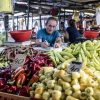
How to Feed the World Without Starving the Planet is a $15 Billion Question
A population of more than 9 billion people, hotter temperatures, decaying ecosystems and increasingly severe natural disasters. That is what our world is facing by 2050 because of climate change.
Where Did We Go So Wrong in Afghanistan?
President Biden’s decision to finally withdraw US forces from Afghanistan was the correct decision and certainly overdue. However, the lack of preparation to do so orderly and safely was yet another terrible mistake in a string of mistakes that have plagued the US from day one.
Internationally Trained Medical Doctors Sidelined in Canada
Canada is ranked number one out of 78 countries globally, with the highest marks in social purpose indicators, emphasizing human rights, social justice, and racial equity commitment, according to a recent U.S. News & World Report survey.
Were US War Profiteers the Ultimate Winners in Battle-Scarred Afghanistan?
As the 20-year-old occupation of Afghanistan came to an inglorious end last week, there were heavy losses suffered by many-- including the United States, the Afghan military forces and the country’s civilian population.
NDC Partnership: Supporting a Global Network of Youth Climate Advocates
Just over six months after launching its Youth Engagement Plan, the NDC Partnership, the coalition assisting governments with their climate action plans, has brought together youth climate advocates for its inaugural NDC Global Youth Engagement Forum.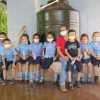
Community-Based Solutions Alleviate Water Shortages in Central America – In Pictures
Access to water is a constant struggle in Central America, a region with more than 60 million people, many of whom live in rural areas where conditions for good quality water and enough for food production are becoming increasingly difficult.
Building Water Resilience Needs a Holistic Approach
Even as COVID-19 ravages communities across the continent, climate change is widening the gap between those who have access to water and sanitation - key elements in fighting the pandemic.
Community Inclusion Currencies: Money for the People – Podcast
 Do you think it’s possible to transform communities that are stagnating from a lack of currency into places where people’s income-generating activities create a vibrant, self-sustaining circular economy? It is in parts of Kenya that are using the community currency Sarafu, according to today’s guest.

How Many More Innocent Lives Must be Lost in Tigray, asks Adama Dieng
Despite a June 30 unilateral ceasefire declaration by Ethiopian President Abiy Ahmed, United Nations agencies say a recent escalation in fighting has been ‘disastrous’ for children, amid reports of over 100 children being killed in an attack on displaced families.
How to Protect Your Data from Malicious Encryption?
Ransomware is deploying its encryption right on your computer. The malicious process runs in the background as you continue your everyday activities suspecting no cyber disaster ahead.
A New Global Agenda on Sport for 2030
Does sport need to change to better serve society? What can sport and development actors do better in the future? How can sport play a greater role in contributing to development and peace? Can we reimagine the role of sport? Can we resolve the conflict and contradictions inherent within sport?
Privatised Health Services Worsen Pandemic
Decades of public health cuts have quietly taken a huge human toll, now even more pronounced with the pandemic. Austerity programmes, by the International Monetary Fund (IMF) and World Bank, have forced countries to cut public spending, including health provisioning.
Bolstering Food Security in Marshall Islands
Forty schoolteachers and principals in the Republic of Marshall Islands (RMI) completed a five-day workshop last month equipping schools to play a key role in strengthening the food security efforts in the country.
Solar Energy Revitalises Indigenous and Farming Communities in Chile
Communities in Arica y Parinacota, the region in the extreme north of Chile, are using solar energy and are being empowered by projects for shrimp and trout farming, the production of yarn from camelid wool, the production of tomatoes and cheese, and even the sale of surplus solar power to the national electric grid.
Indigenous Peoples Need Recognition, Reciprocity & a New Social Contract
The coronavirus pandemic has invited the world to reflect on relationships – between people within and across countries and communities, and between people and nature around the planet.
What Might Help Save Our Planet? Different Approaches to Desertification
I am in the Swedish countryside, lush and beautiful in its late summer attire, having a conversation with the son of a friend of mine. Oskar Olin runs a sheep farm, Stabbehyltan Lamm AB, where he practises holistic management. His three-hundred sheep graze within an area of 30 ha where Oskar every day moves his flock from one pasture to another. It takes between 45 to 90 days before the sheep are back on the same pasture where the rotation began. The animals are thus not overgrazing the area, while they at the same time trample down a protective layer of vegetation, which fertilizes the soil. Carbon is bound in the earth, soil organic matter increases, retaining humidity and accordingly deepen the root systems of wholesome plants.
UN’s Ultimatum to Staff & Diplomats: Get Vaccinated or Go Hungry
As New York city struggles to cope with the widespread outbreak of the deadly new coronavirus Delta variant -– which has claimed more than 100,000 cases per day in the US— the United Nations is laying down strict guidelines at its headquarters (UNHQ) for staffers, diplomats and visiting delegates.
Digitisation Boosts Mechanised Farming Among Kenyan Farmers
When 33-year-old Kimani Mwaniki, an Irish potato farmer in Elburgon, Nakuru County in Kenya’s Rift Valley, heard about a farmer’s virtual school, he didn’t hesitate to enrol. He was keen to learn how the programme will enable him to get higher crop yields for his market in the capital city Nairobi and elsewhere.
How Market Knowledge is Powering Africa’s Solar Irrigation Sector
‘Know your customers’ is arguably the first rule of marketing. By identifying and segmenting customer groups, companies can target their products and services to the right people, in the right way. This can open-up opportunities for growth, inform product development and improve customer retention.
World Bank Looks to Trains in Argentina’s Climate Battle
Argentina will receive a 347 million dollar loan from the World Bank to upgrade one of the most important suburban railway lines in the city of Buenos Aires. The operation is part of the multilateral lender’s new policy, which deepens its commitment to the fight against climate change.« Previous Page — Next Page »





 2026 High-level Political Forum on Sustainable Development. Credit: UN Photo/Eskinder Debebe
In 2015, the United Nations and its Member States adopted the Sustainable Development Goals (SDGs) in an effort to make the world a more sustainable and peaceful place for future generations. Progress on the 17 SDGs has been uneven, and inequality persists across the globe. 10 years after adoption, the 2025 UN SDGs Report revealed that only 35% of the SDG targets are on track, with more than half moving too slowly, and 18% moving backwards from the 2015 baseline. Poverty remains one of the world’s most pressing issues, with hunger, violence, and inequality impeding the opportunities for all people to achieve success. In September 2024, the United Nations Summit of the Future introduced a new goal: to eradicate global poverty by 2030, ensure universal rights to basic services, and increase the overall standard of living in terms of industrialization, economic well-being, citizen health, and literacy. Furthermore, recent shifts in United States foreign aid policy – notably, major budget cuts to USAID and the termination of thousands of development programmes– have severely threatened vital lifelines of financial aid to impoverished communities around the world. Additionally, the United States’ withdrawal from the Paris Climate Agreement has undercut international efforts at sustainable development. With the upcoming 2030 deadline, the UN Secretary-General has called for urgent multilateralism across six priority areas: food systems, energy, digital connectivity, education, jobs and social protection, and climate and biodiversity. IPS sheds light on marginalized communities that struggle on a daily basis to survive and have their stories heard and respected.
Updated by Yilan Batista and Shuli Wong August 2026

The Week with IPS

NEXT STOP - SDGs
Tracking global progress towards a sustainable world
Tracking global progress towards a sustainable world
