Languages
Thursday, November 12, 2026



News and Views from the Global South
Development & Aid

Digital Tech can Help African Island States Cope with Climate Change
Investing in digital technologies can help African small island developing states (SIDS), vulnerable to extreme weather events, cope with growing impacts of climate change, says the United Nations (UN) Economic Commission for Africa (ECA).
Pacific Community Warns of Threat to Education Retention in the Wake of COVID-19
Before the pandemic, many Pacific Island countries grappled with low numbers of students completing secondary education. Now experts in the region are concerned that the closure of schools to contain the spread of COVID-19, and the economic downturn, will lead to even more students dropping out of education early.
Systemic Barriers Exist in Canadian Healthcare for Immigrant Health Professionals
Albert Einstein said, “In the midst of every crisis lies great opportunity.” The year 2020 was a year of crisis across many sectors in Canada, especially the health care sector. There was a severe strain on the health care system through long waiting lists for family physicians, specialists, and vaccination clinics, and Intensive Care Units were working at a high level of capacity.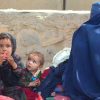
Crisis in Afghanistan: All Eyes on Central Asia
The political and human catastrophe in Afghanistan is threatening to boost autocratic tendencies in Tajikistan and Uzbekistan. With the withdrawal of US and coalition forces from Afghanistan and the rapid takeover by the Taliban, neighbouring Central Asian countries are once again at the focus of international attention.
Needed in the Global South: Wastewater Collection for COVID-19 Detection
Understanding the scale and intensity of the COVID-19 virus and its emerging variants, predicting the pandemic’s direction, and developing and refining associated management response options are challenges likely to confront public-health officials and national governments worldwide well into the future.
Mexico’s Suspicious Shark Fins Exports Under CITES
At “The Lieutenant” (“El Teniente”) fishing site, near La Paz (Baja California Sur’s capital) the boats go by and come in all morning. To chase down sharks, fishers make their way to the Holy Spirit island, some 30 km away from La Paz. They unload the products that will be sold at the city’s fish markets.
Sharks, Victims of Mexican Authorities’ Neglect
The Mexican fisherman Tomás Valencia, aged 70, remembers that around 30 years ago he used to catch a lot of sharks.
Eastern Caribbean Youth Join Calls for Resilient Global Food Systems
As the international community prepares for the landmark United Nations Food Systems Summit, a pivotal gathering as part of a global goal to tackle food insecurity, hunger, biodiversity loss, and climate change through sustainable food production, Caribbean youth say the successful transformation of food systems must include young innovators.
Tonga’s experience: Implementation of Domestic Violence Legislation
Fourteen Pacific Island Countries have enacted specific legislation to address domestic violence. While these laws have been developed to respond to domestic violence, implementation continues to be a challenge. It is affected by various factors that include practical social, cultural, religious, political, environmental and economic challenges.
Haunting Photos of Bangladesh’s COVID Pandemic
 Documentary photographer and filmmaker Mohammad Rakibul Hasan has documented the health crisis in Bangladesh over the past several months. In these haunting images, Hasan brings to life the conditions in which many patients are being treated in poor conditions exacerbated by the COVID-19 pandemic.

Cuba, a Small Island State Seeking to Manage Its Vulnerability
Cuba, already beset by hurricanes, floods, droughts that deplete its main water sources, among other natural disasters, has seen its socioeconomic difficulties, similar to those faced by other Caribbean island nations, aggravated by the COVID-19 pandemic.
As Climate Disaster Migration Rises, Girls Get Married Off
When 11-year-old Mitali Padhi hugged her childhood friends to say goodbye, she felt a deep-seated foreboding.
Resilience in a Riskier World
Over the past two decades, the Asia-Pacific region has made remarkable progress in managing disaster risk. But countries can never let down their guard. The COVID-19 pandemic, with its epicentre now in Asia, and all its tragic consequences, has exposed the frailties of human societies in the face of powerful natural forces. As of mid-August 2021, Asian and Pacific countries had reported 65 million confirmed coronavirus cases and more than 1 million deaths. This is compounded by the extreme climate events which are affecting the entire world. Despite the varying contexts across geographic zones, the climate change connection is evident as floods swept across parts of China, India and Western Europe, while heatwaves and fires raged in parts of North America, Southern Europe and Asia.
Smartphone App Helps Fijians to Grow and Eat Healthier Food
A smartphone app in Fiji is helping users to not only eat better but to help grow food that will contribute to a more nutritious diet.
Drought, Storms, Intense Rainfall and Fires Threatening Millions in Latin America and the Caribbean
In 2020, Brazil, Paraguay and Bolivia faced their worst drought in half a century. The Atlantic Basin saw 30 named storms – the most recorded in a single year. Two category 4 hurricanes achieved an unprecedented feat by making landfall in Nicaragua.
“Don’t Call It Ethnic. Ituri Conflict Is a Mystery”
It is a metallic sound, harmless. It lasts just over a second, but it can become as sharp as a machete blade or as devastating as the burst from an assault rifle. It is a beep, just the beep of a phone notification. A woman is on the ground, her belly open, her intestines exposed and her severed head resting on her arm. A pagne of colorful fabric still girds her hips. Where? Why? Then, a video. Do you hear those voices? It happened there, in that village. It was them who did it, it was them.
Prioritising Profits Reversed Health Progress
Instead of a health system striving to provide universal healthcare, a fragmented, profit-driven market ‘non-system’ has emerged. The 1980s’ neo-liberal counter-revolution against the historic 1978 Alma-Ata Declaration is responsible.
Woman Farmer Shows Way as Small Island Developing State Battles Pandemic’s Impacts
A woman farmer in Samoa is using innovation and technology to overcome economic hardship as the Pacific Island nation seeks ways to adapt to the challenges resulting from the Covid-19 pandemic.
Solutions to Food Insecurity Top Agenda in Meeting of Small Island Developing States
The urgency of finding solutions to the most pressing development challenges of our times has increased as the Covid-19 pandemic threatens to reverse the global momentum in recent years toward achieving the Sustainable Development Goals (SDGs). And small island developing states (SIDS), with their physical remoteness, restricted land and resources and dependence on trade and tourism, are experiencing growing hardship caused by closed borders and plummeting economies.
Southern African Migrants Excluded as COVID-19 Pandemic Grows
Migrants across the Southern Africa region are massively disadvantaged as they find themselves excluded from vaccine programmes – even when the global vaccine initiative COVAX often funds these programmes.
Parliamentarians Determined to Reach ICPD 25 Goals
Politicians from Asia and Africa shared activism anecdotes demonstrating their determination to meet ICPD 25 commitments. They were speaking at a hybrid conference held simultaneously in Kampala, Uganda, and online.« Previous Page — Next Page »





 2026 High-level Political Forum on Sustainable Development. Credit: UN Photo/Eskinder Debebe
In 2015, the United Nations and its Member States adopted the Sustainable Development Goals (SDGs) in an effort to make the world a more sustainable and peaceful place for future generations. Progress on the 17 SDGs has been uneven, and inequality persists across the globe. 10 years after adoption, the 2025 UN SDGs Report revealed that only 35% of the SDG targets are on track, with more than half moving too slowly, and 18% moving backwards from the 2015 baseline. Poverty remains one of the world’s most pressing issues, with hunger, violence, and inequality impeding the opportunities for all people to achieve success. In September 2024, the United Nations Summit of the Future introduced a new goal: to eradicate global poverty by 2030, ensure universal rights to basic services, and increase the overall standard of living in terms of industrialization, economic well-being, citizen health, and literacy. Furthermore, recent shifts in United States foreign aid policy – notably, major budget cuts to USAID and the termination of thousands of development programmes– have severely threatened vital lifelines of financial aid to impoverished communities around the world. Additionally, the United States’ withdrawal from the Paris Climate Agreement has undercut international efforts at sustainable development. With the upcoming 2030 deadline, the UN Secretary-General has called for urgent multilateralism across six priority areas: food systems, energy, digital connectivity, education, jobs and social protection, and climate and biodiversity. IPS sheds light on marginalized communities that struggle on a daily basis to survive and have their stories heard and respected.
Updated by Yilan Batista and Shuli Wong August 2026

The Week with IPS

NEXT STOP - SDGs
Tracking global progress towards a sustainable world
Tracking global progress towards a sustainable world
