Languages
Friday, November 13, 2026



News and Views from the Global South
Development & Aid

Q&A: Why are Stillbirths still Societal Taboo?
Societal taboo and a lack of understanding about stillbirth can cause the issue to be neglected among health practitioners, according to Dr. Danzhen You, a senior adviser on Data and Analytics at the United Nations Children's Fund (UNICEF).
Can Agroecology Feed the World?
Producing food and ensuring nutrition security, protecting the environment and restoring biodiversity, building sustainable and fair food systems: That’s the promise of agroecology.
Budgeting for a Better Future, for Every Child
2020 has not turned out as planned. As the COVID-19 pandemic continues to impact populations around the world, governments have been forced to take a fresh look at their spending and how to meet additional costs of pandemic response as they expect a fall in revenue. Budget information has become even more critical.
COMMENTARY: The Sinatra Doctrine Confronts a Global Consensus
By late September, the COVID-19 pandemic in the United States had claimed 200,000 lives. That’s equivalent to a slightly higher toll than the 418,500 United States deaths in World War II, adjusted for relative population and duration. [See note below.]
Living with Drought: Lessons from Brazil’s Semiarid Region
 No one died of hunger during the worst drought in Brazil's semiarid ecoregion, between 2011 and 2018, in sharp contrast to the past when scarce rainfall caused deaths, looting, a mass exodus to the South and bloody conflicts.

Capture of CO2 and Hydrogen as Part of Latin America’s Energy Future
While struggling to increase the generation and consumption of renewable energy, Latin America is beginning to see the rise of new technologies, such as the capture and storage of carbon and hydrogen from fossil fuels or wind and solar energy.
Child Protection: the Pandemic has Left the Most Vulnerable Children Invisible
A right is an entitlement and it has three basic principles, without which rights cannot be enjoyed. The first principle is that of universality: A right has to be enjoyed by all citizens, including all children. There cannot be a distinction between a Dalit or an Adivasi child and a child who is better endowed.
‘The Sahel – a Microcosm of Cascading Global Risks Converging in One Region’
The European Commission this week pledged $27.8 million in humanitarian support to the Sahel region as floods and the coronavirus pandemic exacerbate the stability in a region deeply in conflict. While the figure is less than 2 percent of the $2.4 billion that the United Nations has appealed for, Amnesty International researcher Ousmane Diallo told IPS that despite past donations from international development partners to Sahelian countries, the situation hasn’t improved over the years.
Mahatma’s Non-Violence: Essence of Culture of Peace for New Humanity
I will begin by presenting to you excerpts from the message from UN Secretary-General António Guterres on the International Day of Non-Violence.
Bulawayo Water Crisis: When the Taps Run Dry and the City Runs out of Ideas
Dotted across the Zimbabwean city of Bulawayo, the water tanks installed in private residences is evidence that years of a water crisis, that has seen some suburbs here going for months without running water, has not spared anyone. The large plastic drums, locally called Jojo tanks after the company that manufacturers them, and which have a storage range of up to 10,000 litres, have assumed a class status of sorts in Bulawayo.
The Plight of Domestic Workers in Brazil
The inclusivity of Brazilian society is put to the test as the coronavirus pandemic highlights a labour sector ripe with historical and structural inequality: domestic work.
Human Trafficking Survivor Harold D’Souza: “The Perpetrators are More Aggressive Than Ever”
The fallout of the COVID-19 pandemic continues: as more people around the world lose their livelihoods, human trafficking is on the rise. Support services for survivors have been shut, and past gains to combat it have been reversed. Funding has dried up.
Food Security Bursts Onto the Global Agenda
The month of October 2020 will be recalled as one of the most important moments in raising awareness about world food security, whether in the global debate or in the search for possible concrete solutions.
A Long, Uneven and Uncertain Ascent
The COVID-19 pandemic continues to spread with over 1 million lives tragically lost so far. Living with the novel coronavirus has been a challenge like no other, but the world is adapting.
Enhanced Social Protection an Opportunity Asia Pacific Must Grasp
In the fight against COVID-19, success has so far been defined by responses in Asia and the Pacific. Many countries in our region have been hailed as reference points in containing the virus. Yet if the region is to build back better, the success of immediate responses should not distract from the weaknesses COVID-19 has laid bare. Too many people in our region are left to fend for themselves in times of need. This pandemic was no exception. Comprehensive social protection systems could right this wrong. Building these systems must be central to our long-term recovery strategy.
Education: Act Now, Don’t Wait for the Bill
School reopening doesn’t mean that education is back on course. For a start, schools remain closed in over 50 countries, affecting more than 800 million students. The poorest ones may never make it back to school, driven by poverty into child labour or early marriage. Distance learning has been out of reach for one third of the 1.6 billion students affected worldwide by school closures. They may disengage altogether if school closures continue.
Limited Liability: Profit Without Responsibility
Limited liability protection for shareholders in joint stock companies was introduced to encourage investments in them. However, it has encouraged irresponsibility, causing much harm while generating profits without responsibility. Limited liability limits responsibility Columbia Law School’s Professor Katarina Pistor has extended her critique of the legal system to emphasize the implications of such limited liability. Limited liability encourages shareholders not to pay attention to the harm corporations they invest in may do.
Low-cost Technology can Have Life-changing Impacts for Rural Women
Access to technology which is relatively inexpensive to deploy can have a life-changing impact for rural women, social scientist Valentina Rotondi told IPS.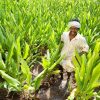
Why Food System Transformation Needs Water
The impact of Covid-19 on supply chains and food security has dealt a blow to the already faltering global development ambition of ending hunger.
NESFAS Partner Communities Celebrate World Food Day
World Food Day, a day dedicated to tackle world hunger, is annually celebrated on October 16, 2020 globally. To commemorate this day, the North East Slow Food and Agrobiodiversity Society (NESFAS) along with its partner organisations — Society for Urban and Rural Empowerment (SURE) and North East Network (NEN), Nagaland — hosted several programmes across 27 communities in Meghalaya and Nagaland. It may be mentioned here that all government SOPs and measures were followed during the events.
Why a Zimbabwean Farming Project Failed: Lessons for Rural Innovation
Many countries in sub-Saharan Africa commit resources to promote agricultural innovations. This is based on the assumption that rural livelihoods are mainly agricultural and that the innovations will increase agricultural production and household income.« Previous Page — Next Page »


 2026 High-level Political Forum on Sustainable Development. Credit: UN Photo/Eskinder Debebe
In 2015, the United Nations and its Member States adopted the Sustainable Development Goals (SDGs) in an effort to make the world a more sustainable and peaceful place for future generations. Progress on the 17 SDGs has been uneven, and inequality persists across the globe. 10 years after adoption, the 2025 UN SDGs Report revealed that only 35% of the SDG targets are on track, with more than half moving too slowly, and 18% moving backwards from the 2015 baseline. Poverty remains one of the world’s most pressing issues, with hunger, violence, and inequality impeding the opportunities for all people to achieve success. In September 2024, the United Nations Summit of the Future introduced a new goal: to eradicate global poverty by 2030, ensure universal rights to basic services, and increase the overall standard of living in terms of industrialization, economic well-being, citizen health, and literacy. Furthermore, recent shifts in United States foreign aid policy – notably, major budget cuts to USAID and the termination of thousands of development programmes– have severely threatened vital lifelines of financial aid to impoverished communities around the world. Additionally, the United States’ withdrawal from the Paris Climate Agreement has undercut international efforts at sustainable development. With the upcoming 2030 deadline, the UN Secretary-General has called for urgent multilateralism across six priority areas: food systems, energy, digital connectivity, education, jobs and social protection, and climate and biodiversity. IPS sheds light on marginalized communities that struggle on a daily basis to survive and have their stories heard and respected.
Updated by Yilan Batista and Shuli Wong August 2026

The Week with IPS

NEXT STOP - SDGs
Tracking global progress towards a sustainable world
Tracking global progress towards a sustainable world
