Languages
Friday, November 20, 2026



News and Views from the Global South
Development & Aid

We Are What We Watch
Consistent exposure to TV series with strong characters has the power to influence mental models in society and shift social norms.
Kenya’s March Towards Demographic Dividend with Investments in Health Sector Partnering with The Netherlands
Demographic dividend is a term which is increasingly preoccupying discussions among development economists and the donor community in general in Kenya. The term refers to countries with the greatest demographic opportunity for development and those that are ushering in a period in which the working-age population has good health, quality education, decent employment and a lower proportion of young dependents. Smaller numbers of children per household generally lead to larger investments per child, more freedom for women to enter the formal workforce and more household savings for old age. When this happens, the national economic payoff can be substantial, and this is the demographic dividend.
Is there a Co-Relation Between Human Development & SDGs?
“People are the real wealth of nations,” began the first Human Development Report (HDR). That 1990 report marked a turning point in the global development debate.
Indigenous Rights Approach a Solution to Climate Change Crisis
The Global Landscapes Forum (GLF) was held in Bonn, Germany to rally behind a new approach to achieving a future that is more inclusive and sustainable than the present – through the establishment of secure and proper rights for all.
India’s Criminal Justice System is Failing Victims of Sexual Violence
Early in 2018, India was shaken by the horrific details surrounding the abduction, gang rape, and murder of an 8-year-old girl in Kathua, a district in the north Indian state of Jammu and Kashmir.
“Unimaginable Horrors” in Libya’s Migrant Detention Centers
For over 10,000 migrants fleeing to Libya from war and violence, their fate often comes down to the mercy of human traffickers or the dark unknown awaiting in detention centers.
Fighting Food Insecurity in Africa – Lessons from the United States
The U.S Agency for International Development (USAID) Administrator Mark Green recently concluded a one-week visit to USAID-funded programs at several African countries, including the Democratic Republic of Congo, Rwanda, Kenya and Mozambique. His goal was to promote sustainable paths to self-reliance, including in the context of food security programs.
How Effective is a Non-Binding Treaty Aimed at Ending Harassment at Work Places?
Against the back drop of widespread charges of sexual abuse and harassment at workplaces-- including the United Nations-- the International Labour Conference (ILC) last week adopted a “Convention” and a set of “Recommendations” to protect workers and employees worldwide.
Looking to the Land in the Climate Change Race
The international community still has a long way to go to chart a new, sustainable course for humanity. But the upcoming climate change meetings provide a renewed opportunity to tackle climate change head on.
Women’s Rights are Key in Slowing Down Population
The increase in world population by 2 billion in the next 30 years will present a serious global challenge especially if we do not find new paradigms of development thought and renewed global political leadership.
A Bad Free Trade Agreement Is Worse than Nothing
With growing economic conflicts triggered by US President Donald Trump’s novel neo-mercantilist approach to overcoming his nation’s economic malaises, many voices now argue that bad free trade agreements are better than nothing. After US withdrawal following Trump’s inauguration in early 2017, there is considerable pressure on signatory governments to quickly ratify the Comprehensive and Progressive Trans-Pacific Partnership (CPTPP), the successor to the TPP.
Is Inclusive Growth an Oxymoron?
After participating in two events on inequality at the Spring Meetings – Making Growth Work for the Poor and Income Inequality Matters: How to Ensure Economic Growth Benefits the Many and Not the Few, I received a surprising number of emails asking whether my remarks on the importance of addressing rising inequality meant I had abandoned growth as the main priority for developing countries.
Blockchain Releases Farmers From the Collateral Trap
A Jamaican start-up has an innovative solution to help smallholder farmers—many of whom do not have the collateral demanded by financial institutions to access loans—build a track record of their production that is proving better than collateral.
Partnering for Youth in Central Asia
Young people around the world are facing increasingly insurmountable, persistent barriers as they try to achieve their full potential and secure a prosperous future. However, Central Asia and the Asia-Pacific have already begun working to ensure that no one is left behind.
Are Hotels Dangerous? Putting in Context Dominican Republic Tourist Deaths
Being a frequent visitor to the Dominican Republic, where I occasionally have enjoyed the high standard, security and excellent service of its resorts, I became puzzled by recent, quiet excessive media reactions to statistically insignificant cases of deaths in these resorts. The number of demises in Dominican resorts have been more or less the same over the years and do not at all differ from those of most other tourist destinations. People die in hotels all over the world. There may even be specific reasons for this and they are far from being unique to the Dominican Republic.
World’s Poorest Nations Weighed Down by Fastest Growing Populations
With a new report projecting a rise in population, specifically in Asia and Africa, the United Nations has warned that continued rapid population growth presents enormous challenges for sustainable development in the world’s 134 developing nations.
From Tony Blair to Mette Frederiksen
Social Democrats, who had been steadily disappearing following the crisis of 2008, have been making a small comeback in the last year. Now they are in power in Spain, Portugal, Sweden, Finland and, most recently, in Denmark.
Low-Income Countries Pay Over 20 Times More for Generic Drugs
A recently-released report by the Washington-based Center for Global Development (CGD) shows that generic drugs, like omeprazole (used to treat heartburn), can cost 20-30 times more in low and middle-income countries than in high-income countries.
Patriotism versus Hope: Eritreans Wrestle with Leaving Home or Remaining
Most media narratives about Eritrea suggest an endless stream of young people fleeing the country, who couldn’t wait to escape. But the reality is far different and more nuanced—both when it comes to those who have left, and those who chose to remain.
Sudan’s Fragile Hope for Democracy
Sudanese civilians risk their lives everyday protesting and campaigning for democracy but they face several obstacles, including street closures and no Internet access.
Sharing the Burden of Refugees; the World Can Do Better
As the world marks World Refugee Day on June 20th to celebrate the strength, courage and perseverance of refugees, a glaring concern remains just how inadequate the global response to the refugee crisis has been.« Previous Page — Next Page »


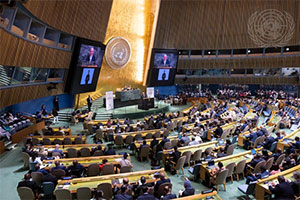 2026 High-level Political Forum on Sustainable Development. Credit: UN Photo/Eskinder Debebe
In 2015, the United Nations and its Member States adopted the Sustainable Development Goals (SDGs) in an effort to make the world a more sustainable and peaceful place for future generations. Progress on the 17 SDGs has been uneven, and inequality persists across the globe. 10 years after adoption, the 2025 UN SDGs Report revealed that only 35% of the SDG targets are on track, with more than half moving too slowly, and 18% moving backwards from the 2015 baseline. Poverty remains one of the world’s most pressing issues, with hunger, violence, and inequality impeding the opportunities for all people to achieve success. In September 2024, the United Nations Summit of the Future introduced a new goal: to eradicate global poverty by 2030, ensure universal rights to basic services, and increase the overall standard of living in terms of industrialization, economic well-being, citizen health, and literacy. Furthermore, recent shifts in United States foreign aid policy – notably, major budget cuts to USAID and the termination of thousands of development programmes– have severely threatened vital lifelines of financial aid to impoverished communities around the world. Additionally, the United States’ withdrawal from the Paris Climate Agreement has undercut international efforts at sustainable development. With the upcoming 2030 deadline, the UN Secretary-General has called for urgent multilateralism across six priority areas: food systems, energy, digital connectivity, education, jobs and social protection, and climate and biodiversity. IPS sheds light on marginalized communities that struggle on a daily basis to survive and have their stories heard and respected.
Updated by Yilan Batista and Shuli Wong August 2026

The Week with IPS

NEXT STOP - SDGs
Tracking global progress towards a sustainable world
Tracking global progress towards a sustainable world
