Languages
Friday, November 20, 2026



News and Views from the Global South
Development & Aid

What They Need: Money, Resources, & a Seat at the Table
As a long-time advocate, I’ve been invited to speak at dozens of global conferences about the needs of girls and women in humanitarian emergencies.
Q&A: “The Knowledge of Local Challenges Can Only Come from Working with People”
The remarkable story of an Adivasi lawyer and social activist who has led peoples’ movements against state development policies, and sought redress for human rights violations of his people in conflict-ridden regions of Maharashtra.
Q&A: Why Treating Leprosy as a Special Disease Violates the Rights of the Person Affected by It
His multiple awards and degrees aside, Dr. Arturo Cunanan is known as a people’s doctor; one who has profound belief in the human rights of every person affected by Hansen’s disease, commonly known as leprosy.
South-South Cooperation: a Path to Implementing UN’s 2030 Agenda
I see five issues that will be central to implementing the Paris Agreement on climate change and achieving the 2030 Agenda for Sustainable Development. South-South Cooperation can offer solutions to all of them. First, rising inequality both between and within countries is eroding trust and deepening a sense of injustice. Globalization has enabled many people to escape poverty – but its benefits are not shared equitably and its costs fall disproportionately on the poor and vulnerable.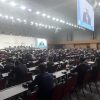
South-South Cooperation Now Triangulates with the North
It sounds like a contradictory play on words, but the countries of the industrialised North are currently the big supporters of South-South cooperation, as was demonstrated at the United Nations Second High-Level Conference on this subject, held in the Argentine capital.
A New Window for Delhi’s Migrant Women & Girls
When the most devastating flood in Bihar’s history came in 1987, Renu Devi recalled that the rampaging waters and landslides had swept away people who were sleeping, along with their beds.
South Florida’s Underserved Refugee Communities
South Florida has long been known as a haven for refugees and migrants. Widely referred to as the “gateway to Latin America”, 1 in every 5 Florida residents is an immigrant. Significantly, the “sunshine state” welcomes 1,000 new settlers every day.
Myanmar and China’s Bride Trafficking Problem
Women and girls from Myanmar are increasingly being trafficked as “brides” to China, a human rights group found.
Call for Returnee Migrants to Join Forces to Fight Irregular Migration
Elhadj Mohamed Diallo wants to make sure that others won’t experience what he has lived through. The former irregular migrant who has returned home to Guinea from a jail in North Africa is calling on his fellow returnee migrants to establish associations in their respective countries, which will serve as powerful platforms to combat irregular migration across the continent.
9 of the 10 Worst Global Risks are Linked to Water
Every year, the World Economic Forum asks some 1,000 decision-makers from the public sector, business, academia and civil society across the globe to assess the risks facing the world over the decade to come.
How One Kenyan Teacher is Lifting His Students Out of Poverty With Science
Keriko Mixed Day Secondary School in Nakuru County, situated in a remote, semi-arid part of Kenya’s Rift Valley, could pass for an ordinary secondary school in any part of Africa. But ordinary it is not.
Dismantling Patriarchy Must Begin at Home: A Reflection on Gender Equality
This week, I joined thousands of activists, campaigners, thought-leaders, and change-makers in New York to advocate for women's rights and promote gender equality during the 63rd session of the UN's Commission on the Status of Women (CSW).
Depression Is More than a Stigma
Depression is often distinguished from other non-communicable diseases or NCDs (e.g., cancer, diabetes, cardio-vascular diseases, hypertension) because of the stigma attached to it. Among other consequences, those suffering from depression are often denied access to medical care. Indeed, the latter is an outcome of interaction between supply of and demand for medical care. On the provider side, stigmatizing attitudes by service providers are identified as a barrier to access. On the demand side, stigma and low mental health literacy by community members are just as emphatically reported as barriers to accessing care.
VIDEO: World Autism Awareness Day 2019 – Assistive Technologies, Active Participation
 Awareness of Austism Spectrum Disorder (ASD) has continued to grow worldwide, in recent years. But the number of diagnoses have continued to increase unabated.

VIDEO: Water for All – World Water Day 2019
Water is a precondition for human existence, and for the sustainability of our planet. It is entwined with almost everything human, from climate change and global economy to gender issues and human rights. 
Climate Change Also Affects Mental Health in Mexico
Minerva Montes lost her home on Holbox Island in 2005 when Hurricane Wilma hit the Yucatan Peninsula in southeastern Mexico. Rebuilding her home was quicker and easier than overcoming the psychological aftermath of the catastrophe.
Belt and Road Initiative vs Washington Consensus
With the Washington Consensus from the 1980s being challenged, President Donald Trump withdrawing the United States from the Trans-Pacific Partnership (TPP), and China pursuing its Belt and Road Initiative (BRI), most notably with its own initiatives such as the multilateral Asian Infrastructure Investment Bank (AIIB), the political and economic landscape in East Asia continues to evolve. Jomo Kwame Sundaram was interviewed about likely implications for developing countries in the region and beyond.
Closing the Gender Gap: The Economic Benefits of Bringing more Women into the Labour Force
As girls, we were raised with the belief that we could accomplish anything, and that no barrier was insurmountable. Yet, for so many women, the reality doesn’t quite meet their aspirations. Things weren’t exactly equal in the relatively conservative middle-class society in India where we both grew up.
Climate Change: a Threat to Agriculture & UN’s Goal to Eradicate Hunger
The United Nations has vowed to eradicate extreme hunger and malnutrition on a self-imposed deadline of 2030. But it is facing a harsh realty where human-induced climate change – including flash floods, droughts, heatwaves, typhoons and landslides-- is increasingly threatening agriculture, which also provides livelihoods for over 40 per cent of the global population.
Fighting the World’s Largest Criminal Industry: Modern Slavery
Modern slavery and human trafficking is one of the fastest growing criminal industries and one of the biggest human rights crises today, United Nations and government officials said.
Q&A: Caribbean Losing Momentum on Climate Change and Concerted Action is Needed
In 2015, the Caribbean was “the region that could” on the climate change scene. Countries rallied under the ‘1.5 to Stay Alive’ banner, in the face of an existential threat. The now former Sustainable Development Minister of Saint Lucia Dr. James Fletcher emerged as a climate change champion at the time. But now, three years on, the scientist is giving regional climate action a C- in an assessment.« Previous Page — Next Page »


 2026 High-level Political Forum on Sustainable Development. Credit: UN Photo/Eskinder Debebe
In 2015, the United Nations and its Member States adopted the Sustainable Development Goals (SDGs) in an effort to make the world a more sustainable and peaceful place for future generations. Progress on the 17 SDGs has been uneven, and inequality persists across the globe. 10 years after adoption, the 2025 UN SDGs Report revealed that only 35% of the SDG targets are on track, with more than half moving too slowly, and 18% moving backwards from the 2015 baseline. Poverty remains one of the world’s most pressing issues, with hunger, violence, and inequality impeding the opportunities for all people to achieve success. In September 2024, the United Nations Summit of the Future introduced a new goal: to eradicate global poverty by 2030, ensure universal rights to basic services, and increase the overall standard of living in terms of industrialization, economic well-being, citizen health, and literacy. Furthermore, recent shifts in United States foreign aid policy – notably, major budget cuts to USAID and the termination of thousands of development programmes– have severely threatened vital lifelines of financial aid to impoverished communities around the world. Additionally, the United States’ withdrawal from the Paris Climate Agreement has undercut international efforts at sustainable development. With the upcoming 2030 deadline, the UN Secretary-General has called for urgent multilateralism across six priority areas: food systems, energy, digital connectivity, education, jobs and social protection, and climate and biodiversity. IPS sheds light on marginalized communities that struggle on a daily basis to survive and have their stories heard and respected.
Updated by Yilan Batista and Shuli Wong August 2026

The Week with IPS

NEXT STOP - SDGs
Tracking global progress towards a sustainable world
Tracking global progress towards a sustainable world
