Languages
Friday, November 20, 2026



News and Views from the Global South
Development & Aid

Has Privatization Benefitted the Public?
In most cases of privatization, some outcomes benefit some, which serves to legitimize the change. Nevertheless, overall net welfare improvements are the exception, not the rule. Never is everyone better off. Rather, some are better off, while others are not, and typically, many are even worse off. The partial gains are typically high, or even negated by overall costs, which may be diffuse, and less directly felt by losers.
An Indigenous Nation Battles for Land and Justice in Bolivia
The ancient Qhara Qhara nation began a battle against the State of Bolivia in defence of its rich ancestral lands, in an open challenge to a government that came to power in 2006 on a platform founded on respect for the values and rights of indigenous peoples.
Sierra Leone: Bio Government’s First Year
If the government of Sierra Leone’s President Julius Maada Bio were to be graded on their first year’s performance in office, it is likely that their report card would read, “promising start, which they must surpass in the years ahead”.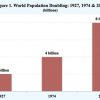
2, 4, 8 and ? Billion People
Two, four and eight billion people is the extraordinary doubling and redoubling of the world’s population that occurred in slightly less than a century. World population, which had grown to 2 billion by 1927, doubled to 4 billion by 1974 and will reach 8 billion by around 2023.
‘The First City Completely Devastated by Climate Change’ Tries to Rebuild after Cyclone Idai
The city of Dondo, about 30 kilometres from Beira, central Mozambique, didn’t escape the strong winds of Cyclone Idai. It is estimated that more than 17,000 families were displaced and more than a dozen schools were destroyed in the city.
Making it in India: Women Struggle to Break Down Barriers Starting a Business
Radhika Baburao Shinde was all of 12 years old when she was married off to a man who was 10 years older. She was sent away to live with her new husband, a truck driver, and his family in remote, drought-prone Satara district, 330 kilometers southwest of Mumbai. She left school and went to work as a laborer on her husband’s family farm.
Devolution CS Eugene Wamalwa Commends UN Kenya support to national development priorities
Devolution and ASALs Cabinet Secretary Hon. Eugene Wamalwa has said that the reforms being carried out by the United Nations are enabling the global agency to align its activities better and coordinate more effectively in delivering on national development priorities.
Bridging the Gaps for the Disabled
People with disabilities are being left behind, and steps must be taken to ensure their inclusion in the world of education and work.
Militarised Government Attempts to Resume Mega-projects in Brazil
Two military-inspired initiatives are leading Brazil's new government, which includes a number of generals, down the path of mega-projects, which have had disastrous results in the last four decades.
Developing Effective and Sustainable Programmes for Those Living with and Affected by Autism Spectrum Disorder
The Kingdom of Bhutan is a landlocked country surrounded by Bangladesh, India and the Tibetan region of China. It is a country that brought the term Gross National Happiness as a concept by which to measure a country’s progress. In April 2017 it celebrated WAAD by hosting the International Conference on Autism & Neurodevelopmental Disorders (ANDD2017) in Thimphu.
Rising Inequalities in Asia-Pacific have become a Major Obstacle to Accelerating Progress
2019 will be a defining year for the 2030 Agenda; and the regional forums will pave the way for our first stocktaking on the SDGs in the General Assembly in September.
Safe Menstrual Practices Important for Progress
As menstruation continues to be shamed in many communities, one organisation is rising up to the challenge to ensure “safe menstruation for all women of Bangladesh.”
Cyclone Idai: A Time to Reassess Disaster Management
It was one of the worst tropical cyclones hit Southern Africa in recent times. Cyclone Idai, which has been characterised by heavy rains and flooding including mudslides in some parts of Mozambique, Zimbabwe, and Malawi, has left more than 750 dead, with thousands marooned in remote rural areas, whilst others are still unaccounted for. More than 1,5 million people are affected by the cyclone in the region.
Anguilla’s Fishers Share their First-Hand Knowledge About Climate Change and its Impact
Fishers in Anguilla saw posted on Youtube this week a video they helped produce that depicts the impacts of climate change on their industry. Titled “Anguilla’s Fishing Dilemma”, the four-and-a-half minute video highlights some of the main challenges Anguilla’s 92 licensed fishers face in earning a living.
“Don’t Tell My Husband I Have Leprosy”: Social Stigma Silences Marshall Islands’ Women
Meretha Pierson has been a nurse for the past seven years, working in the government-run leprosy clinic in Majuro, the capital of the Marshall Islands. Her patients come in all ages, from different economic backgrounds and different professions. But, aside from their diagnosis, they all have something else in common: everyone wants to keep their illness a secret.
NHIF Reform Critical to Affordable Health For All in Kenya
Consider this. One million Kenyans fall into poverty every year due to catastrophic out of pocket health expenditures. For the almost four in every five Kenyans who lack access to medical insurance, the fear that they are just an accident or serious illness away from destitution.
Changing Weather Will Affect Living Standards of Half of India’s Population
The India Meteorological Department (IMD) on January 16 declared that 2018 was the sixth- warmest year in the last 117 years or since 1901, when recording started. Pointing towards changing weather and climate parameters, it also noted that the last monsoon rainfall was the sixth-lowest since 1901.
Monoculture Crops Threaten Community Water Projects in El Salvador
For nearly three decades, several communities in southeastern El Salvador have collectively and efficiently managed the water they consume, but monoculture production and climate change put their water at risk.
World Bank Financializing Development
The World Bank has successfully legitimized the notion that private finance is the solution to pressing development and welfare concerns, including achieving the Sustainable Development Goals (SDGs) through Agenda 2030. A recent McKinsey report estimates that the world needs to invest about US$3.3 trillion, or 3.8 per cent of world output yearly, in economic infrastructure, with about three-fifths in emerging market and other developing economies, to maintain current growth.
The Destruction of the Environment: An Unfolding Tragedy for Humanity
Late last year the World Wide Fund for Nature released their Living Planet Report for 2018. WWF’s estimates were stark: populations of mammals, birds, fish, reptiles, and amphibians have, on average, declined by 60 percent between 1970 and 2014.
World’s Best Teacher Prize and One Million Dollars Awarded to Kenyan Teacher from Impoverished Community
A maths and physical science teacher from an impoverished school in Kenya’s Rift Valley, Peter Tabichi, has won the one million dollar Global Teacher Prize, becoming the first teacher from Africa to clinch the prize established to honour the profession.« Previous Page — Next Page »


 2026 High-level Political Forum on Sustainable Development. Credit: UN Photo/Eskinder Debebe
In 2015, the United Nations and its Member States adopted the Sustainable Development Goals (SDGs) in an effort to make the world a more sustainable and peaceful place for future generations. Progress on the 17 SDGs has been uneven, and inequality persists across the globe. 10 years after adoption, the 2025 UN SDGs Report revealed that only 35% of the SDG targets are on track, with more than half moving too slowly, and 18% moving backwards from the 2015 baseline. Poverty remains one of the world’s most pressing issues, with hunger, violence, and inequality impeding the opportunities for all people to achieve success. In September 2024, the United Nations Summit of the Future introduced a new goal: to eradicate global poverty by 2030, ensure universal rights to basic services, and increase the overall standard of living in terms of industrialization, economic well-being, citizen health, and literacy. Furthermore, recent shifts in United States foreign aid policy – notably, major budget cuts to USAID and the termination of thousands of development programmes– have severely threatened vital lifelines of financial aid to impoverished communities around the world. Additionally, the United States’ withdrawal from the Paris Climate Agreement has undercut international efforts at sustainable development. With the upcoming 2030 deadline, the UN Secretary-General has called for urgent multilateralism across six priority areas: food systems, energy, digital connectivity, education, jobs and social protection, and climate and biodiversity. IPS sheds light on marginalized communities that struggle on a daily basis to survive and have their stories heard and respected.
Updated by Yilan Batista and Shuli Wong August 2026

The Week with IPS

NEXT STOP - SDGs
Tracking global progress towards a sustainable world
Tracking global progress towards a sustainable world
