Languages
Saturday, November 21, 2026



News and Views from the Global South
Development & Aid

The IMF and Climate Change: Three Things Christine Lagarde Can Do to Cement Her Legacy on Climate
The International Monetary Fund (IMF) and climate change do not often appear in the same headline together. Indeed, environmental issues have been, at most, peripheral to the Fund's core functions. But now economists inside and outside the IMF are beginning to understand that climate change has significant implications for national and regional economies, and so it's worth reconsidering the Fund's role in addressing the climate challenge.
Fixing the Food System to Solve Humanity’s Greatest Challenges
We are at a moment of huge opportunity in the world’s food system. We can continue on our current trajectory of consuming too little, too much, or the wrong type of food at an unsustainable cost to the environment, health care and political stability. Or we can change course. Fixing the food system will help solve humanity’s greatest challenges – creating jobs, reducing emissions, and improving health.
Ending Hunger by 2030? This is Possible
The Food and Agriculture Organization (FAO) recently announced that the number of hungry people in the world has increased by 38 million in the past year due to climate change, conflict and slow economic growth. Given this setback, can we, in fact, end hunger in our lifetime? The answer is a resounding, Yes, we can. The first step is simply wrapping our minds around the reality that—yes—ending hunger is possible.
World Bank Must Stop Encouraging Harmful Tax Competition
One of the 11 areas that the World Bank’s Doing Business (DB) report includes in ranking a country’s business environment is paying taxes. The background study for DB 2017, Paying Taxes 2016 claims that its emphasis is “on efficient tax compliance and straightforward tax regimes”.
Rohingya Refugee Women Bring Stories of Unspeakable Violence
Yasmin, 26, holds her 10-day-old baby, who she gave birth to in a crowded refugee camp in Cox’s Bazar, a southeastern district bordering Myanmar.
Hydropower Dams Invade Brazil’s Agricultural Economy
“After being displaced for the third time,” Daniel Schlindewein became an activist struggling for the rights of people affected by dams in Brazil, and is so combative that the legal authorities banned him from going near the installations of the Sinop hydroelectric dam, which is in the final stages of construction.
World Food Day 2017 – Change the future of migration. Invest in food security and rural development
 Large movements of people is one of the most complex challenges the world faces today. In recent years there has been a huge increase in the number of people migrating around the world. Why is this happening and do they have a choice of staying in their own homes ?

Global Green Growth Week 2017 Kicks Off in Addis Ababa
The Global Green Growth Week 2017 (#GGGWeek2017), in its second year, will take place in Addis Ababa, Ethiopia from October 17 – 20 to discuss ways to scale up green growth in Africa and around the world.
How to Eradicate Rural Poverty, End Urban Malnutrition – A New Approach
Population growth, increasing urbanisation, modern technologies, and climate change are transforming the world at a fast pace. But what direction are these transformations headed in? Are they benefitting the poor and the food insecure? And will the food systems of the future be able to feed and employ the millions of young people poised to enter labour markets in the decades to come?
Searching for a Doctor at 3,000 Metres High
Good healthcare can be hard to get – particularly when one lives on top of a mountain. The road to Porcón in the Cajamarca region of Peru, therefore, is as breathtaking as it is sobering. With every step further into its isolated natural beauty, a group of volunteers sent to deliver healthcare essentials are reminded how long the trek would be in an emergency.
Joining Forces to Improve Lives in Honduran Shantytowns
On the north side of the Honduran capital, nine poor neighbourhoods are rewriting their future, amidst the violence and insecurity that plague them as “hot spots” ruled by “maras” or gangs.
Alternative Financing Strategies to Boost Small Businesses in Africa
A few years ago, more than half a century after the concept was first proposed, the government of Côte d’Ivoire completed construction of the Henri Konan Bédié Bridge, a span over the Ébrié Lagoon linking the north and south of Abidjan, the country’s main city. The project became a reality after the government received development bank and private capital financing.
Ghana Aims to Regain Top Spot in Cocoa Production
Ghana is home to the world’s favourite cocoa beans. They’re bigger in size, have a higher butter content and superior flavour – all qualities which make Ghana’s cocoa the world standard against which all cocoa is measured.
Inclusive Electoral Processes: a Pathway to More Peaceful Societies
The Sustainable Development Goals 16 (SDG16) calls on UN Member States to promote responsive, inclusive, participatory and representative decision-making, and to build effective, accountable and transparent institutions at all levels.
Rainwater Harvesting Improves Lives in El Salvador
Filling a jug with water to supply her household needs used to be an ordeal for Salvadoran villager Corina Canjura, because it meant walking several kilometers to the river, which took up a great deal of time, or else paying for water.
Back-to-Back Hurricanes Take Heavy Toll on the Caribbean
As you know, we are coming off a jam-packed High-level week and opening of the General Assembly. Some of the most important speeches during that period came from leaders of Caribbean nations reeling from back-to-back hurricanes.
Why American Overseas Aid Should Focus on SDGs?
The average American believes the US spends a whopping third of its federal budget on foreign aid. Consequently, a majority of people think that too much is spent on foreign aid. That is one reason US President Donald J. Trump, who has campaigned on putting the needs of Americans first, has proposed deep cuts to foreign aid in his 2018 budget.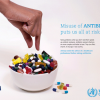
The World Is Running Out of Much Needed New Antibiotics
The world is running out of new antibiotics to combat the growing threat of antimicrobial resistance, a new specialised report warns ahead of this year's World Antibiotic Awareness Week, adding that most of the drugs currently in the clinical pipeline are modifications of existing classes of antibiotics and are only short-term solutions.
US Call for Suspending Arms Sales to Myanmar Faces Road Block in Security Council
When US Ambassador Nikki Haley called for a virtual arms embargo against the repressive and much-maligned military regime in Myanmar, she took a passing shot at two of her fellow veto-wielding, permanent members of the Security Council – namely China and Russia – who are primary arms suppliers to the increasingly politically-isolated nation.
Greater Cooperation To Strengthen Taxation
Since the 1950s, there has been a popular dance called the ‘limbo rock’, with the winner leaning back as much as possible to get under the bar. Many of today’s financial centres are involved in a similar game to attract customers by offering low tax rates and banking secrecy.
Women and Girls: The Hardest Hit Rohingya Refugees
Of the nearly half a million Rohingya refugees who’ve fled across the border and have sought refuge in Bangladesh, women and girls are the most at risk, sleeping under open skies, roadsides, and forest areas with little or no protection.« Previous Page — Next Page »


 2026 High-level Political Forum on Sustainable Development. Credit: UN Photo/Eskinder Debebe
In 2015, the United Nations and its Member States adopted the Sustainable Development Goals (SDGs) in an effort to make the world a more sustainable and peaceful place for future generations. Progress on the 17 SDGs has been uneven, and inequality persists across the globe. 10 years after adoption, the 2025 UN SDGs Report revealed that only 35% of the SDG targets are on track, with more than half moving too slowly, and 18% moving backwards from the 2015 baseline. Poverty remains one of the world’s most pressing issues, with hunger, violence, and inequality impeding the opportunities for all people to achieve success. In September 2024, the United Nations Summit of the Future introduced a new goal: to eradicate global poverty by 2030, ensure universal rights to basic services, and increase the overall standard of living in terms of industrialization, economic well-being, citizen health, and literacy. Furthermore, recent shifts in United States foreign aid policy – notably, major budget cuts to USAID and the termination of thousands of development programmes– have severely threatened vital lifelines of financial aid to impoverished communities around the world. Additionally, the United States’ withdrawal from the Paris Climate Agreement has undercut international efforts at sustainable development. With the upcoming 2030 deadline, the UN Secretary-General has called for urgent multilateralism across six priority areas: food systems, energy, digital connectivity, education, jobs and social protection, and climate and biodiversity. IPS sheds light on marginalized communities that struggle on a daily basis to survive and have their stories heard and respected.
Updated by Yilan Batista and Shuli Wong August 2026

The Week with IPS

NEXT STOP - SDGs
Tracking global progress towards a sustainable world
Tracking global progress towards a sustainable world
