Languages
Sunday, November 22, 2026



News and Views from the Global South
Development & Aid
Increased Adb Aid Will Help Cushion Economic Blows
The Philippines faces prospects of slower growth this year because of external factors. One such factor is the effect of Brexit on the world economy. With Brexit causing the European Union’s already sluggish economy to shrink further, Philippine exports to EU countries in 2016 may end up being less than half of last year’s.
Entrenched Inequalities
Do a girl born in a poor household in rural Balochistan and a boy born in a rich household in Karachi have the same or even a similar set of opportunities in life? Are their chances of acquiring an education similar? Do they have access to comparable healthcare services and facilities? Do they have equal opportunities for access to physical infrastructure and the freedom of movement and association?
Indigenous Villages in Honduras Overcome Hunger at Schools
Barely 11 years old and in the sixth grade of primary school, this student dreams of becoming a farmer in order to produce food so that the children in his community never have to go hungry. Josué Orlando Torres of the indigenous Lenca people lives in a remote corner of the west of Honduras.
Focus on the Supply Side of Terrorism
Clearly, this is a tipping point in our understanding of and approach to ideological terrorism so far as Bangladesh is concerned. Since we have been visited by a series of 'firsts' in so-called jihadi manifestations, perhaps a review is in order.
Displaced Youth: Selling Souls to Sex and Drugs
Omar’s striking blue eyes and well-built physique are accentuated by his fashionable, tight-fitting apparel. At first glance, one would regard him as a carefree young man, blessed with the gifts of intellect and beauty. However, appearances can be deceptive. The traumas of war, displacement and isolation hang over Omar like an ominous shadow.
South Sudan Tense but Calm Following Intense Fighting: UN
The situation in Juba, South Sudan on Thursday was "tense" but "calm" following recent intense fighting, UN Spokesperson for the Secretary General Stephane Dujarric told journalists here Thursday.We’ve Won a Monumental UN Victory, so What?
The important thing about the West Philippine Sea (South China Sea), as far as day-to-day life for Filipinos is concerned, is that our fishermen may continue to do what they and their ancestors have been doing since time immemorial—fish in the waters of the West Philippine Sea. Both because of that, and the affirmation of Philippine sovereignty over those waters, which are inside the UN definitions of what belongs in our EEZ (exclusive economic zone), we rejoice that the UN Permanent Court of Arbitration decided in our favor on Tuesday.
New Study on Earthquake
A new study using ground and satellite GPS monitors have concluded that the north-eastern corner of the Indian subcontinent encompassing Bangladesh, eastern India and parts of Myanmar is at risk of a major earthquake, and the effect when it occurs would be on a massive scale (8.2 to 9 on the Richter scale). The study conducted at the Lamont-Doherty Earth Observatory at Columbia University should be taken seriously, particularly by Bangladesh which has several issues going against it in the event of a major quake.
Is Sustainable Development Hindering Economic Recovery?
The global economic and employment situation is alarmingly protracted, with recovery not expected any time soon. In October 2012, then IMF chief economist Olivier Blanchard indicated he did not see a global economic recovery before 2016.
The Global South’s Untold Human Rights Legacy
While human rights are often viewed as a Western creation, pushed against the will of developing countries, the origins of the international human rights system may prove otherwise, according to a forum held at the the International Peace Institute (IPI) here Wednesday.
Civil Society Organizations Worried About Declining Involvement
Less than a year after the adoption of the global Sustainable Development Goals (SDGs), non-government organizations (NGOs) are concerned about declining possibilities for participation, both at the UN and in national politics.
The Dark Road to Peace in South Sudan
The dark road to Peace in South Sudan began with the manner in which the Machakos Peace agreement was crafted.
IPS Interview with Bernadette Lahai On the Pan African Parliament Food and Nutrition Security Agenda
Dr.Bernadette Lahai, Vice President of the Pan African Parliament (PAP), discusses the multitude of challenges facing the African continent and how the PAP plans to overcome them. With the rise of malnutrition as a direct result of ongoing food insecurity, the Parliament will play an indispensable role in the future of food in the African continent.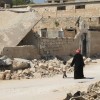
Fighting Violence Against Children as a Global Problem
One billion children experienced physical, sexual or psychological violence in the last year, according to the US Centers for Disease Control and Prevention (CDC), prompting the launch of a new global partnership to tackle the problem here Tuesday.
What Does it Really Mean to “Leave No One Behind”?
Although “leave no one behind” has become a central rallying cry around the UN's Sustainable Development Goals, more needs to be done for it to be put into practice, civil society said during a review conference of progress made on the Post-2030 agenda here this week.
Large-Scale Rainwater Harvesting Eases Scarcity in Kenya
Rainwater harvesting in Kenya and other places is hardly new. But in this water-stressed country, where two-thirds of the land is arid or semiarid, the quest for a lasting solution to water scarcity has driven useful innovations in this age-old practice.Global Coalition Seeks Ban on Mercury Use
A coalition of over 25 international non-governmental organizations (NGOs) has launched a global campaign to end a longstanding health and environmental hazard: the use of mercury in dentistry.
The Future of Food in Cities: Urban Agriculture
Habitat III, the UN’s conference on cities this coming October will explore urban agriculture as a solution to food security, but here in New York City, it has shown potential for much more.
The Eugenics Debate
The current debate on the re-emergence of eugenics is worrying, as most of its proponents seem to be urging for gene manipulation for higher intelligence and beauty, while only a few are concerned with its dystopian implications.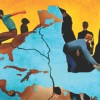
Rethinking the Population Problem
With the knowledge that Bangladesh's population - which was about 75 million in 1971 - now stands bloated to more than 160 million, all crammed into a land area of only 50,260 sq miles and that the population density is already five times that in any other 'mega' country, contemplate the following scenarios and see if you want to picture the country with any further addition to its population. A population that renders running trains to become invisible under loads of humanity spilling out of their interiors and clinging to all over their exteriors, while carrying people to their homes in the countryside on the eve of Eids; traffic jams resulting into prolongation of say a 30-minute trip in the cities to an absurd three-hour trip; unbridled population increase that has already brought down the per capita land to 24 decimals or less and cultivable land to some 11 decimals; law courts reeling under the unwieldy burdens of hundreds of thousands of civil and criminal suits; innumerable daily occurrences of land-related disputes, countless crimes and murders; dying and moribund rivers; desertification and salinity intrusion from the sea; dire inadequacy of water supply causing distress to an enormous segment of the urban and rural population; a catastrophe from the rising sea-level looming large and threatening to submerge one-third of the land area of the country, which could thus engender the need to move and rehabilitate over 50 million internal migrants in the remaining two-thirds of the country's land territory, which could in turn raise the already high population density to an absurd level; fast-shrinking agricultural and cultivable land due to unplanned and uncontrolled urbanisation, industrialisation, infrastructural and development projects implementation; increasing cost of living, healthcare and education, and rampant and ubiquitous corruption and unscrupulousness; admission of even infants to schools depending on lottery and parents' capability to pay donations and; myriads of such other woes afflicting our daily life.
Latin American Development Depends On Investing In Teenage Girls
Latin America’s teenage girls are a crucial force for change and for promoting sustainable development, if the region invests in their rights and the correction of unequal opportunities, according to Luiza Carvalho, the regional head of UN Women.« Previous Page — Next Page »


 2026 High-level Political Forum on Sustainable Development. Credit: UN Photo/Eskinder Debebe
In 2015, the United Nations and its Member States adopted the Sustainable Development Goals (SDGs) in an effort to make the world a more sustainable and peaceful place for future generations. Progress on the 17 SDGs has been uneven, and inequality persists across the globe. 10 years after adoption, the 2025 UN SDGs Report revealed that only 35% of the SDG targets are on track, with more than half moving too slowly, and 18% moving backwards from the 2015 baseline. Poverty remains one of the world’s most pressing issues, with hunger, violence, and inequality impeding the opportunities for all people to achieve success. In September 2024, the United Nations Summit of the Future introduced a new goal: to eradicate global poverty by 2030, ensure universal rights to basic services, and increase the overall standard of living in terms of industrialization, economic well-being, citizen health, and literacy. Furthermore, recent shifts in United States foreign aid policy – notably, major budget cuts to USAID and the termination of thousands of development programmes– have severely threatened vital lifelines of financial aid to impoverished communities around the world. Additionally, the United States’ withdrawal from the Paris Climate Agreement has undercut international efforts at sustainable development. With the upcoming 2030 deadline, the UN Secretary-General has called for urgent multilateralism across six priority areas: food systems, energy, digital connectivity, education, jobs and social protection, and climate and biodiversity. IPS sheds light on marginalized communities that struggle on a daily basis to survive and have their stories heard and respected.
Updated by Yilan Batista and Shuli Wong August 2026

The Week with IPS

NEXT STOP - SDGs
Tracking global progress towards a sustainable world
Tracking global progress towards a sustainable world
