Languages
Sunday, November 22, 2026



News and Views from the Global South
Development & Aid

Uganda Ill-Equipped for Growing Cancer Burden
Lying on a dirty bed in a crowded, squalid hostel in Kampala, emaciated Jovia, 29, managed a weak smile as a doctor delivered her a small green bottle containing a liquid.
Biswal’s Dreams Just Pretentious Prattle
So Nisha Biswal, the US State Department’s point person on Sri Lanka, says that Sri Lanka could be another Singapore. That will be the day. If after six visits to the country in 20 months she has still not grasped the basics of Sri Lanka’s socio-political culture and mores, the lack of respect for law and order and the rule of law infused by political interference and intimidation, she could hardly be a messenger of hope and good sense.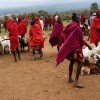
Rights of Indigenous Peoples ‘Critical’ to Combat Climate Change
No longer it is about restoring the legitimate rights of over 370 indigenous peoples spread across 70 countries worldwide, many of them living in dire situation, but now about their central, critical role in combating climate change.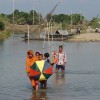
Indian Climate Activist Ponders the ‘Unthinkable’
For acclaimed Indian novelist and essayist Amitav Ghosh, the future of humankind as global warming impact events spread worldwide looks grim. So grim that the 60-year-old pamphleteer has titled his new book of three climate-related essays "The Great Derangement."
Beyond Rhetoric: UN Member States Start Work on Global Goals
UN member states “are going beyond rhetoric and earnestly working to achieve real progress” towards the Sustainable Goals, the members of the Group of 77 and China said in a ministerial statement delivered here on 18 July.
Devastating Droughts Continue as El Nino Subsides
Although the devastating El Niño of 2015 to 2016 has now subsided, in many parts of Africa, Central America and Southeast Asia rains and harvests are not expected to recover until 2017.
Economic Recovery Needed To Enhance Food Security
After a half century of decline, agricultural commodity prices rose with oil prices in the 1970s, and again for a decade until 2014. Food prices rose sharply from the middle of the last decade, but have been declining since 2012, and especially since last year, triggering concerns of declining investments by farmers.
Feminism Slowly Gaining Support at United Nations
Achieving gender equality has long been one of the United Nations’ top priorities yet the word feminism has only recently begun to find its way into speeches at UN headquarters.
Global List of Smart Cities Gives MM Kulelat Status
IESE, the graduate school of business of the University of Navarra, recently released a ranking of the “smart cities” of the world. This is a yearly ritual for the Opus Dei-founded school, which has a solid reputation as one of the best graduate schools of business in Europe.Kashmir on Fire
Kashmir is bleeding once again. Many innocent civilians have been brutally killed and many more injured by the Indian security forces. Surprisingly, there is a deafening silence in the local media. No views, no comments whatsoever have appeared. Strangely, the media, which is otherwise very active and springs into action on the slightest violation of human rights, kept mum as if Kashmiris are not human, their blood carries no importance and is cheaper than water. Many nowadays are voicing serious concerns about the rights of drug addicts killed by the police but not a single word for Kashmiris.
The Importance of Soft Power
The world is at war with extremists. Developed and developing nations, whether it is France, the United States, Russia or China, the Middle East or countries in the sub-continent, we are all battling one form of Muslim militancy or another. And while alliances are being forged on a regional or trans-continental basis to fight outfits like the Boko Haram, Al Qaeda or the Islamic State (IS), and battles are being fought out on land in Iraq Syria, Libya or Yemen, on the streets of Paris or in Dhaka, every nation that has faced the onslaught of extremists who are connected to a global network of jihadists that is increasingly sophisticated, the realisation that they are now battling for the 'hearts and minds' of the populace is emerging.
Forests: To Farm or Not to Farm? This Is the Question!
The dilemma is critical: on the one hand, there is an absolute need to produce more food for the world’s steadily growing population; on the other, there is pressing urgency to halt -and further revert- the increasing trend to deplete the forests, which are as necessary for human survival as it is for ensuring their dietary needs.
Germany’s Energy Transition: The Good, the Bad and the Ugly
Immerath, 90 km away from the German city of Cologne, has become a ghost town. The local church bells no longer ring and no children are seen in the streets riding their bicycles. Its former residents have even carried off their dead from its cemetery.
Implementing the Sustainable Development Goals: The Sooner, the Better
The first 1000 days after the adoption of the Sustainable Development Goals are critical, according to a report published last week, urging UN member states to take action quickly.
Fast-track Development Threatens to Leave Indigenous Peoples Behind
Fast-tracked development often means that indigenous people and their territories get run over and their rights are not taken into consideration, Roberto Borrero, from the International Indian Treaty Council and Indigenous Peoples Major Group, said here Friday.
Ramifications of Terror Attacks in Bangladesh
At a time when Bangladesh has broken the 6 percent growth trap and has begun its journey towards achieving a faster growth of about 7 percent, and at a time when Bangladesh has achieved the status of a lower middle income country with a per capita income of USD1314 in 2015, it experiences the greatest shock in recent times. This has suddenly changed the perspective on Bangladesh. The ruthless killing of 20 lives, including 17 foreigners at the Holey Artisan Bakery of Gulshan in Dhaka on July 1, 2016, by terrorists has brought new realities for Bangladesh. A country which boasts to be a moderately Islamic country, holding the values of Islam yet being tolerant to other religions and a country that is reputed for its warmth and hospitality towards foreign nationals, has come under the global radar due to the brutality of recent terror attacks. While the grief for the lost lives is going to make a permanent place in our hearts, the implications of this painful episode on other spheres of lives cannot be ignored either.
Biodiversity, GMOs, Gene Drives and the Militarised Mind
A recent report from the National Academy of Science of The United States, titled Gene Drives on the Horizon : Advancing Science, Navigating Uncertainty, and Aligning Research with Public Values”, warns:
Rewriting Africa’s Agricultural Narrative
Albert Kanga Azaguie no longer considers himself a smallholder farmer. By learning and monitoring the supply and demand value chains of one of the country’s staple crops, plantain (similar to bananas), Kanga ventured into off-season production to sell his produce at relatively higher prices.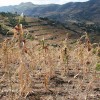
‘Monster’ El Niño Subsides, La Niña Hitting Soon
As if human-made armed conflicts, wickedness, rights abuse, gender violence, cruel inequality and climate catastrophes were not enough, now the saying “God Always Forgives, Men Sometimes, Nature Never” appear to be more true than ever. See what happens.
What can Development Banks do to Protect Human Rights?
In a petition signed by 150 NGOs, the Coalition for Human Rights in Development have called for development banks to make sure that human rights are respected by their beneficiaries.
Women Empowerment Holds the Key for Global Development
Latin America's inclusion of women in its development model, with greater participation within the work force and improved wage conditions, was a decisive factor in the region's successful diminishment of extreme poverty.« Previous Page — Next Page »


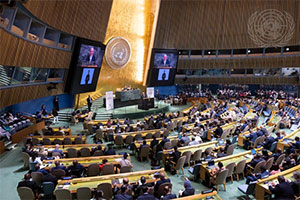 2026 High-level Political Forum on Sustainable Development. Credit: UN Photo/Eskinder Debebe
In 2015, the United Nations and its Member States adopted the Sustainable Development Goals (SDGs) in an effort to make the world a more sustainable and peaceful place for future generations. Progress on the 17 SDGs has been uneven, and inequality persists across the globe. 10 years after adoption, the 2025 UN SDGs Report revealed that only 35% of the SDG targets are on track, with more than half moving too slowly, and 18% moving backwards from the 2015 baseline. Poverty remains one of the world’s most pressing issues, with hunger, violence, and inequality impeding the opportunities for all people to achieve success. In September 2024, the United Nations Summit of the Future introduced a new goal: to eradicate global poverty by 2030, ensure universal rights to basic services, and increase the overall standard of living in terms of industrialization, economic well-being, citizen health, and literacy. Furthermore, recent shifts in United States foreign aid policy – notably, major budget cuts to USAID and the termination of thousands of development programmes– have severely threatened vital lifelines of financial aid to impoverished communities around the world. Additionally, the United States’ withdrawal from the Paris Climate Agreement has undercut international efforts at sustainable development. With the upcoming 2030 deadline, the UN Secretary-General has called for urgent multilateralism across six priority areas: food systems, energy, digital connectivity, education, jobs and social protection, and climate and biodiversity. IPS sheds light on marginalized communities that struggle on a daily basis to survive and have their stories heard and respected.
Updated by Yilan Batista and Shuli Wong August 2026

The Week with IPS

NEXT STOP - SDGs
Tracking global progress towards a sustainable world
Tracking global progress towards a sustainable world
