Languages
Sunday, November 22, 2026



News and Views from the Global South
Development & Aid

Time to Change Expectations: Zero Retribution to Zero Tolerance
The drugging, abduction and violent gang rape of a 16-year-old girl in Rio de Janeiro, Brazil calls us all to turn the tide of sexual violence against women and girls in Brazil and in every country in the world.
It’s Time to Tell Livestock’s Untold Secret
As nations attempt to usher in a new era of global development, seeking to satisfy both the Paris climate agreement and Sustainable Development Goals, there is one natural resource that has remained untapped.
Banking on the Milk of Human Kindness
The recent launch of Amaara, New Delhi's first human milk bank, has been greeted with much cheering. The initiative endorses the long-term goal of reducing infant mortality and addresses the critical issue of lack of mothers' milk for physically fragile newborns in India's capital city.
Can Poor Countries Combat Big Tobacco Too?
This year for World No Tobacco Day on May 31 the World Health Organization has recommended that countries adopt plain packaging as a way to reduce tobacco use, however so far mostly only rich countries have been able to afford to implement the changes.
African Leaders Make an Economic Case for Increased Nutrition Investments
Africa’s contribution to global malnutrition statistics is miserably high, with 58 million children under the age of five said to be too short for their age, while 13.9 million weigh too little for their height.
A Jarring Anomaly of Society
It is easy to miss stories about child domestic workers being tortured and killed. Easy because stories of children being killed have become eerily regular. It is May 28 and there is the report of 14-year-old Konika Rani being hacked to death by a drug addict with three of her classmates also grievously injured by him. There is also the horror of having to read about a six-year-old being left critically wounded after being raped by her neighbour. Next to this is the news of 11-year-old Hasina Akhter dying in hospital from the fatal wounds inflicted on her, presumably by her employers.
Achieving Universal Access to Energy; Africa Caught Between a Rock and a Hard Place
“It is unacceptable that 138 years after Thomas Edison developed the light bulb, hundreds of millions of people cannot have access to electricity to simply light up the bulb in Africa,” says Africa Development Bank (AfDB) Group President, Akinwumi Adesina, mourning the gloomy statistics showing that over 645 million people in Africa lack access to electricity, while over 700 million are without clean energy for cooking.
When the UN Comes Under Heavy Fire
When heads of government and foreign ministers make their annual pilgrimage to the United Nations in September, it is rare to hear hard-hitting, headline-grabbing political statements from the podium.The Price of Non-Governmental Growth
It is well known that since the 1980s, Bangladesh has made astonishing progress on a wide variety of development indicators such as reducing the prevalence of extreme hunger and poverty, increasing primary education enrolment rates, and reducing child and maternal mortality. This progress has been mirrored by an impressive record of sustained GDP growth, spanning decades. In contrast to these successes, the quality of our democratic institutions has languished to the point where they now threaten to undermine all these hard-won gains. This article argues that the provision of public goods and services by non-governmental organisations (NGOs) has not only contributed to these successes, but also to this failure.
Latest Population Projection of 25 Million Poses Serious Challenges
The most recent population projections expect the Island’s population to reach 25 million by 2042 and 25.8 million by 2062. It is expected to stabilise around the mid 2060s at 25-26 million. This is a significant departure from earlier projections that expected population stability much earlier at around 23-24 million in the 2030s and to decline thereafter.
Menstrual Hygiene Gaps Continue to Keep Girls from School
Around the world girls are struggling to stay in school when their menstrual hygiene needs are forgotten or ignored, yet the water, sanitation and hygiene (WASH) and education sectors have remained reluctant to address the issue.
New International Accord to Tackle Illegal Fishing
A new international accord to tackle illegal and under-reported fishing will come into force on June 5.
Malawi’s Drought Leaves Millions High and Dry
It’s Saturday, market day at the popular Bvumbwe market in Thyolo district. About 40 kilometers away in Chiradzulu district, a vegetable vendor and mother of five, Esnart Nthawa, 35, has woken up at three a.m. to prepare for the journey to the market.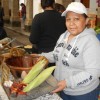
Traditional Mexican Recipes Fight the Good Fight
In a clay pot, Araceli Márquez mixes tiny Mexican freshwater fish known as charales with herbs and a sauce made of chili peppers, green tomatoes and prickly pear cactus fruit, preparing a dish called mixmole.
UNFPA Funding Cuts Threaten Women’s Health in Poorer Nations
The UN Population Fund (UNFPA), which has played a key role in ensuring maternal health and promoting reproductive rights of millions of women world-wide, is expected to suffer over $140 million in funding cuts by Western donors this year.
A Disaster-in-Waiting
In a recent interview with BBC, India's minister of water resources Uma Bharti unveiled her government's massive plan to divert major rivers including the Ganges and Brahmaputra. According to the Guardian, the project is just waiting for a rubber stamp from the environment ministry of India. While we do not want to be alarmists, it is hard to ignore the fact that, if implemented, the project will rob Bangladesh, a riverine country, of her very lifelines.
Poorest Countries Have Progressed but Fragile Countries Lag Behind
The world's poorest countries are making development gains, yet challenges remain, particularly for so-called fragile countries affected by conflict or other disasters.
The Humanitarian Clock Is Ticking, The Powerful Feign Deafness
The humanitarian clock is now ticking away faster than ever, with over 130 million of the world’s most vulnerable people in dire need of assistance. But the most powerful, richest countries—those who have largely contributed to manufacturing it and can therefore stop it, continue to pretend not hearing nor seeing the signals.
New and Old Vaccines Still Out of Reach for Many
While long-awaited new vaccines for malaria and dengue may finally be within reach, many of the world’s existing vaccines have remained unreachable for many of the people who need them most.
Least Developed Countries Still Face Significant Challenges
Since the establishment of the Least Developed Countries (LDCs) category in 1971, the international community has worked hand in hand to support its most vulnerable members.The Caracas Crunch
After Uruguay`s former president José Mujica last week declared that Nicolás Maduro was `mad as a goat`, the latter chose to wear the insult as a badge of honour, announcing at a rally: `Yes, I`m as mad as a goat, it`s true. I`m mad with love for Venezuela, for the Bolivarian revolution, for Chavez and his example.« Previous Page — Next Page »


 2026 High-level Political Forum on Sustainable Development. Credit: UN Photo/Eskinder Debebe
In 2015, the United Nations and its Member States adopted the Sustainable Development Goals (SDGs) in an effort to make the world a more sustainable and peaceful place for future generations. Progress on the 17 SDGs has been uneven, and inequality persists across the globe. 10 years after adoption, the 2025 UN SDGs Report revealed that only 35% of the SDG targets are on track, with more than half moving too slowly, and 18% moving backwards from the 2015 baseline. Poverty remains one of the world’s most pressing issues, with hunger, violence, and inequality impeding the opportunities for all people to achieve success. In September 2024, the United Nations Summit of the Future introduced a new goal: to eradicate global poverty by 2030, ensure universal rights to basic services, and increase the overall standard of living in terms of industrialization, economic well-being, citizen health, and literacy. Furthermore, recent shifts in United States foreign aid policy – notably, major budget cuts to USAID and the termination of thousands of development programmes– have severely threatened vital lifelines of financial aid to impoverished communities around the world. Additionally, the United States’ withdrawal from the Paris Climate Agreement has undercut international efforts at sustainable development. With the upcoming 2030 deadline, the UN Secretary-General has called for urgent multilateralism across six priority areas: food systems, energy, digital connectivity, education, jobs and social protection, and climate and biodiversity. IPS sheds light on marginalized communities that struggle on a daily basis to survive and have their stories heard and respected.
Updated by Yilan Batista and Shuli Wong August 2026

The Week with IPS

NEXT STOP - SDGs
Tracking global progress towards a sustainable world
Tracking global progress towards a sustainable world
