Languages
Sunday, November 22, 2026



News and Views from the Global South
Development & Aid

African Staple Plantains at Risk of Same Diseases as Bananas
Anna Gamusi, has been growing ‘matooke’ - plantains - for over 20 years. She originally learnt how to grow them in her home village of Busolwe in Eastern Uganda, but says that they are no longer grown there.
Public Primary Boarding Schools in Pastoral Communities
Jonathan Tipapa is a nine year-old boy whose daily journey to and from school exposes him to many dangers that have seen him come close to dropping out of school -- like many of his friends who can be seen running after cows even on school days. He attends Enkutoto primary school in the expansive Narok South Constituency in the Rift Valley region, approximately 70 miles from the capital Nairobi.
Panama’s Expanded Canal Faces a Challenging Scenario
When the new locks of the expanded Panama Canal begin operations, they will do so amidst numerous challenges, because of the storm clouds hanging over the global economy, especially China. But local authorities and experts are not worried about the possible impact on the expanded canal.
The Empowerment of Women Will Be Central to Realising Sustainable Global Development
“Planet 50-50 by 2030: Step It Up for Gender Equality” – the theme of this year’s International Women’s Day serves as a timely reminder that, despite incremental progress of recent years and the ambition of the new global development agenda, we must redouble efforts to achieve a world underpinned by gender equality. All women must be empowered to realise their full and equal rights. But what does it actually mean to step it up for gender equality?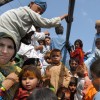
Border Restrictions Violate 1951 Refugee Convention
When the United Nations commemorated “Zero Discrimination Day” on March 1, there was an implicit commitment by the 193 member states to abhor all forms of discrimination – including against women, minorities, indigenous people, gays and lesbians and those suffering from AIDS.
Tanzania Farmers, Pastoralists Launch Forum to Resolve Water Conflicts
At a remote village of Itunundu in Iringa, farmers and pastoralists recently met to discuss the best way to share land resources while charting out a strategy to prevent unnecessary fights among themselves. No one in the village ever imagined that this meeting would ever take place as the two groups had for long considered themselves enemies: they often clashed for water and pastures to feed their animals thus causing deaths and loss of property.Civil Society to Build Bridges With Private Sector
To successfully implement the UN’s 17 Sustainable Development Goals (SDGs), adopted by world leaders last September, it is time for "Turning Conversations into Action."Toys of Violence
In this age of advanced technology, where violent forms of entertainment thrive on the screen and in cyberspace, parenting becomes a challenging task, as children want to emulate what they see. The adoption of a resolution last year by the Sindh Assembly demanding a ban on the manufacturing, import and sale of toy guns often used in actual hold-ups was a step in the right direction.
Schools are in for Summer
“We are extremely jubilant over the rebuilding of our school that the Taliban destroyed it in 2013, due to which we used to sit without a roof,” Mujahida Bibi, a student of 8th grade in Government Girls Middle School North Waziristan Agency, told IPS.
Central America Makes Uneven Progress in Clean Energy
Over the last decade, Central America has managed to reduce its dependence on fossil fuels for the production of electric power, while expanding coverage. But the progress made by each country varies widely.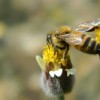
Asian Scientists Grapple with How to Foster Crop Pollination
Pollinators, whose role is essential in a third of what the world eats, are at center stage after a landmark new United Nations report warned that many of the 20,000 species are threatened by human behaviour.Political Violence, “Rational Ignorance”, and “Political Illiteracy” in Bangladesh
There was yet another shocking headline in this daily (February 22): “Priest killed, devotee shot”. Some “unknown” assailants raided a Hindu temple, slit the throat of a priest, and shot a devotee at Panchagarh in northern Bangladesh. This wasn't a random violent crime. Of late, there is nothing exceptional about premeditated attacks on minority communities or on people holding divergent views on religion and politics across the country.
Anti-Retrovirals but No Food
Silindiwe Moyana, an HIV positive mother of five from Chipinge east of Zimbabwe, cannot hide her anxiety. She was worried she might not survive this year as drought-induced starvation stalks her and her family. The country is in the throes of a devastating drought which has compromised the nutrition of people living with HIV.Garbage, Garbage Everywhere, but…
Imagine a river bursting its banks and flooding entire cities and towns. But when the river is made of malodorous garbage and is in Beirut, this is a stark and dramatic situation affecting the city’s 2.226 million people. It all started in July 2015, when the Lebanese administration closed the major landfill of the city. Since then, trash is being piled all over the streets of Jdeideh in Beirut’s northern suburbs. This river of garbage grew steadily, as reported in recent days by a wide section of news media, including Al Jazeera, CNN and Reuters. Thousands of kilometers away in Pakistan, a very similar situation is reported by Dawn.
World’s Rural Poor Need Social Protection, Says UN
The success of the UN’s post-2015 development agenda is predicated on one underlying theme: no one should be left behind – and certainly not the world’s rural poor --in the fight to eradicate hunger and poverty by 2030.
Tackle ‘Hidden Hunger’ by Improving Food Systems
Nutrition is complex and multi-dimensional. Micronutrient deficiencies or ‘hidden hunger’ are much more widespread than chronic undernourishment or hunger, understood as inadequate dietary energy. Micronutrient deficiencies refer to the lack of essential vitamins, minerals and other substances required over the human life cycle by the body in small amounts. Micronutrient undernutrition has long-term effects on health, learning ability and productivity, leading to high social and public costs, reduced work capacity in populations due to high rates of illness and disability, and loss of human potential.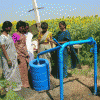
Groundwater Governance in Andhra Pradesh
India is the largest user of ground water in the world. But reliance of this overexploited resource has reached its limits in many parts of the country. Nowhere is this more evident than in the drought-prone districts of Rayalseema, uplands of Prakasam, Krishna, East-West Godavari, parts of Nellore, Vizianagaram and Srikakulam in the state of Andhra Pradesh (AP). Forty per cent of the state’s irrigation needs are met through groundwater. In the drought-prone Rayalseema region – which comprises Chittoor, Anantapur, Kurnool, Prakasam and Kadapa districts -- dependence on groundwater for irrigation is particularly high. The water crisis is also most severe in this region.
Mexico’s Chinampas – Wetlands Turned into Gardens – Fight Extinction
David Jiménez grows two kinds of lettuce and other fresh produce on his “chinampa” or artificial island just under one hectare in size in San Gregorio Atlapulco, on the south side of Mexico City.
Free Speech and Free Media: Help or Hindrance to Development? / Part 2
The second part: the relevance of free speech and free media to development. Freedom is the central object of development, says Amartya Sen. He argues that development cannot simply be seen as GNP or industrialization or social modernization.
Europe: The Schengen Agreement In Danger
Exclusion of Greece from the European free travel zone established by the Schengen Agreement is pending. The European Commission has ruled that the Athens government has “seriously neglected its obligations to control its own borders,” and if the deficiencies are not corrected within three months, the other member states of the Schengen area may exclude it from the agreement. In 2015, some 850,000 people seeking asylum and work in northern European countries passed through Greece, and the influx is continuing.
Faith Leaders Join the Fight against Child Marriage
Anger is an inner demon that one must have a strong grip on, believes Virayya Shastri - head priest of Maddi Madugu Anjaneya Swamy temple in southern India’s Mahbubnagar district. But mention ‘child marriage’ and the priest finds himself struggling to stay calm. ““Early marriage ruins a girl’s body and scars her mind. There is no way you can call yourself a believer when you support such a thing,” says the priest turned anti-child marriage advocate.« Previous Page — Next Page »


 2026 High-level Political Forum on Sustainable Development. Credit: UN Photo/Eskinder Debebe
In 2015, the United Nations and its Member States adopted the Sustainable Development Goals (SDGs) in an effort to make the world a more sustainable and peaceful place for future generations. Progress on the 17 SDGs has been uneven, and inequality persists across the globe. 10 years after adoption, the 2025 UN SDGs Report revealed that only 35% of the SDG targets are on track, with more than half moving too slowly, and 18% moving backwards from the 2015 baseline. Poverty remains one of the world’s most pressing issues, with hunger, violence, and inequality impeding the opportunities for all people to achieve success. In September 2024, the United Nations Summit of the Future introduced a new goal: to eradicate global poverty by 2030, ensure universal rights to basic services, and increase the overall standard of living in terms of industrialization, economic well-being, citizen health, and literacy. Furthermore, recent shifts in United States foreign aid policy – notably, major budget cuts to USAID and the termination of thousands of development programmes– have severely threatened vital lifelines of financial aid to impoverished communities around the world. Additionally, the United States’ withdrawal from the Paris Climate Agreement has undercut international efforts at sustainable development. With the upcoming 2030 deadline, the UN Secretary-General has called for urgent multilateralism across six priority areas: food systems, energy, digital connectivity, education, jobs and social protection, and climate and biodiversity. IPS sheds light on marginalized communities that struggle on a daily basis to survive and have their stories heard and respected.
Updated by Yilan Batista and Shuli Wong August 2026

The Week with IPS

NEXT STOP - SDGs
Tracking global progress towards a sustainable world
Tracking global progress towards a sustainable world
