Languages
Sunday, November 22, 2026



News and Views from the Global South
Development & Aid

Zika Epidemic Offers Sanitation a Chance in Brazil
Three decades of dengue fever epidemic did not manage to awaken a sense of urgency in Brazil regarding the need for improving and expanding basic sanitation. But the recent surge in cases of microcephaly in newborns, associated with the Zika virus, apparently has.
Free Speech and Free Media: Help or Hindrance to Development? / Part 1
The greatness of a newspaper is not measured by the size of its readership but by its influence and credibility. That is why the New York Times or the Guardian are better known and more respected than the tabloids in their respective countries with ten times their circulation. Like those broadsheets, The Daily Star too strives for quality over circulation, influence over income and credibility over sensationalism.
Malawi’s Refugee Crisis
Imagine fleeing from your home because you feel unprotected by the people who are required to do so by law. And when you get to where you feel safer, the very same people come to persuade your keepers to let you come back with them, claiming you are running away from nothing! Well, this is the situation some 5,800 Mozambican nationals have found themselves in. Hundreds of them, including unaccompanied children, have been fleeing from Tete Province, near the Malawi border, since late last year following renewed fighting between government forces and opposition Renamo fighters.UNDP Pledges to Help Eradicate Poverty, Hunger By 2030
The UN Development Programme (UNDP) celebrated its 50th anniversary this week with a pledge to help implement the UN’s post-2015 development agenda aimed at eliminating extreme poverty and hunger by 2030. When the agency was founded in 1966, one in every three people was living in poverty. But that number has changed to one in eight, according to UNDP figures.
Obama in Cuba: the Reasons for His Trip
At this stage of the process that began in December 2014 with the surprise announcement of the opening of relations between the United States and Cuba, hardly anything counts as spectacular news. The detail in the decision by Washington and Havana that made news in the traditional sense (man bites dog) was that the plan to sit down and talk implied that Cuba gave up its prior demand that the embargo be lifted. The United States, for its part, accepted that Cuba did not undertake to make any special changes to its own political system.
Fall in Commodity Prices Rings Alarm Bells in Papua New Guinea
Resource-rich Papua New Guinea (PNG) is seen as an economic powerhouse in the Pacific Islands with a state-led focus on resource extraction initially expected to drive one of the world’s highest growth rates of 15 per cent last year. But in the wake of falling commodity prices, GDP growth has plummeted from 8.5 per cent in 2014 to a forecasted 3 per cent this year. As the government faces a growing deficit between revenue and expenditure, exacerbated by high public debt, experts in the country believe greater efforts to diversify the economy are essential.
Groundwater Crisis Worsens Food Insecurity
Sijabuliso Nleya has been kept busy in the past few weeks digging up sand. He is not a sand poacher like scores of people who local district councils across the country say are digging along dry river beds for sand used in the construction of houses. "The situation is terrible," said Nleya, who owns a plot in Douglasdale, a small farming community on the outskirts of Bulawayo.Mideast Arms Supplies Continue Despite Falling Oil Prices
The continued decline in oil prices is threatening to have a direct and indirect impact on several fronts, including development aid, migrant workers and remittances, voluntary contributions to UN agencies, humanitarian assistance to refugees and infrastructure-building in the Gulf countries.
Argentina’s Ties with China: Pragmatism over Politics
Argentina’s new government is reviewing several major projects to be carried out jointly with China. But aside from a few changes in priorities, the administration is not expected to put the brakes on an alliance that Beijing classifies as strategic.
UNDP at 50 Seeks Broad Coalition Targeting Sustainable Development
Fifty years ago, one in every three people around the world was living in poverty. It was against that backdrop that the United Nations Development Programme, UNDP, was founded in 1966. Ever since, UNDP has been a leader in working for a more fair and prosperous world for all. We have worked with governments, civil society, the private sector, and philanthropy to empower people and build resilient nations.
Uneducated Women Entrepreneurs Defeat Poverty
Maryam Yousuf, 50, gently washes her hands under a common tap outside her house in Saida Kadal, a grassy middle-class locale encircled by the famous Dal Lake in Srinagar, Kashmir’s capital. She puts on a Pheran, the traditional long loose gown, and holding a large steel bucket walks towards a dimly-lit cowshed, made up of wooden shingles, in a corner of her home backyard. Nearby, children are playing cricket, flaunting wooden sticks as bats, and a flock of chicken cluck and nibble at left-over vegetables.
World Leaders Agree to Save the Planet – Now It’s Time to Actually Do It!
The day, 12 December 2015 was historic. Following decades of negotiations, countries agreed to sign the first global, legally binding climate agreement.125 Million Crying for Help Symbolize World’s 11th Largest Nation
Ban Ki-moon maybe fighting a losing battle to resolve one of the biggest humanitarian problems facing the world body – even as he completes his last 10 months as UN Secretary-General.
Sterilisation of HIV-Positive Women
Mayimuna Monica* has been living with HIV for over 10 years and wants to have a baby. But she can’t because her uterus was removed against her will at a government hospital where she had gone to deliver her last child now aged eight. “My uterus was removed in 2007. When I got pregnant and went for medical check-up, the doctor asked me why I was pregnant. I told him I want to have a third child. The doctor said, you people living with HIV at times annoy us because you understand your situation but you come to disturb us.” Mayimuna narrates.
El Salvador Pension Reform Could Take Women into Account
El Salvador is debating reforms of the country’s privatised pension system, which could introduce changes so that it will no longer discriminate against women.
Rice: Africa’s Ticket Out of Poverty
Africa is eating more rice than other food staples, though it produces less than it needs. This is good news for the cereal's potential to help Sub Saharan Africa out of poverty according to researchers. Rice is the second most important source of calories in Sub-Saharan Africa, according to the Africa Rice Center (AfricaRice), a research organisation working to contribute to poverty alleviation and food security.
TPP’s Threat To Multilateralism
2015 proved challenging for multilateralism, especially in relation to development concerns. July’s Addis Ababa third Financing for Development (FfD) conference delivered little real progress. Nevertheless, the September Sustainable Development Goals summit redeemed hopes with an ambitious and universal Agenda 2030.
The tragedy of Darfuri asylum-seekers in Uganda
After escaping the genocide in Sudan’s Darfur region during which his father and two brothers were killed and his mother and sister displaced, Adam (named changed), began a new chapter. But it was a life “in limbo”. Over a decade later, he remains trapped in a strange country where he struggles to prove his identity; cannot find work or receive financial support.
Latin America’s Indigenous Peoples Find an Ally in the Pope
“We want Pope Francis’ message to come true…We want the rights of indigenous people to be supported, respected and strengthened,” Yuam Pravia, a representative of the Misquito native people, said in this city in southern Mexico.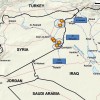
Big War Lords Playing Brinkmanship Game in Syria
When 25 million Syrians--half of them refugees abroad or at home and the other half terrorised by daily bombing, learnt that major world leaders in their meeting in Germany launched an unprecedented confrontation threatening with unleashing World War III, instead of easily agreeing on a ceasefire to alleviate their inhumane suffering, they most probably fell into an even deeper desperation. See what happened.
Gulf migration at an inflexion point
The steep fall in global oil prices has hit Gulf economies severely. Saudi Arabia, United Arab Emirates (UAE), Qatar, Bahrain are expected to run huge budget deficits as shrinking revenues from selling cheaper oil cannot fund their mounting expenditures. As they tighten their belts, the brunt of adjustment will be felt by migrants, who constitute the bulk of the labour force. Reforms include cutting fuel, power, water, education subsidies and a value-added tax (VAT). This will affect migrants and reports indicate family members are returning home.« Previous Page — Next Page »


 2026 High-level Political Forum on Sustainable Development. Credit: UN Photo/Eskinder Debebe
In 2015, the United Nations and its Member States adopted the Sustainable Development Goals (SDGs) in an effort to make the world a more sustainable and peaceful place for future generations. Progress on the 17 SDGs has been uneven, and inequality persists across the globe. 10 years after adoption, the 2025 UN SDGs Report revealed that only 35% of the SDG targets are on track, with more than half moving too slowly, and 18% moving backwards from the 2015 baseline. Poverty remains one of the world’s most pressing issues, with hunger, violence, and inequality impeding the opportunities for all people to achieve success. In September 2024, the United Nations Summit of the Future introduced a new goal: to eradicate global poverty by 2030, ensure universal rights to basic services, and increase the overall standard of living in terms of industrialization, economic well-being, citizen health, and literacy. Furthermore, recent shifts in United States foreign aid policy – notably, major budget cuts to USAID and the termination of thousands of development programmes– have severely threatened vital lifelines of financial aid to impoverished communities around the world. Additionally, the United States’ withdrawal from the Paris Climate Agreement has undercut international efforts at sustainable development. With the upcoming 2030 deadline, the UN Secretary-General has called for urgent multilateralism across six priority areas: food systems, energy, digital connectivity, education, jobs and social protection, and climate and biodiversity. IPS sheds light on marginalized communities that struggle on a daily basis to survive and have their stories heard and respected.
Updated by Yilan Batista and Shuli Wong August 2026

The Week with IPS

NEXT STOP - SDGs
Tracking global progress towards a sustainable world
Tracking global progress towards a sustainable world
