Languages
Sunday, November 22, 2026



News and Views from the Global South
Development & Aid

Are We Entering Into a Long Term Stagnation?
Larry Summers, Clinton’s minister of treasury, has made few friends in life. At that time, he was instrumental in eliminating the Glass Stegall Banking Law, which since 1933 separated the bank’s customer deposits from the financial activities of the Stock Exchange, releasing a flood of money which created the present monster financial system.
Clean Water, Sanitation & Hygiene For All by 2030
Last year we watched with cautious optimism as UN chief Ban Ki-moon welcomed the new Sustainable Development Goals, and called upon the world to meet them.Civil Wars Threaten to Break up a Volatile Middle East
As civil wars and cross-border military conflicts continue to escalate in the Middle East, Syria, Iraq and Libya are in danger of breaking up —even as the Islamic State in Iraq and Syria (ISIS) continues to make territorial gains in the volatile region.
Outsourcing Jobs, Insourcing Labour & Increasing Profits
For decades “outsourcing” jobs from wealthy developed countries to low-wage developing countries has been a major strategy of many corporations, industries and businesses to increase profits by reducing labor costs and operating expenses.
‘Worse Than World War I’
When the leaders of 28 European states enjoy again this week their exclusive flights, luxurious suites and official limousines, to meet for a new summit in Brussels to adopt a final decision on their proposed plan of using refugees as bargaining chips, 20.000 Syrians will most probably be still starving in the Idomeni camp in Greece, in a situation that has been described as “worse than World War I.”
Fat’s Heavy Burden on the World Economy
About 2.1 billion people are regarded as overweight or obese today, or almost thirty per cent of the world’s population. With over 800 million people estimated to be chronically hungry in the world, it appears that the number of overweight is more than 2.5 times the number of undernourished.Fighting Poverty
When it comes to the biggest challenges facing Bangladesh, surely poverty is one of the most crucial. And there is still much work to be done. Despite cutting the rate of extreme poverty from 34 percent in 2000 to just 13 percent today, 20 million Bangladeshis still live in conditions considered to be ultra poor. Living on less than Tk. 43 per day can be immensely difficult, and for some, it can create a trap that's almost impossible to escape.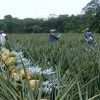
Post COP21: Costa Rica’s Innovation Must Become the Global Norm
The Paris agreement means countries and corporations will be compelled to act much more quickly on making agricultural commodity production more sustainable. Companies must look beyond their supply chains. Farmers need support to overcome barriers such as: struggle with ineffective farming practices, lack of investment and fluctuating commodity prices.
Turkey’s Crackdown on the Press
On the evening of March 4, heavily armed police forced their way into the headquarters of the Turkish daily Zaman. The hundreds of protesters that had gathered in front of the building in an Istanbul suburb in solidarity with their newspaper were violently dispersed.
Can Europe Survive – Back to a Better Yesterday?
The last formal act of European disintegration was the last negotiation between 28 European leaders and the Prime Minister of Turkey. The deal, against all international treaties, is a total capitulation to European values. Europe will give Turkey 6 billion dollars, and in exchange Turkey will keep refugees from coming to Europe. Or better, will screen everybody, and send to Europe only the Syrians who are eligible for political asylum.
Palestinian Refugees from Syria
In the safety of his sister's bare flat in Beit Hanoun, Gaza, 42 year-old Iyad Yusef still shakes his head in disbelief when he recounts the journey that from war-torn Syria, brought him and his family to the relative safety of the blockaded strip.
Clean Clothes – Fashion Free of Slave Labour in Argentina
In Argentina, there are now 20 brand names that guarantee that their garments are produced by workers in decent working conditions, thanks to the Clean Clothes network, aimed at eradicating slave labour in the garment industry, which illegally employs some 30,000 people in sweatshops around the country.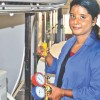
Increasing Women’s Access to Skills and Jobs
"My daughter and I were a burden on my parents,” says 20-year-old Moushumi Akter Mou from Mirpur. Married off at the age of 14, Mou could not complete her schooling. After her daughter was born, her husband remarried, leaving her feeling vulnerable and hopeless. “I felt that if I had a job, my life might be worthwhile.”
Enriching Education in Bangladesh
About a year ago, seven year-old Afroza Khatun dropped out of school as her mother could not continue supervising her homework. The interruption in her grade II lessons was soon noticed by a teacher of an information education centre known as ENRICH, a state-funded programme which aims at supporting children who drop out to continue their education from the primary level (up to grade II).
Repressive NGO Act
Nearly two weeks after controversially winning a fifth term, it has emerged that Uganda’s President Yoweri Museveni has signed another repressive law which restricts the operations of thousands of NGOs working in the country.UN Says it Shattered Glass Ceilings Creating a Carpet of Shards
In the 1960s, when gender discrimination was widespread at the United Nations, there was a story doing the rounds of a woman candidate who had applied for a mid-level professional job in the UN Secretariat.
Rural Community Fights a Second Dam and a New Expropriation of Land
In 1976, the construction of a hydroelectric dam destroyed farmland in the rural municipality of Chicoasén in southern Mexico. Forty years later, part of the local population is fighting a second dam, which would deprive them of more land.
“Take My Iraqis and Give Me Some Syrians” – Europe to Turkey
In a yet another violation of international laws and their own human values, 28 European countries have just agreed with Turkey to open a new “bazaar” of refugees, this time using the old barter system. i.e. Iraqis and Afghans in exchange of Syrians.
Women “Water Friends” Script a Success Story
Prema Bai, 58, bends her head and pushes hard her wheelchair on the village road. In the early afternoon, the village of Mamna appears almost deserted although it is home to 742 families and is located in Uttar Pradesh - India’s largest and most populated state. Thanks to a severe drought, every man and woman under 50 has fled Mamna in recent weeks, leaving behind the elderly and women with very young children. “They thought we were like cattle, a burden in this hard time because we only eat but yield no returns,” says Bai whose two sons and their wives also migrated to Agra -- a city 255 km away -- to work in a brick kiln.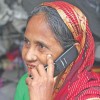
Linking Rural Development with SDGs
The 2030 agenda for sustainable development undoubtedly proposes an exciting vision, and promises a future of peace and prosperity; but these goals will not be easy to achieve unless we develop effective global partnerships and learn from the outcomes of Millennium Development Goals (MDG). We need to investigate both the successes and failures of MDGs, set our focus on result-oriented development, and encourage government and their development partners to think about the linkages between plan, policy, delivery and monitoring in resource mobilisation and management.
Every Day Is a Good Day to Hear More Women in the Media
On International Women’s Day newspapers and radio shows are filled with women’s voices. Yet too often the media’s attention is fleeting. These are the best of times, but without a doubt also the worst of times, for journalism and journalists – especially women in the media.« Previous Page — Next Page »


 2026 High-level Political Forum on Sustainable Development. Credit: UN Photo/Eskinder Debebe
In 2015, the United Nations and its Member States adopted the Sustainable Development Goals (SDGs) in an effort to make the world a more sustainable and peaceful place for future generations. Progress on the 17 SDGs has been uneven, and inequality persists across the globe. 10 years after adoption, the 2025 UN SDGs Report revealed that only 35% of the SDG targets are on track, with more than half moving too slowly, and 18% moving backwards from the 2015 baseline. Poverty remains one of the world’s most pressing issues, with hunger, violence, and inequality impeding the opportunities for all people to achieve success. In September 2024, the United Nations Summit of the Future introduced a new goal: to eradicate global poverty by 2030, ensure universal rights to basic services, and increase the overall standard of living in terms of industrialization, economic well-being, citizen health, and literacy. Furthermore, recent shifts in United States foreign aid policy – notably, major budget cuts to USAID and the termination of thousands of development programmes– have severely threatened vital lifelines of financial aid to impoverished communities around the world. Additionally, the United States’ withdrawal from the Paris Climate Agreement has undercut international efforts at sustainable development. With the upcoming 2030 deadline, the UN Secretary-General has called for urgent multilateralism across six priority areas: food systems, energy, digital connectivity, education, jobs and social protection, and climate and biodiversity. IPS sheds light on marginalized communities that struggle on a daily basis to survive and have their stories heard and respected.
Updated by Yilan Batista and Shuli Wong August 2026

The Week with IPS

NEXT STOP - SDGs
Tracking global progress towards a sustainable world
Tracking global progress towards a sustainable world
