Languages
Saturday, November 7, 2026



News and Views from the Global South
Development & Aid

‘International Demand for Coltan Is Linked to Violence in the DRC’
CIVICUS speaks with Claude Iguma, a mining governance expert with a PhD in Social Sciences, who is based in Bukavu, South Kivu province, eastern Democratic Republic of the Congo (DRC).

HLPF 2025: Civil Society Is Not A Service Provider – We Are The Frontline Of Transformation
As delegates gather in New York over the coming weeks for the 2025 High-Level Political Forum (HLPF), we see this moment as a test. A test of whether world leaders are serious about rescuing the Sustainable Development Goals (SDGs) - or content to let the promises of Agenda 2030 drift quietly into irrelevance.
Sweet Hope to End Bitter Pills for Multidrug-Resistant Tuberculosis
Every day, Yondela Kolweni has to hold down her son, who screams and fights when it is time for his daily life-saving TB tablets—a painful reminder of her battle with the world’s top infectious killer disease. “It is a fight I win feeling awful about what I have to do,” says Kolweni (30), a Cape Town resident and a TB survivor. “The tablets are bitter, and he spits them out most of the time, and that reminds me of the time I had to take the same pills.”
WHO, UNICEF Find the World Is Off Track To Meet Childhood Immunization Goals
The latest data highlights that the world is off track to meet the targets set by the Immunization Agenda 2030 (IA2030) to achieve 90 percent global immunization coverage for essential childhood vaccines and halve the number of unvaccinated children by 2030.
Trump Tech Big Bro: Monopoly Is Best
Trump’s billionaire cronies want more monopoly profits, not competition. With more policies crafted for them, wealth concentration is set to become greater than ever.
Financing for Whom? Trials & Tribulations from the Fourth Financing for Development in Seville
The Fourth International Conference on Financing for Development (FfD4) took place in Seville, Spain from 30th June to 3rd July amidst intensifying attacks on multilateralism, unprecedented cuts to global aid and development financing, and regression of decades of progress in the fight against poverty.
A Crisis of Contagion and Collapse: Why Cholera Continues To Be a Problem in the DRC
The Democratic Republic of Congo (DRC) is grappling with one of its worst cholera outbreaks in recent history, exposing deep systemic cracks in public health, water infrastructure, and humanitarian response, leaving its youngest citizens in peril.
Can the Cali Fund Deliver on Its Billion-Dollar Biodiversity Pledge?
When the Cali Fund was unveiled in February on the sidelines of COP16.2 in Rome, the announcement sent ripples through the global conservation community. For the first time ever, companies that profit from digital sequence information (DSI)—the digitized genetic material of plants, animals, and microorganisms—will be expected to pay into a multilateral fund to protect the very biodiversity they benefit from.
The Risks Artificial Intelligence Pose for the Global South
Artificial intelligence (AI) is rapidly developing and leaving its mark across the globe. Yet the implementation of AI risks widening the gap between the Global North and South.
NATO’s Trillion-dollar Gamble: The Dangers of Defence Without Accountability
Donald Trump’s bullying tactics ahead of NATO’s annual summit, held in The Hague in June, worked spectacularly. By threatening to redefine NATO’s article 5 – the collective defence provision that has anchored western security since 1949 – Trump won commitments from NATO allies to almost triple their defence spending to five per cent of GDP by 2035. European defence budgets will balloon from around US$500 billion to over US$1 trillion annually, essentially matching US spending levels.
#KeepHopeAlive Through Education
On the first International Day of Hope, we are all responsible to #KeepHopeAlive for the children impacted by the world’s most severe humanitarian crises. Perhaps the strongest responsibilities lie with those entrusted to lead the world and make the right moral and legal choices. This is especially so today, when we have led the world into an abyss of excruciating pain for nearly a quarter of a billion innocent children now suffering brutal conflicts and violence, forced displacement and punishing climate disasters – without quality education.
Will the FfD4 Sevilla Commitment Ever be Followed up?
The extensive plan of action adopted at the 4th International Conference on Financing for Development (FfD4), held recently in Sevilla, Spain (30 June - 3 July), triggers the question: Where will the money come from?
UN Reform: Is it Time to Renew the Idea of Clustering the Major Environmental Agreements?
“Never let a good crisis go to waste.” Winston Churchill’s famous maxim feels very relevant today, when multilateralism and many environmental causes seem to be in retreat. We now face a triple planetary crisis of climate change, biodiversity loss, and pollution.
Conflict, Climate Change Push Migrants in Yemen to Return to Their Home Countries
Yemen's humanitarian crisis, driven by conflict, economic collapse and climate shocks, leaves migrants desperate to return to their home countries.
WFP Deputy Chief Describes Unprecedented Humanitarian Crisis in Gaza
Carl Skau, Deputy Executive Director of the World Food Programme (WFP), described the dire humanitarian situation in Gaza following his recent visit, speaking at a press briefing at the UN Headquarters on July 11.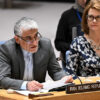
Afghan Refugees Expelled from Iran and Exposed to Horrific Abuse
Since early June, Afghan refugees in Iran have endured increasingly harsh humanitarian conditions, with many being forced to repatriate under conditions that violate the principles of international humanitarian law. In 2025 alone, over one million refugees have returned to Afghanistan, further stretching the limited supply of resources amid a severe and multifaceted humanitarian crisis.
The Race Towards Clean Energy: A World Still Gripped by Coal
Global investments in energy exceeded USD 3 trillion in 2024, with at least USD 2 trillion being invested in clean energy technology and infrastructure. Infrastructure. Despite that progress, fossil fuel consumption continues to rise with little sign of slowing.
UN Funding Crisis Threatens Work of Human Rights Council
The United Nations Human Rights Council (HRC) has expressed concern at the UN High Commissioner for Human Rights’ announcement that certain activities mandated by the council cannot be delivered due to a lack of funding. The council has sought clarity on why certain activities had been singled out.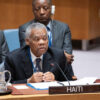
Escalating Gang Violence in Haiti Threatens to Override State Control
Over the month of June, the security situation in Haiti has taken a considerable turn for the worse, with armed gangs continuing to coordinate brutal attacks, seizing more territory, and obstructing critical humanitarian aid deliveries. In the past week, new waves of hostilities were reported in the nation’s Centre Department, which has elicited concern from humanitarian organizations that gang influence could soon completely overpower state control.
HIV/AIDS Funding Crisis Risks Reversing Decades of Global Progress
UNAIDS called the funding crisis a ticking time bomb, saying the impact of the US cuts to the President’s Emergency Plan for AIDS Relief (PEPFAR) could result in 4 million unnecessary AIDS-related deaths by 2029.
The New Silk Road of Central Asia: Landlocked Countries Now Connected
Once landlocked, now connected, the UN Global Compact has bridged the gap between Europe, Asia, and the Middle East: having many call it the “New Silk Road”.« Previous Page — Next Page »





 2026 High-level Political Forum on Sustainable Development. Credit: UN Photo/Eskinder Debebe
In 2015, the United Nations and its Member States adopted the Sustainable Development Goals (SDGs) in an effort to make the world a more sustainable and peaceful place for future generations. Progress on the 17 SDGs has been uneven, and inequality persists across the globe. 10 years after adoption, the 2025 UN SDGs Report revealed that only 35% of the SDG targets are on track, with more than half moving too slowly, and 18% moving backwards from the 2015 baseline. Poverty remains one of the world’s most pressing issues, with hunger, violence, and inequality impeding the opportunities for all people to achieve success. In September 2024, the United Nations Summit of the Future introduced a new goal: to eradicate global poverty by 2030, ensure universal rights to basic services, and increase the overall standard of living in terms of industrialization, economic well-being, citizen health, and literacy. Furthermore, recent shifts in United States foreign aid policy – notably, major budget cuts to USAID and the termination of thousands of development programmes– have severely threatened vital lifelines of financial aid to impoverished communities around the world. Additionally, the United States’ withdrawal from the Paris Climate Agreement has undercut international efforts at sustainable development. With the upcoming 2030 deadline, the UN Secretary-General has called for urgent multilateralism across six priority areas: food systems, energy, digital connectivity, education, jobs and social protection, and climate and biodiversity. IPS sheds light on marginalized communities that struggle on a daily basis to survive and have their stories heard and respected.
Updated by Yilan Batista and Shuli Wong August 2026

The Week with IPS

NEXT STOP - SDGs
Tracking global progress towards a sustainable world
Tracking global progress towards a sustainable world
