Languages
Tuesday, November 10, 2026



News and Views from the Global South
Population
POPULATION-PAKISTAN: Illegality Inducing Unsafe Abortions
For thousands of Pakistani women, the World Population Day message of ‘Family planning is a right, let’s make it real’’ must sound hollow when they must resort to unsafe, illegal abortions while a debate on whether termination of pregnancy is Islamic or not rages on.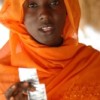
Q&A: Family Planning In Its Infancy in South Sudan
With few roads and almost no health and education infrastructure for the estimated 10 million people of South Sudan - an April census has yet to release any results - health care workers have an enormous task ahead of them.POPULATION-INDIA: One-Child Ideal Catching On
Ponni, 27, lay quiet on a missionary hospital bed in this small town, groggy from the anaesthetic administered to her for a caesarean delivery a couple of hours earlier.
HEALTH-SOUTH SUDAN: Welcome New Attention to Maternal Care
A vast pregnancy has swollen the tiny woman walking South Sudan's shining new maternity ward clutching two pieces of paper stapled together. She looks no more than 16, wide-eyed with recent pain.POPULATION-MIDEAST: Israel Fears the Womb More Than the Bomb
Israeli Prime Minister Ehud Olmert has laid it out in the starkest possible terms for his fellow Israelis. If they do not relinquish control of the occupied territories, he has warned them, Israel will ultimately cease to exist as a Jewish and democratic state.
POPULATION-MIDEAST: Time Bomb Ticking Away in Gaza
Crowded into a tiny strip of territory of 360 square kilometres, plagued by poverty, malnutrition and unemployment, Gaza's 1.5 million people face a demographic time bomb as the fragile infrastructure struggles to cope with a soaring birth rate.
Q&A: "There Are No Negotiations Between Syria and Israel"
"There are no negotiations between Syria and Israel in Istanbul - what is happening is an indirect exchange of messages via Turkey, to explore ways towards a possible negotiation," Syrian Information Minister Mohsen Bilal told IPS.
AGRICULTURE-CHAD: Farmers, Herders Collide In Southern Refugee Camps
Clarisse Larlombaye was nearly ruined when a herd of cows got into her rice field one night. The tiny 900-square-meter plot, outside the U.N.-run Gondje refugee camp in lush southern Chad is the sole source of income for Larlombaye and the two other Central African refugees she shares it with.
COLOMBIA: The General Ingrid Hugged
General Mario Montoya Uribe, the national commander of the Colombian army, whom Ingrid Betancourt thanked on Wednesday for rescuing her from captivity, has a controversial service record.
ENVIRONMENT-CHAD: Peacekeepers Try To Tread Lightly
Polish army Lieutenant Colonel Marc Gryga didn’t realize he was planning on building his country’s major base here in eastern Chad on top of a cemetery. "It didn’t look like any cemetery you see in the United States or Europe," he says, referring to absence of headstones.
HEALTH-SOUTH AFRICA: Refugees Denied Access to Health Care
Refugees and migrants do not have adequate access to health care services in South Africa, aid organisations and NGOs say. This is particularly detrimental for those who are HIV-positive and in need of continuous antiretroviral (ARV) medication: interrupted treatment can mean illness, development of drug-resistance and ultimately death.CHINA: ‘Within a Generation Beijing Will Cease to Exist’
Few in the Chinese capital are aware of the price their city would pay for staging the world’s first ‘green Olympics’ in August. The fabulous capital of Chinese emperors and the epitome of modern China’s ambitions is being driven to extinction by its chronic lack of water. And the Olympic games are expediting the city’s slow demise, according to experts.
PARAGUAY: Fourteen Years in the Wilderness
Indigenous Enxet people are still waiting for the restitution of their ancestral lands, nearly three years after the Paraguayan state was convicted by the Inter-American Court of Human Rights of usurping territory and violating basic rights. Meanwhile, they endure overwhelming poverty.RIGHTS-KENYA: Doubly Displaced
The Kenyan government says Operation Rudi Nyumbani - Return Home in Kiswahili - is almost complete; most of the camps for internally displaced people are closed and the remaining IDPs will be resettled within a week or two. But the hastily implemented programme is being called into question by Kenya's civil society and human rights activists.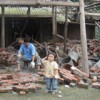
CHINA: Quake Highlights Urban Privilege
1970 - The height of the Cultural Revolution. A severe quake ripples through rural China’s Yunnan province in the south. The response from the communist leadership in far away Beijing arrives swiftly - tens of thousands of little Red Books with quotations from chairman Mao Zedong and as many badges with his image. The rescue efforts are complete with thousands of letters of sympathy from the capital.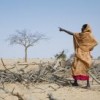
REFUGEES-CHAD: Water and Wood Shortages Worsen
Every morning soon after sunrise, Fatne Abdaraman walks a short distance across the Iridimi refugee camp in eastern Chad hauling a twenty-litre plastic jug. She lines it up along with other women's containers at the water distribution point, then awaits her turn to draw her daily allotment of one of Central Africa's scarcest resources, one that underpins ongoing conflict in the region.HEALTH-KENYA: Malaria Rises to Highland Areas
The end of June marks the start of the malaria season in East Africa. After the long rains, conditions in lowland swamps and coastal regions are more conducive for mosquito breeding. But in recent years malaria has also appeared in the highland areas where it was previously unheard of.NICARAGUA: Asylum for Refugees – At Last
Salvadoran refugee Matías Carazo has lived in legal limbo in Nicaragua for more than 26 years. In 1982 he fled from the military in his country who accused him of being a sympathiser of the leftwing guerrillas, and only now is he able to seek protection under a law granting him official refugee status.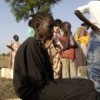
SUDAN: Cracks In North-South Peace Deal
Nyandeng Akot rushed out of the rude shelter of thatch and plastic sheeting pinned against the side of a tree with sticks. Grabbing a passing aid worker's arm, she said she has nothing except the four children that she grabbed when she began running from renewed fighting in Sudan's Abyei area a month ago.AUSTRALIA: Concerns For Refugees Despite Better Treatment
While Prime Minister Kevin Rudd’s government has been promoting recent improvements in its treatment of refugees and asylum seekers during national Refugee Week serious concerns regarding the health, welfare and safety of those seeking protection in Australia remain.RIGHTS: Let May 11 Be A Turning Point For A More Tolerant, Safe, and Prosperous South Africa
June 20 is World Refugee Day. Early this week, the Consortium for Refugees and Migrants in South Africa (CoRMSA) launched a report documenting just how far South Africa has to go in protecting the rights of foreigners in our midst.« Previous Page — Next Page »





 One Thousand Internally Displaced Persons (IDPs) Relocated from Tomping Camp in South Sudan. Credit: UN Photo/Isaac Billy
It took hundreds of thousands of years for the world’s human population to cross one billion in 1804. Approximately 200 years later, the population has multiplied sevenfold. In 2023, the global population crossed 8 billion, and is expected to reach 9 billion before 2050. With the planet more crowded than ever, it is essential to keep track of population trends, urbanization, migration, and reproduction across the world.
Life expectancy has seen significant strides in the past century, largely due to economic development and increased standards of living. On the contrary, trends in global fertility are shifting, with certain regions in Africa and Asia reporting higher rates, while parts of Europe and North America report stagnant or lower rates. This is in part due to differences in sexual and reproductive healthcare, as well as societal and economic conditions around the world. For example, child marriage is prevalent in certain societies, where childbearing is also considered a familial duty. Meanwhile, stagnating economies frequently experience lower marriage and childbearing rates.
The increase in migration and urban development around the world is also linked to global population trends. By 2050, it is expected that approximately 66 percent of all people will live in cities. Furthermore, global crises such as warfare and natural disasters also prompt transnational migration. Transnational migration is linked to a variety of socioeconomic issues in both host and receiving countries: migrants often leave developing countries with less access to educational and economic opportunities and arrive in developed countries where they are frequently the targets of ethnic, racial, and cultural discrimination, and economic exploitation. Recent crises in Europe and the United States demonstrate the importance of advocating for migrants worldwide. As migrants from the Global South are increasingly stripped of their legal and civic rights in unlawful deportations, or targeted in acts of identity-based violence, it is essential to keep track of population trends and protect the human rights of migrant populations. Climate-related disasters are now a major driver of displacement, with nearly half of all new internal displacements in 2025 being disaster-related.
IPS is devoted to covering issues surrounding population trends, migration, and reproduction through its compelling articles, which use both statistics and human stories to provide readers with robust and informative viewpoints.

The Week with IPS

NEXT STOP - SDGs
Tracking global progress towards a sustainable world
Tracking global progress towards a sustainable world
