Languages
Thursday, October 8, 2026



News and Views from the Global South
Population

Investing in Arab and Asian Youth For a Sustainable Future
As the youth population has increased to unprecedented levels in Arab and Asian regions, governments need to do more to invest in them.
Climate Change Response Must Be Accompanied By a Renewed Approach to Economic Development
In the face of the many challenges posed by climate change, Panos Caribbean, a global network of institutes working to give a voice to poor and marginalised communities, says the Caribbean must raise its voice to demand and support the global temperature target of 1.5 °C.
Deaf or Dead? The Unbearable Choice for some TB Patients
Like death, hearing loss is irreversible. I never imagined that I would have to choose between the two until seven years ago when I became infected with tuberculosis (TB), a contagious disease caused by an airborne bacterium.
Making Every Euro Count in the Fight Against Malnutrition
Everybody wants to end hunger. That is what all UN-member countries stated when signing the 2030 Agenda for a better world: the second of its 17 goals aims at eradicating all forms of malnutrition (which include overweight, obesity or micronutrient deficiencies) and ensuring that everybody has access to nutritious and healthy foods.
How to Green Uganda’s Cities
Locals in Kampala, Uganda’s capital, always have two or three things to say in a conversation about how the city is developing. Some say it is filthy because of the growing waste; others say it is a slum because of its unplanned settlements; and then there are those who say it is just plain inconvenient because of the traffic congestion created by the boda boda (motorcycle taxis) and commuter taxis that honk incessantly as they make their way along the streets.
Local Communities in Mexico Show Ways to Fight Obesity
Manuel Villegas is one of the peasant farmers who decided to start planting amaranth in Mexico, to complement their corn and bean crops and thus expand production for sale and self-consumption and, ultimately, contribute to improving the nutrition of their communities.
Q & A: Why Switching to Renewable Energy Sources is No Longer a Matter of Morality, But of Economics
When the Global Green Growth Institute (GGGI) was founded eight years ago, the general public thought that renewable energies would never replace oil and coal. Today, the tables have turned.
A UN High-Level Meeting May See Hopes to End Tuberculosis
In the early months of 1993, there was frenetic activity within the Geneva headquartered WHO’s Communicable Diseases program, to get Tuberculosis designated as a Global Emergency.
India Uses Tech to Power its New Battle Against Malnutrition
Kanaklata Raula from Kaptipada village in India’s Mayurbhanj District is on duty 24x7. The 52-year-old community health worker from Odisha state rides a bicycle for hours each day, visiting community members who need nutrition and reproductive healthcare.
Q&A: An Uncertain Future Ahead for Rohingya in Bangladesh
Over one year ago, Bangladesh opened its doors in response to what is now the world’s fastest growing refugee crisis. But questions still remain on how to rehabilitate the steadily growing population.
How Technology Has Changed Lives for the Better
Rose lives in Nairobi. Getting safe, reliable drinking water for her six daughters in the slum where they live used to involve risking disease from an illegally tapped water supply.
U.N. General Assembly Kicks Off With Strong Words and Ambitious Goals
In honour of Nobel Peace Laureate Nelson Mandela’s legacy, nations from around the world convened to adopt a declaration recommitting to goals of building a just, peaceful, and fair world.
Climate Change Undermining Global Efforts to Eradicate Hunger
The United Nations warned last month that the accelerating impacts of climate change—“already clearly visible today”-- have triggered an unpredictable wave of natural disasters-- including extreme heatwaves, wild fires, storms, and floods during the course of this year.
Countries On the Frontline of Climate Change Impact Call for Stronger Mitigation Commitments
Caribbean leaders want larger countries to pick up the pace at which they are working to meet the climate change challenge and keep global warming from devastating whole countries, including the most vulnerable ones like those in the Caribbean.
End Tuberculosis by Empowering Community Health Workers
“I’m alive because of support from my family and the community health worker who brought medicine directly to my house, accompanied me during treatment and gave me hope. Without care and human support, there's no way I could be here today,” says Melquiades Huauya, a survivor of multi-drug resistant tuberculosis (MDR-TB) from Peru.
Ethiopian Domestic Workers Battle for Survival in Saudi Arabia
Marjani F, 44, spent 8 years in Riyadh, Saudi Arabia’s capital working as domestic help. “My husband was killed by the military after being accused of organizing a protest. I have four children and there was no way I could pay the bills staying there,” she says.
Recognising the Debilitating Nature Conflict Has on Food Security
Nyalen Kuong and her daughters fled to safety after an attack on their village in South Sudan in which Kuong's husband and two sons where killed and the family’s cattle lost. Kuong, her daughters and other families from their village fled to islands surrounded by swamp land. There, she had little to eat. And soon began suffering from diarrhoea, brought on by acute malnutrition.
Freezing Inside UAE’s High Rise Buildings While Temperatures Soar Outside
“Look at these tall, beautiful buildings. I have worked as a mason during the construction and was one of those who laid [the brickwork] brick by brick,” says Mohammed Akhtar* who has been working as mason for over a decade in Dubai, United Arab Emirates (UAE). Akhtar has seen the evolution of Dubai’s skyline over time. “It has been an overwhelming journey.” When asked what has changed in the last 10 years, Akhtar smiles and says the weather.
Levelling the Playing Field for Persons with Disabilities in the United States
When it was time for Joe Lupinacci to graduate from his high school in Stamford, Connecticut, he knew he wanted to go to college. While other students were deciding which college to apply to, the choice required more thought and research on Lupinacci and his parents’ part. Lupinacci, who has Down Syndrome, needed a college that would meet his needs.
The Cambodian Port City on China’s 21st Century Silk Road That’s Becoming the New Macau
The new Macau. That's what the Cambodian coastal city Sihanoukville is called nowadays. Chinese investors are building casinos there on a massive scale. The southern port city lies on the new Silk Road (the so called 'One Belt, One Road') and is therefore interesting for China. The Cambodian government is happy to accept the money. And Beijing never asks difficult questions.
An Urgent Need to Turn Down Rhetoric Against Migrants & Refugees
Migration has become a focus of debate in recent years. From United States President Donald Trump’s vehemently anti-migrant and anti-Muslim rhetoric to Denmark’s new ‘ghetto laws’, the language has become increasingly heated.« Previous Page — Next Page »





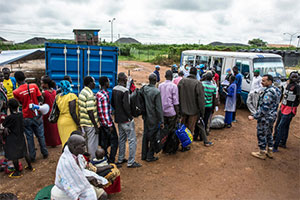 One Thousand Internally Displaced Persons (IDPs) Relocated from Tomping Camp in South Sudan. Credit: UN Photo/Isaac Billy
It took hundreds of thousands of years for the world’s human population to cross one billion in 1804. Approximately 200 years later, the population has multiplied sevenfold. In 2023, the global population crossed 8 billion, and is expected to reach 9 billion before 2050. With the planet more crowded than ever, it is essential to keep track of population trends, urbanization, migration, and reproduction across the world.
Life expectancy has seen significant strides in the past century, largely due to economic development and increased standards of living. On the contrary, trends in global fertility are shifting, with certain regions in Africa and Asia reporting higher rates, while parts of Europe and North America report stagnant or lower rates. This is in part due to differences in sexual and reproductive healthcare, as well as societal and economic conditions around the world. For example, child marriage is prevalent in certain societies, where childbearing is also considered a familial duty. Meanwhile, stagnating economies frequently experience lower marriage and childbearing rates.
The increase in migration and urban development around the world is also linked to global population trends. By 2050, it is expected that approximately 66 percent of all people will live in cities. Furthermore, global crises such as warfare and natural disasters also prompt transnational migration. Transnational migration is linked to a variety of socioeconomic issues in both host and receiving countries: migrants often leave developing countries with less access to educational and economic opportunities and arrive in developed countries where they are frequently the targets of ethnic, racial, and cultural discrimination, and economic exploitation. Recent crises in Europe and the United States demonstrate the importance of advocating for migrants worldwide. As migrants from the Global South are increasingly stripped of their legal and civic rights in unlawful deportations, or targeted in acts of identity-based violence, it is essential to keep track of population trends and protect the human rights of migrant populations. Climate-related disasters are now a major driver of displacement, with nearly half of all new internal displacements in 2025 being disaster-related.
IPS is devoted to covering issues surrounding population trends, migration, and reproduction through its compelling articles, which use both statistics and human stories to provide readers with robust and informative viewpoints.

The Week with IPS

NEXT STOP - SDGs
Tracking global progress towards a sustainable world
Tracking global progress towards a sustainable world
