Languages
Thursday, August 13, 2026



News and Views from the Global South
Sustainable Development Goals

Small Farmers Feeling Climate Change Heat Find Little Support From the State
The over 20 million residents of Pakistan’s port city of Karachi, in Sindh province in particular, have been experiencing brutal heat since May. But they are not the only ones bearing the brunt of high temperatures and humidity. Up to 15,000 cattle died due to scorching heat mixed with high humidity which Shakir Umar Gujjar, president of the Cattle and Dairy Farmers Association, Pakistan, said was “no joke”.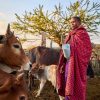
Indigenous Peoples — An Antidote in a World of Crisis
This year’s Equator Prize winners are the antidote we need in a world of crisis. Earlier this year, the World Economic Forum released its annual Risk Report. The key findings highlighted the inescapable trend over the past decade that we are facing a global polycrisis, in which problems of biodiversity loss, climate change, inequality, water scarcity and conflict are increasingly indivisible, simultaneous, and systemic.
Pacific Community Photographic Winners Bring Impacts of Climate Change to Life
The Pacific Community’s photographic competition winners reflect the devastating climate impacts on beautiful and sensitive environments, documenting the most pressing issues the communities who live on the islands face today.
Should There be a Dedicated Credit Rating Agency for Asia & the Pacific?
Following persistent and determined efforts, Africa has achieved a breakthrough in advancing the establishment of an African credit rating agency (ACRA), with the proposed launch scheduled for December 2024.
Explainer: Why Kenya is Considered a High Climate Risk for Development Banks
Kenya contributes less than 0.1 percent of global greenhouse gas emissions every year, yet development banks have flagged the East African nation as a high climate risk. This is due to extreme weather changes that are increasingly threatening the country’s development agenda, widening socio-economic inequalities, and deepening rural poverty and hunger.
Water Stories: The Well Seven Families and 400 Buffaloes Rely On
In the rural village of Khardariya in the Dang district of Nepal, access to clean water is a major issue. Villagers depend on one poorly managed well for drinking water, cleaning, and feeding livestock. Anjana Yadav stood near the well while a neighbor walked toward it to fetch a bucket of water.
Pivotal Shift at Seabed Authority: Nations Rally for Deep-Sea Mining Moratorium
The International Seabed Authority (ISA) Assembly meeting concluded last week with no mining authorized, an unprecedented number of States calling for a moratorium or precautionary pause and a new Secretary-General elected.
Nigeria: Why #EndBadGovernanceInNigeria Protests Gained Traction
Thousands of Nigerians have taken to the streets to protest against bad governance, corruption, soaring inflation, and the rising cost of living, in what has been termed "10 Days of Rage" and believed to mirror Kenyan protests organized by the youth. Nigeria, Africa's most populous country and a major exporter of crude oil, citizens claim that the benefits of the country's resources do not trickle down to the masses but to a group of corrupt politicians.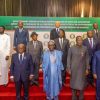
ECOWAS at 49: Successes in Regional Integration, Despite Emerging Challenges
The Economic Community of West African States (ECOWAS) was founded in 1975 to promote economic integration in the region. Forty-nine years later, the regional bloc boasts significant successes in integration, peace and security and good governance, but also faces some challenges.
Chilean Fisherwomen Seek Visibility and Escape from Vulnerability
The number of organisations that bring together fisherwomen who seek to be recognised as workers, make their harsh reality visible and escape the vulnerability in which they live is growing in Chile.
How Women Volunteers Are Shaping India’s Water Future
“Daily squabbles at the lone water point in Bhubaneswar’s slums, where hundreds of households depended on this single non-potable water source, have now receded into the past,” says Aparna Khuntia, a member of a large cohort of water volunteers who have played an important enabling role in ensuring households in the eastern India city now have their own on-premises potable running tap water available all 24 hours.
Activists Challenge Pharma Company Gilead Over HIV Medication
Campaigners and experts have demanded a breakthrough HIV intervention hailed as “the closest thing to an HIV vaccine” must be made available as soon and as cheaply as possible to all who need it as its manufacturer faces protests over its pricing. Activists led a massive protest during the 25th International AIDS Conference (AIDS2024) in Munich last week as a study was presented showing lenacapavir—a drug currently sold by pharmaceutical firm Gilead for more than USD 40,000 per year as an HIV treatment—could be sold for USD 40 per year as a form of pre-exposure prophylaxis (PrEP) to help prevent HIV infection.
Partnering for Progress: Maldives’ Sustainable Ocean Initiatives
The ocean is our lifeline, covering 70 percent of the earth’s surface, it is the source of half of the oxygen we breathe, and it absorbs 26 percent of the carbon dioxide we produce. It is home to millions of marine species, contains 97 percent of all of the water on our planet and offers humankind immense resources.
Economic Prospects in Asia & the Pacific – Celebrate Resilience, Prepare for Headwinds
Economic performance in Asia and the Pacific has proved to be quite resilient to the shocks of the past few years – the COVID-19 pandemic, the ongoing wars in Ukraine and Gaza, and the cost-of-living crisis. In 2023, the region’s economy drove over 60 per cent of the global economic growth.
Intl. AIDS Conference: Trans Man Asks Governments to Pressure Uganda to Repeal Punitive Anti LGBT+ Law
Jay Mulucha, Executive Director of FEM Alliance Uganda, gave an impassioned plea to governments around the world to push lawmakers in his home country to reverse punitive new legislation criminalizing the LGBT+ community.
Sportwashing Allegations at Africa’s Top Football Tournament
Following the recent Africa Cup of Nations (AFCON) tournament in Ivory Coast, a continent-wide campaign has emerged on social media challenging the tournament's main sponsor, TotalEnergies, over its involvement in the East African Crude Oil Pipeline (EACOP).
Parliamentarians: Active Aging Enhanced By Using Artificial Intelligence
With projections that by 2060, over 1.2 billion people in Asia will be 65 or older, and by adopting technology, including artificial intelligence technologies, it is possible to plan for active and fulfilled aging, lawmakers attending a regional meeting on Aging Preparedness and Care Economy in Asia heard.
Zimbabwe Needs Awareness, Advanced Tech to Beat Cancer
Earlier this year, then 46-year-old Lydia Musundiwa, based in the Zimbabwean capital Harare, was diagnosed with colon cancer, which, already at an advanced stage, killed her in less than two months. Now, Landeni, her 49-year-old widower, has to contend with the burden of looking after their three children single-handedly.
Life or Energy: The Hydroelectric Dilemma in Amazonian Brazil
The decade-and-a-half-long battle for life in the so-called Volta Grande (Big Bend) of the Xingu river, a stretch of the river dewatered by the Belo Monte hydroelectric power plant in the Brazilian Amazon, has a possible solution, albeit a partial one.
Government Indifferent to Invasion of Drug Traffickers in the Peruvian Amazon
The invasion of lands inhabited by Amazon indigenous communities is growing in Peru, due to drug trafficking mafias that are expanding coca crops to produce and export cocaine, while deforestation and insecurity for the native populations and their advocates are increasing
Emergency Response: Building Resilient Education Systems in Haiti Amid Multiple Crises
Haiti is witnessing unprecedented levels of lawlessness and brutality from armed gangs, which target schools and hospitals. The groups have plunged the country into a crisis and apart from the gun violence accusations, disturbing reports of ruthless sexual violence, including gang rape. Millions of children are in harm's way; many are out of school and it is estimated that between 30 and 50 percent of armed group members are children.« Previous Page — Next Page »


The Week with IPS

NEXT STOP - SDGs
Tracking global progress towards a sustainable world
Tracking global progress towards a sustainable world
