Languages
Tuesday, August 11, 2026



News and Views from the Global South
Sustainable Development Goals

Fast-Acting Interventions Needed for Sudanese Refugee Children as Needs Outpace Response
As peace eludes war-torn Sudan, thousands of displaced people fleeing the deadly battle between the Sudanese Armed Forces (SAF) and Rapid Support Forces (RSF) have found refuge in neighboring countries, including Egypt.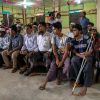
Conditions Grow Dire in Myanmar
On August 21st, Spokesperson for the Secretary-General Stéphane Dujarric spoke at a press briefing at the United Nations Headquarters about the ongoing Rohingya genocide taking place in Myanmar. Dujarric detailed high levels of hostility and displacement in the Shan, Mandalay, and Rakhine regions, which have significantly intensified since late June of this year.
Rohingya Refugees Must Not Be Forgotten
Seven years ago, a brutal campaign of violence, rape and terror against the Rohingya people ignited in Myanmar’s Rakhine State. Villages were burned to the ground, families were murdered, massive human rights violations were reported, and around 700,000 people – half of them children – fled their homes to seek refuge in Bangladesh.
Tackling the World’s Planetary Emergency
The world is facing a triple planetary crisis of climate change, pollution, and biodiversity loss. Climate change continues to pose an existential threat to humanity, with recent science estimating that we have possibly less than six years left to change course and rapidly reduce greenhouse gas emissions to have a chance of avoiding the worst of the climate crisis.
In Samoa, Protecting the Ocean is Our Way of Life
In Samoa, we use a simple phrase to capture our way of life: Fa’asamoa. At the core of this concept is respect for others, devotion to family and a deep appreciation for the preservation of our natural resources. Importantly, Fa'asamoa has enabled us to sustainably fish our vibrant coral reefs for millennia, in a way that provides good health and prosperity for everyone in our communities.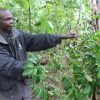
Uganda Coffee Smallholders Grapple With EU Regulations on Imports
In Kubewo village in eastern Uganda, children often go to work with their parents in the coffee gardens. Earnings from Arabica coffee are used, their parents and grandparents say, to pay for children’s education and other expenses for the family.
Absence of Reproductive Care Haunts Syrian Displaced Women
Pregnant women in northern Syria's camps for internally displaced people fear about their health and the health of their unborn children because of a lack of basic medical care and a healthy diet. These conditions exacerbate the illnesses and challenges faced by women, particularly amid the region's widespread poverty, food insecurity, and the remoteness of hospitals and health centers from the camps.
UK: ‘Many in the Climate Justice Movement Are Finding Creative and Imaginative Ways to Protest’
CIVICUS speaks with Chris Garrard, co-founder and co-director of Culture Unstained, about the campaign to end fossil fuel sponsorship of cultural institutions, which oil companies use to try to present a positive public image.
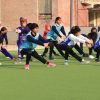
Climate Change Poses Yet Another Stumbling Block for Pakistani Sportswomen
Goalkeeper Rehana Jamali, 17, is jubilant. Her team came in second in the All Sindh Women Hockey Tournament, held last month.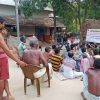
Transforming India’s Villages Through Innovative Water Harvesting Techniques
Brij Mohan, a 37-year-old farmer from Deoria, a modest village in India’s northern state of Uttar Pradesh, has a story of resilience and transformation. Mohan, the lone breadwinner for his family, has two children, the eldest just 10 years old.
Neglected for Years, Mpox Now a Public Health Emergency of International Concern
There is a deadly outbreak of a new and graver variant of mpox in the Democratic Republic of Congo (DRC), and at least one case has been confirmed in nearly 12 African countries, including those like Kenya, Burundi, Uganda, and Rwanda that were previously unaffected. Suspected mpox cases across these countries have surpassed 17,000, a significant increase from 7,146 cases in 2022 and 14,957 cases in 2023.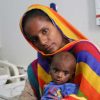
How Extreme Heat Intensifies Health Problems and Hunger
In May, temperatures soared above 52° Celsius (125.6° Fahrenheit) in Pakistan’s southern province of Sindh. To cope, Samina Kanwal, a community health worker with Action Against Hunger, began work at 7:00 am — the earliest time possible given neighborhood security protocols — to travel door-to-door helping vulnerable with the health consequences of extreme heat including heatstroke, difficulties with brain function, and even hunger.
Micro-Dams, a Solution to Water Shortages in Rural Brazil
Water shortage is over, springs have emerged or become perennial, small ponds with fish have formed and pastures have become greener and more permanent, all thanks to the ‘barraginhas’, the Portuguese name given in Brazil to micro-dams that retain rainwater and infiltrate it into the soil.
Gender Equality Has Everything To Do with Climate Change
After years of reporting on the frontlines of climate change, I have witnessed the devastating impact extreme weather events have on women and girls. In Kenya’s pastoralist communities in far-flung areas of Northern Kenya, West Pokot, Samburu and Narok counties, droughts mean a resurgence in harmful cultural practices such as outlawed female genital mutilation (FGM), beading and child marriages.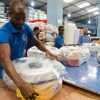
How the Private Sector Can Create Jobs and Drive Development in Western & Central Africa
Every year in Western and Central Africa, 6 million young people enter the labor force, while only about half a million new jobs are created. This enormous jobs deficit means that most entrants into the workforce work in the informal sector, with insecure income, low quality employment, and very little hope of escaping poverty.
Empowering Women for a Green Future: AFPPD Conference Tackles Climate Change and Gender Equality
Robust data collection, integrated policies, and an accelerated push towards a green economy with a gender focus topped the agenda at a conference in Islamabad, Pakistan, that brought together policymakers, experts, and advocates from across the Asia-Pacific region.
Freedom of Press in Jeopardy With Journalists in Crossfire in Kenyan Protests
In the heart of Nairobi, as tear gas clouded the streets, the line between journalists and protesters blurred in the eyes of Kenyan law enforcement. A wave of anti-government protests, ignited by opposition to a proposed finance bill, has spiraled into violence, with journalists increasingly caught in the crossfire between police and protesters.
Rizwana Hasan Vows to Ensure Justice for Those Killed During Bangladesh’s Quota Reform Movement
Justice for all those who died and suffered injuries during the recent student-led quota reform movement in Bangladesh and reforms to the systems to ensure that this justice takes place are not negotiable, an adviser to the Bangladesh interim government, Syeda Rizwana Hasan, told IPS in an exclusive interview
Digital Trade & the Sustainable Development Goals: A Dynamic Agenda
The rapid growth of digitalization has fundamentally altered commerce, impacting production and facilitating the movement of goods. The 2023 Asia-Pacific Trade and Investment Report (APTIR), has pointed out that although digital trade revenues of Asia and the Pacific account for a significant share of global trade, this growth is uneven, with trade concentrated in a few areas, leading to disparities across the region.
Hydrogen from Renewables or Fossil Fuels? The Panamanian Question
In 2021, the Panama Canal welcomed a French experimental ship on a world tour, the Energy Observer, the first electric vessel powered by a combination of renewable energies and a hydrogen production system based on seawater.
Small Farmers Feeling Climate Change Heat Find Little Support From the State
The over 20 million residents of Pakistan’s port city of Karachi, in Sindh province in particular, have been experiencing brutal heat since May. But they are not the only ones bearing the brunt of high temperatures and humidity. Up to 15,000 cattle died due to scorching heat mixed with high humidity which Shakir Umar Gujjar, president of the Cattle and Dairy Farmers Association, Pakistan, said was “no joke”.« Previous Page — Next Page »


The Week with IPS

NEXT STOP - SDGs
Tracking global progress towards a sustainable world
Tracking global progress towards a sustainable world
