Languages
Monday, August 24, 2026



News and Views from the Global South
Sustainable Development Goals

New Era: Unlocking Africa’s Agriculture Potential Through CGIAR TAAT Model
As hunger and food insecurity deepen, Africa is confronting an unprecedented food crisis. Estimates show that nearly 282 million people on the continent, or 20 percent of the population, are undernourished. Numerous challenges across the African continent threaten the race to achieve food security; research and innovative strategies are urgently needed to transform current systems as they are inadequate to address the food crisis.
AI Will Transform the Global Economy: Let’s Make Sure It Benefits Humanity
We are on the brink of a technological revolution that could jumpstart productivity, boost global growth and raise incomes around the world. Yet it could also replace jobs and deepen inequality.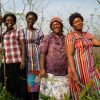
The World’s Richest Men Leave Women Far Behind—Amid Rising Economic Inequalities
The world’s rich are getting progressively richer while the world’s poor continue to be increasingly poorer. In a new report released January 15, Oxfam says the wealth of the world’s five richest men has doubled since 2020 –even as five billion people were made poorer in a “decade of division.”
Assessing Public Debt Sustainability with a Long-Term View
When students from poor families in developing countries are offered places at prestigious universities, they are often faced with a tough choice. One option is to accept the offer and create more debt, likely through borrowing from a loan shark, to pay for tuition fees. Another option is to forgo this opportunity, which could be the first in family generations, and start working as low-wage workers.
Cooperative Farming Makes Bangladesh’s Coastal Women Farmers Climate-Resilient
In the past, Salma Begum, 40, lost her crops every year due to natural disasters. She lives with her five-member family in Ashabaria village under Rangabali upazila, a remote coastal island in Patuakhali district. “We did not have enough livelihood options in the coastal area where we live. Cyclones, coastal floods, and tidal surges have been having adverse impacts on agriculture, making it difficult for my wage-laborer husband to find work regularly,” she said.
From Chemical Engineer to Climate Justice Avenger: A Journey with Yamide Dagnet
As a child on the French-Caribbean island of Guadeloupe, Yamide Dagnet dreamed of launching rockets into space. She stuck to science, discovering her path in chemical engineering. She became a scientist focused on critical reactions to solving real-world problems like improving water quality in the United Kingdom.
Technology Transfer Critical to Revolutionizing Africa’s Pharma Industry
An agreement signed between the Rwandan government and the Africa Pharmaceutical Technology Foundation (APTF) gives impetus to Africa’s domestic industry with the hope of helping the continent tackle vaccine inequity and fill the critical gap in vaccine manufacturing.
Homeless Families Now a Growing Issue in Zimbabwe
It is do or die on the streets of Zimbabwe as homeless families battle for survival solely depending on begging. Such is the life of 69-year-old Gladys Mugabe, who lives with her disabled son in Harare Gardens, a well-known recreational park in the Zimbabwean capital, Harare. Over the decades, Zimbabwe’s economy has underperformed. It started in 2000 with the departure of white commercial farmers, and the country has experienced subsequent periods of hyperinflation, which the International Monetary Fund estimated reached 172% in July last year.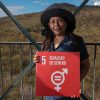
There Is No Democracy Without Gender Equality
Violence against women and girls is one of the most widespread and persistent abuses of fundamental rights at a global level that, to a certain extent, derives from what we consider "normal" in our societies. In addition to firmly condemning that every three women in the world suffer from physical or sexual violence, we must question what we are normalizing as a society for this to happen.
South Asian Women, Girls Need Responsive Legal System to Gender Violence
Criminal justice systems in South Asia are failing women, despite stark statistics on the prevalence of violence. WHO estimates translate to one in every two women and girls in the region experiencing violence daily.
What’s in Store for Indian Farmers After Cop 28’s Conclusion in Dubai?
Durga Das*, a 59-year-old farmer from the Indian state of Maharashtra, committed suicide last year by ingesting a poisonous substance. He was unable to repay the loan he had taken from the bank for the renovation of his single-story house. This year, his 32-year-old son, Pradeep Das, a father of two children, is equally desperate. The family owns half an acre of cultivated land where they grow cotton. The harvest has been devastated due to intense heat waves, leaving farmers like Dass and his son Pradeep in dire straits. The loan the family had taken is yet to be paid, and the land they had mortgaged in the bank is about to be confiscated. This means no crops, no cultivation, no business, and no food.
Saving Energy, Saving Forests: How Kindle Stoves Are Changing Women’s Lives
Five years ago, farmer Sehlisiwe Sibanda would walk into a nearby forested area to fill a scotch cart with huge wood logs for cooking and heating; a pile of firewood would last her a week during the summer. But now she does not need a cartful of huge logs. Small branches and twigs are enough to last for more than a month.
World Bank Enables Private Capture of Profits, Public Resources
The World Bank insists commercial finance is necessary for achieving economic recovery and the Sustainable Development Goals (SDGs), but does little to ensure profit-hungry commercial finance serves the public interest. By failing to address pressing challenges within their purview, the second-ever Bretton Woods institutions’ (BWIs) annual meetings on the African continent, in Marrakech in October 2023, set the developing world even further back.
Watching the Arctic Melt, Meteorologist’s Experience on Icebreaker Oden
Conflicting emotions greet the outcomes of COP28. After 28 years of climate conferences, an agreement has, for the first time, proclaimed that fossil fuels are the biggest culprit behind the warming of our planet and stated that it would encourage all nations to “accelerating action in this critical decade so as to achieve net zero by 2050 in keeping with the science." The agreement calls for, among other things, a tripling of renewable energy by 2030, but also an increased pace in the work to develop technical solutions for the separation and storage of carbon dioxide, an extremely expensive and, so far, limited effort.
Caribbean Confidence High Post COP28, But Vigilant Follow-Through on Key Deals Needed
Buoyed by USD 800 million in pledges to the Loss and Damage Fund and an unprecedented agreement to transition away from fossil fuels, but grounded in the reality of the work ahead to meet key climate targets, the Caribbean will need to maintain its focus on sustainable agriculture, renewable energy, and climate resilience.
IFAD’s Record-Breaking Pledges: Lifeline for Rural Communities Cornered by Climate, Hunger
The world is not on track to end hunger and poverty as a future of growing food insecurity and climate challenges beckon. Small-scale farmers are the backbone of food production, producing one-third of the world’s food and up to 70 percent of the food consumed in Africa and Asia, yet they are often cut off from the services they need to pull themselves out of poverty and food insecurity.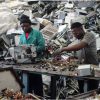
Sustainability, Human Wellbeing Depend on Rethinking, Redefining Value of Resources
While the COP28 presidency celebrated an “historic deal” to transition away from fossil fuels, we must remind ourselves that the future wellbeing of human societies in a livable planet depends on more than that.
‘Imperfect COP28’ Gives Direction For Managed, Equitable Move From Fossil Fuels
While the outcomes of COP28 are being hotly debated in both the scientific and social justice arenas, the climate conference has taken an unprecedented step forward toward a just transition, says Yamide Dagnet, Director for Climate Justice at the Open Society Foundations.
What Is the Cost of Phasing Out Fossil Fuels in Latin America?
One of the most heated debates at the annual climate summit coming to a conclusion in this United Arab Emirates city revolved around the phrasing of the final declaration, regarding the "phase-out" or "phase-down" of fossil fuels within a given time frame.
‘Stop Wars and Step Up ‘Measly’ Contributions’ to Climate Finance—Jeffrey D. Sachs
The United State's contribution to the Loss and Damage Fund equals nine minutes of Pentagon spending, says Jeffrey D. Sachs, a world-renowned economist, bestselling author, innovative educator, and global leader in sustainable development.
Rise of the Global South Highlights Minamata Convention on Mercury COP5
As it strives to be the prototype environmental treaty of this era, the Minamata Convention on Mercury continues its razor-like focus on ending all major uses of mercury. Emerging as the force leading the charge is the Global South, particularly the Africa Region, whose proposals led to hard-charging changes addressing dental amalgam, mercury-based skin creams, and fluorescent lights.« Previous Page — Next Page »


The Week with IPS

NEXT STOP - SDGs
Tracking global progress towards a sustainable world
Tracking global progress towards a sustainable world
