Languages
Saturday, October 3, 2026



News and Views from the Global South
Financial Crisis

U.S.: Occupy Targets Foreclosures
Five months ago, Gayla Newsome was at work when she got the call. A sheriff had come to her home of 15 years and put her two pajama-clad daughters out on the curb of her West Oakland street. Newsome knew the bank was about to foreclose, but thought she still had time to fight it.DEVELOPMENT: In Crisis, The Rich Get Richer
Mansions on one side of the road, and slums on the other. People queuing for food rations, while others drive by in shiny Land Rovers with tinted windows.
OP-ED: Occupy Foreign Affairs
It's not the topic of George Packer's latest essay that's particularly surprising. Inequality, he writes, is undermining democracy. Progressives have been hammering home this message for years if not decades.Listening to ‘Appalled Economists’
A paper written by a handful of French economists criticising the economic policies applied in the European Union to deal with the sovereign debt crisis that followed government bailouts of banks and other financial institutions in 2007 has become a manifesto supported by many worldwide.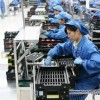
US-EU: Economic Crisis Threatens Global Recession, U.N. Warns
The United Nations Thursday reaffirmed a lingering fear haunting Western capitals: the world economy is teetering on the brink of another major downturn and heading towards a global economic recession.U.S.: States Seek Drug Tests for Welfare Recipients
At least 36 states across the U.S. are proposing laws that would require applicants for and recipients of a variety of public aid programs to undergo drug testing in which they would have to provide a urine sample. Several states, including Arizona, Florida, Indiana and Missouri, have already passed such laws.SPAIN: Self-Financed Communities “A Tool for Building Trust”
On the first Sunday of every month, Abdoulaye Fall, from Senegal, meets a group of people in Barcelona, to contribute money to a common fund or to take out a loan. This is one of 60 self-financed communities in Spain, an alternative to traditional banking systems that is having a powerful social effect.EUROPE: Crisis Brings New Governments, Not New Politics
The change of government in five countries in Europe, brought about this year by the dramatic sovereign debt crisis that broke out in 2007 has so far failed to remove the original causes of the crisis.
Aid Not Effectively Reaching Africa’s Poor
Kenyan tea and coffee farmers remain disgruntled about the minimal profits they make selling their cash crops, the country’s leading foreign currency earners, as the government receives millions in funding for training and subsidies that most of these farmers are yet to see materialise.
SPAIN: Socialist Defeat Could Give Rise to a New Left
The crushing defeat suffered by Spain's governing socialist party may pave the way for the emergence of a new alterative left capable of standing up to the centre-right People's Party (PP), which won a landslide victory in Sunday's elections.
Occupy Oakland Rallies Amid Anger over Pepper-Spraying of Students
Twice evicted from its encampment just outside city hall, Occupy Oakland sprung back to life Saturday, erecting a new three-dozen-tent camp and defying multiple city warnings that lodging in public spaces would not be tolerated.China Confronts its Own Greece
Europe has its Greece moment and China has its Wenzhou crisis. When European leaders were calling on China to step in and provide a lifeline to the eurozone by investing in its bailout programme, voices inside China were saying Beijing should save Wenzhou and forget about Europe.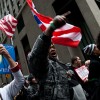
U.S.: Occupy Movement Pushes Back in Coordinated Day of Action
Tens of thousands of people in hundreds of cities across the country flooded streets, public squares and university campuses in the largest nationwide action since the first group of occupiers set up its encampment in New York City exactly two months ago Thursday.
U.S.: Occupy Cal Students Revive Camp After Police Clubbing
Occupy Cal students were clubbed by baton-wielding university police Nov. 9 - with beatings captured on video - when they linked arms and refused to disband the tent camp they had erected on the University of California, Berkeley campus.CHINA: Only Business Occupies Shanghai
As China's financial centre and a pinnacle of domestic wealth, Shanghai could have been in the forefront of a home-grown movement against income disparity of the like sweeping New York's Wall Street and London's City.
U.S.: Occupy Wall Street Activists Vow to Fight On
After two months of holding New York City's Zuccotti Park despite repeated threats of eviction, Occupy Wall Street (OWS) activists were forcibly removed from the site by hundreds of police in riot gear early Tuesday morning.ECONOMY-PORTUGAL: Side Effects of IMF Medicine
A European Union economic forecast for 2012 indicates Portugal is the EU country that will grow the least.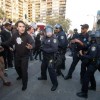
U.S.: Divide Emerges over Bounds of Occupy Protests
On Nov. 2, the day of Occupy Oakland's General Strike, the streets were filled with chants and music and the sounds of people speaking in the many tongues of Oakland residents.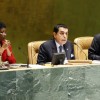
U.S.: Frustrated with Big Banks, More Turn to Cooperatives
The number of people flocking to cooperative banks has recently skyrocketed in the U.S., with 650,000 people joining credit unions just since late September. Their rationale: financial cooperatives offer a more secure and socially just alternative to big commercial banks – or a way for the 99 percent to fight the one percent.Papademos Named Greek Prime Minister
Greek party leaders have agreed to name Lucas Papademos, a former European Central Bank vice-president, as prime minister of a new interim government until early elections, the president's office said.Global Crisis Makes U.N. Reform Imperative
Reinventing the United Nations is crucial to protect the poorest inhabitants of the planet, at a time when the global economic crisis, the effects of climate change, and food insecurity are undermining development efforts.« Previous Page — Next Page »


 Secretary-General Meets with Members of Debt Expert Group. Credit: UN Photo/Eskinder Debeb
Financial crises are often defined by banking panics, recession, loss of market value, and deflation. Various financial crises at the turn of the 20th century, such as the Asian Crisis of 1997-1998 and the 2007-2008 Global Financial Crisis, have had immense impacts on the world economy. The COVID-19 pandemic also caused a financial crisis when mass lockdowns triggered staggering unemployment rates, a stagnation of economic growth, and led to the 2020 stock market crash. With the Russian invasion of Ukraine, the world has also witnessed a global energy crisis with shortages and increased prices in oil, gas, and electricity markets. According to UNCTAD’s World of Debt 2025, global public debt surpassed $100 trillion in 2024, with developing country debt growing twice as fast as developed economies since 2010. Burdens of debt servicing come with economic slowdowns and demands of austerity from lenders, with some economists arguing that this will lead to a new “lost decade” for the Global South. IPS brings you worldwide coverage of these financial developments and how we should manage these crises.

The Week with IPS

NEXT STOP - SDGs
Tracking global progress towards a sustainable world
Tracking global progress towards a sustainable world
