Languages
Wednesday, September 30, 2026



News and Views from the Global South
Financial Crisis
SPAIN: Streets Paved with Evicted Families
As the number of apartments and houses left empty in Spain due to failure to make mortgage or rental payments climbs, tens of thousands of families, including many immigrants, are living on the streets, in shantytowns, or crowded into seedy boarding houses.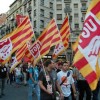
Around the Globe, Workers Demand Decent Jobs
The modern English word "economy" is derived from the Greek "oikonomia", meaning "household management".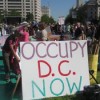
U.S.: “Leaderless” Protest Movement Continues to Snowball
"First they ignore you, then they ridicule you, then they fight you – then you win," a middle-aged man yells into the microphone from a makeshift stage erected at the far end of Freedom Plaza in Washington, DC.For International Migrants, It May Be the Worst of Times
When Secretary-General Ban Ki-moon recently addressed the U.N. General Assembly on the impact of migration on development, he counted himself as one of 214 million international migrants who live outside their home countries.Agencies Fight to Save U.S. Foreign Aid from Deep Cuts
Foreign aid could be one of the first items on the chopping block as the United States struggles to address trillion- dollar deficits in the coming fiscal years, a fate U.S. international development agency officials are trying hard to avoid.
SPAIN: ‘Indignant’ Protests Heat Up Election Campaign
"Ex dockyard worker, now a beggar" reads the sign displayed by a man in a spotless shirt who is panhandling near a square in this southern Spanish city where dozens of demonstrators are chanting: "The bank always wins and I'm against this!" and "What's going on? We have no homes!"GREECE: Lost Generation Begins to Leave
Every working day a long queue of people forms outside the State Translation Service in Thission in downtown Athens from early in the morning. Most are youngsters processing documents they need to leave Greece for study or work. Many move on to queue later outside embassies for visas.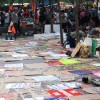
Occupy Wall Street: “It Is a Revolution”
Since Sep. 17, hundreds of demonstrators in the Occupy Wall Street movement have transformed the quiet Zucotti Park in lower Manhattan from a place where Wall Street traders once relaxed during lunch breaks into a demonstration camp.BOOKS: “The End of Loser Liberalism” and the Free Market Myth
The top one percent of earners in the United States now controls over 40 percent of the nation's wealth, their income steadily rising while much of the country earns less than what it did a decade ago and an all-time high of 46 million Americans now live below the official poverty line.Barroso: Greece Will Remain in the Eurozone
Greece will remain in the eurozone but must meet its reform commitments in full, Jose Manuel Barroso, the head of the European Commission, has said.How to Nurse the Unemployment Epidemic
At a meeting in the suburb of Carthage, just outside of Tunis on Nov. 18, 2008, the former head of the International Monetary Fund (IMF) Dominique Strauss-Kahn applauded the economic efforts of the now deposed Tunisian dictator Abidine Ben Ali, calling his policies "sound, the best model for emerging countries".Emerging Markets Hit Economic Stage Like a Tonne of BRICS
Headlines this week have been saturated with protests against unaffordable food, unfair taxes and unsustainable austerity measures, with one distinct difference setting these stories apart from countless others in recent history.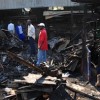
MALAWI: Markets Torched Ahead of Cancelled Protests
Soot and ash filled the air the day after a fire gutted Malawi's Blantyre Market. Men and women merchants wore solemn expressions as they shovelled piles of debris from the site on Tuesday.ROMANIA: Fixing the Economy, Not Lives
The economic crisis has led Romanian authorities to take some of the toughest austerity measures in Central and Eastern Europe. While no big opposition movement emerged as a result, a special kind of protest has taken place: some have committed suicide to get their messages across.World Bank, IMF Face Shifting Development Paradigm
Amid a global financial crisis that has shown little signs of reversing, next week's fall meetings of the International Monetary Fund and World Bank are crucial in setting the tone for rebounding world markets, to which leaders of the Bretton Woods institutions offered optimistic, yet ultimately vague, solutions in speeches this week.
SWAZILAND: No Fees No School
The future education of Swazi children remains uncertain, as public schools across the country have not reopened for the new term because government has not been able to pay for their upkeep.DEVELOPMENT: France Steps Up Support for Financial Transaction Tax
If governments could find trillions of dollars to support banks and the global financial system in 2009, why can't they raise enough money to help eradicate extreme poverty? This is the question that supporters of a financial transaction tax (FTT) are asking in France, as lawmakers debate introducing such a levy to help fund development at home and abroad.U.S. Residents Poorer, Earning Less, and Less Insured in 2010
According to data released Tuesday by the U.S. Census Bureau, 2.6 million more people slipped into poverty in 2010, placing the number of U.S. residents living below the poverty line at 15.1 percent.
MALAWI: Government Becomes a One-Man Show
For the last two weeks, Malawi’s president has been running the country’s 22 ministries on his own after firing his entire cabinet. But political and economic analysts say that his delay in appointing a new cabinet is detrimental to the country’s development. Some analysts say government has come to a standstill because of this, while others say the situation shows that the president has lost control.EUROPE: Some Rich Want to Get a Little Less Rich
In the face of the severe sovereign debt crisis in most industrialised countries, some extremely rich people are urging governments to increase taxes on wealth.First Federal Reserve Audit Reveals Trillions in Secret Bailouts
The first-ever audit of the U.S. Federal Reserve has revealed 16 trillion dollars in secret bank bailouts and has raised more questions about the quasi-private agency’s opaque operations.« Previous Page — Next Page »


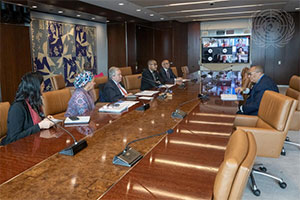 Secretary-General Meets with Members of Debt Expert Group. Credit: UN Photo/Eskinder Debeb
Financial crises are often defined by banking panics, recession, loss of market value, and deflation. Various financial crises at the turn of the 20th century, such as the Asian Crisis of 1997-1998 and the 2007-2008 Global Financial Crisis, have had immense impacts on the world economy. The COVID-19 pandemic also caused a financial crisis when mass lockdowns triggered staggering unemployment rates, a stagnation of economic growth, and led to the 2020 stock market crash. With the Russian invasion of Ukraine, the world has also witnessed a global energy crisis with shortages and increased prices in oil, gas, and electricity markets. According to UNCTAD’s World of Debt 2025, global public debt surpassed $100 trillion in 2024, with developing country debt growing twice as fast as developed economies since 2010. Burdens of debt servicing come with economic slowdowns and demands of austerity from lenders, with some economists arguing that this will lead to a new “lost decade” for the Global South. IPS brings you worldwide coverage of these financial developments and how we should manage these crises.

The Week with IPS

NEXT STOP - SDGs
Tracking global progress towards a sustainable world
Tracking global progress towards a sustainable world
