Languages
Thursday, October 8, 2026



News and Views from the Global South
Green Economy

Beyond Expo: Embedding the SDGs in the DNA of Future Technology and Innovation
A landscape of shared global challenges The COVID-19 pandemic has moved us farther away from the Sustainable Development Goals (SDGs). Data shows that the pandemic has pushed a further 124 million people into extreme poverty. Global poverty is now expected to be at 7% by 2030 – only marginally below the level in 2015. And with the global temperature increase already at 1.2 degrees, we are on the verge of the abyss. UN Secretary-General António Guterres is deeply concerned about the impact of the pandemic on the SDGs. But there is hope. He believes in the knowledge, science, technology, and resources to turn it around. He also urges further financing for development and climate action.

Cool Scheme to Reduce Food Waste in Nigeria
Food spoilage forced smallholder farmers out of pocket and out of business – until an entrepreneur came up with a cool idea.
Climate Change: Adapt for the Future, Not the Past
Funding for developing countries to address global warming is grossly inadequate. Very little finance is for adaptation to climate change, the urgent need of countries most adversely affected. Also, adaptation needs to be forward-looking rather than only addressing accumulated problems.
Fighting Loss of the Greater Mekong’s Prized Rosewood Forests
The famed Rosewood forests of the Greater Mekong region in Southeast Asia produce dark, richly grained timbers zealously sought after worldwide by manufacturers of luxury furniture, flooring and musical instruments, among other products. But their high value has also made them a major commodity in transnational organized crime.
Profiting from the Carbon Offset Distraction
Carbon offset markets allow the rich to emit as financial intermediaries profit. By fostering the fiction that others can be paid to cut greenhouse gases (GHGs) instead, it undermines efforts to do so.
From Fruit Waste to Gourmet Grub
When Bonolo Monthe’s neighbours discarded bucketsful of fallen ripe morula fruit from their backyard, she saw food and fortune going to waste.
Time Honoured Food Traditions, Pleasing for Palate and Planet
Balance is the absolute key, says Alia Chughtai, a journalist who started a catering service with filmmaker Akhlaque Mahesar, by the name of Aur Chaawal (And Rice), two years ago.
Double Solution to Ongoing Food and Climate Crises
For the last ten years, Angeline Wanjira’s food stall at Kirigiti Market in Kiambu County has featured the same foods, cabbages, potatoes and carrots, keeping with the community’s most preferred food types.
Biofuels, the World’s Energy Past and Future
The number of victims of serious burns, some fatal, has increased in Brazil. Without money to buy cooking gas, the price of which rose 30 percent this year, many poor families resort to ethanol and people are injured in household accidents.
COP26 – New Toolkit to Boost Clean Energy Investments in Small Island Nations
A new toolkit launched in the margins of the UN Climate Change Conference COP26 aims to unlock clean energy investments for small island nations, many of whom rely heavily on imported fossil fuels for power generation.
Magical Thinking on Fertilizer and Climate Change
As world leaders wrap up the UN Climate Summit in Glasgow, new scientific research shows that there is still a great deal of magical thinking about the contribution of fertilizer to global warming.
Carbon Tax Over-Rated
Addressing global warming requires cutting carbon emissions by almost half by 2030! For the Intergovernmental Panel on Climate Change, emissions must fall by 45% below 2010 levels by 2030 to limit warming to 1.5°C, instead of the 2.7°C now expected.
Finance Nature-based Solutions to Quiet Nature’s Wrath – Experts
Climate change experts and leaders from the Commonwealth member states rallied behind calls to accelerate climate finance for nature-based solutions to arrest the pace of climate change, land degradation, and biodiversity loss.
At COP26, EBRD Launches Plan to Mobilise Private Capital for Climate Finance
The European Bank for Reconstruction and Development (EBRD) has announced its intention to double the mobilisation of private sector climate financing by 2025.
Will Glasgow Fix Broken Climate Finance Promises?
Current climate mitigation plans will result in a catastrophic 2.7°C world temperature rise. US$1.6–3.8 trillion is needed annually to avoid global warming exceeding 1.5°C.
Is Asia and the Pacific Ready for the Global Climate Stage?
As the leaders of Asia and the Pacific prepare to head to Glasgow for the 26th United Nations Climate Change Conference of the Parties (COP26), they can be sure that our region will be in the spotlight: many of the most vulnerable countries to the impacts of climate change are located here; the seven G20 members from this region are responsible for over half of global GHG emissions; and five of the 10 top countries with the greatest historic responsibility for emissions since the beginning of the twentieth century are from Asia.
COP26: the Heat is On, But Climate Leadership is Off, Warns UN Report
When over 100 political leaders meet in Scotland next week for the UN Climate Change Conference, the very future of our planet seems to hinge on the outcome of the summit which is scheduled to take place October 31-November 12.
COP26: Rich Nations Have Not Shown Leadership in Their Fair Share of Emission Cuts
It is well-known that all the Nationally Determined Contributions (NDCs) added together, even those that have been updated, will not help to place the world on a 1.5 degree C pathway.
Green Gold: Billion Dollar Question for Congo Rainforest
On the brink of an unprecedented environmental emergency, EU ambassadors to the Democratic Republic of Congo (DRC) gathered earlier this month for a luxury river cruise hosted by the country’s Environment Minister, Eve Bazaiba.
COP26: Funding Innovation Crucial for Strengthening Climate-Stressed Food Systems
The global food system is facing more demands from society than ever before in modern times – and rightly so. From responding to the climate crisis to dealing with rising malnutrition and ensuring the sustainable use of natural resources and protection of biodiversity, the responsibility of our food systems is no longer just to “feed the world.”
An Ambitious, Stakeholder-Driven Climate Change Commitment Ahead of COP26: Eswatini’s Revised Nationally Determined Contribution (NDC) Process
There is no country today that has not experienced the effects of climate change, from changing weather patterns to extreme, devastating weather events.« Previous Page — Next Page »





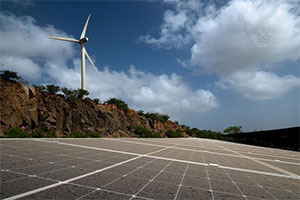 Renewable Energy in Cabo Verde. Credit: UN Photo/Mark Garten
A green economy is an economic model that aims to reduce environmental risks and build a sustainable future. Many of the UN SDGs seek to facilitate a green economy, such as ensuring access to affordable and reliable clean energy, building sustainable cities and communities, and implementing urgent action to combat climate change. Various key negotiations have strived to achieve a green economy, such as the Green New Deal and the Inflation Act of 2022. COP30, held in Belém, Brazil in 2025, agreed to mobilize $1.3 trillion annually for climate action and launched the Belém Mission to 1.5°C. However, the conference was not able to develop a fossil fuel reduction roadmap. Recent years have witnessed a sharp transformation in the geopolitical landscape of international sustainability cooperation. In March 2025, the United States stepped back from formal multilateral support for the SDGs, while China is on the rise as an international leader in renewable energy production. The actions of these global powers may shape shifting alliances on environmental governance. IPS is dedicated to sharing timely news on international developments in building a sustainable future.

The Week with IPS

NEXT STOP - SDGs
Tracking global progress towards a sustainable world
Tracking global progress towards a sustainable world
