Languages
Tuesday, September 15, 2026



News and Views from the Global South
Green Economy

New Science Shows Climate-Smart Farming is Within Reach
Until the United Nations climate talks in Bonn last year, no clear plan to include agriculture in climate negotiations existed. This was troubling, considering agriculture contributes 19-29% of global greenhouse gases, and changing temperatures are making it harder to farm. This is having an increasingly prominent effect on food security -- hunger levels have now risen for the third year in a row.
Bamboo — the Magic Bullet to Rapid Carbon Sequestration?
As thousands of environmental technocrats, policy makers and academics work round the clock to come up with strategies for mitigation and adaptation to climate change at the United Nations’ conference in Katowice, Poland, one scientist is asking Parties to consider massive bamboo farming as a simple but rapid way of sequestering carbon from the atmosphere.
Time to Follow EU’s Lead & Step Up Climate Action with 2050 Plans
As climate negotiators, experts and activists are gathering in Katowice, Poland, for the international climate talks, much of the focus will be on immediate issues. Laying down the ground rules of the 2015 Paris Agreement and wrapping up the first global review of countries’ progress to date are high on the agenda.
Study Shows How African Countries are Preparing for Green Development
In order for African countries to implement their Nationally Determined Contributions (NDC) and Sustainable Development Goals (SDG), they will require further human capacity building, and there must be involvement of the private sector from the start of the planning process.
Indonesia Commits to Low Carbon Development and a Green Economy at COP24
Although Indonesia has attained decent economic growth of over five percent in the last decade, in order to ensure sustainable growth in the future the switch to renewable energy (RE) will be critical, says the country’s government.
Poor Progress and No Finance Commitments at COP24 in Katowice
Implementation of the Paris Agreement on climate change is in limbo as developed countries remain noncommittal to financial obligations at the ongoing negotiations in Katowice, Poland.
Q&A: Creating an African Bamboo Industry as Large as China’s
The bamboo industry in China currently comprises up to 10 million people who make a living out of production of the grass. But while the Asian nation has significant resources of bamboo — three million hectares of plantation and three million hectares of natural forests — the continent of Africa is recorded to have an estimated three and a half million hectares of plantations, excluding conservation areas.
Climate Action Should be a Global Priority for World Leaders
The IPCC report says that it is not impossible to limit climate change to 1.5͒C? Do you think we can realistically achieve that? Politically, what needs to happen? History shows that when the human race decides to pursue a challenging goal, we can achieve great things. From ridding the world of smallpox to prohibiting slavery and other ancient abuses through the Universal Declaration of Human Rights, we have proven that by joining together we can create a better world.
Get Ready for COP24: Transition to a Sustainable Future
COP24 is the time for governments to act and increase their pledges to prevent global warming ensuring a just transition that leaves no one behind.
Limiting Climate Change to 1.5 C is not Impossible, Says IPCC Chair
When governments set a target in December 2015 of limiting global warming to well below 2ºC above pre-industrial levels while pursuing efforts to hold it at 1.5ºC, they invited the IPCC to prepare a report to provide information on this Goal.
Q&A: How Political Will can Accelerate Green Growth in Africa
While the African Green Growth Forum 2018 was taking place for the first time ever in Kigali, Rwanda last week, IPS sat down with Okechukwu Daniel Ogbonnaya, the Acting Country Representative and Lead Advisor for the Global Green Growth Institute (GGGI) to talk about the new forum, working with Rwanda and green growth integration in Africa. GGGI organised the forum with the Government of Rwanda.
Rwanda to Build Ecotourism Park in Kigali
Rwanda’s capital city Kigali will be home to a 134 hectare urban park in the city’s biggest valley in 2020. The Nyandungu Urban Wetland Eco-Tourism Park will conserve wetlands and habitat for wildlife while providing walking and cycling trails, fish ponds and botanical gardens for residents and tourists.
Fostering Green, Made-In-Africa Innovations
Over 1000 policy makers, experts, investors and financial specialists from across Africa are gathered this week in Kigali, at a week-long Africa Green Growth Forum 2018 to discuss how to foster green, made-in-Africa innovations to meet the needs of the continent.
Marine Waste is Turning the Earth into a Plastic Planet
Africa risks being the worst plastic-polluted place on earth within three decades overtaking Asia, says a continental network calling for African contributions to solving the growing threat of marine waste.
Senegal Talks Green Growth this Week
Global Green Growth Week 2018 is taking take place in Dakar, Senegal from 26-29 November with a focus on strengthening collaborations, sharing experiences and best practices in the new green growth economy.
Over Half of the World’s Tropical Forests Have been Destroyed, Say Conservationists
Biodiversity conservationists have revealed that at least 10 more percent of land than what is currently being used to grow green crops will be required to successfully replace fossil fuels with alternatives derived from natural sources such as biofuel.
Youth Create Businesses that Are Geared to Protecting the Environment
An organic pesticide safe for farmers and the environment, and carbonised fuel briquettes made from agricultural waste materials and organic waste are all business ideas that promote a green economy.
‘A Turtle is Worth More Alive Than Dead’
On the north-eastern shores of Trinidad and Tobago, on the shoreline of Matura, more than 10,000 leatherback turtles climb the beaches to nest each year. But there the local community is keenly area of one thing: ‘a turtle alive is worth more than a turtle dead.”
The Sustainable Polar Bear Tour that Also Educates Tourists on Environmental Impact
It’s almost always cold in Churchill, Manitoba, a remote coastal community on Hudson Bay in Canada’s subarctic region. Today, a month before winter officially begins, it’s -25 degrees C with a fierce wind coming off Hudson Bay which is thick with slabs of ice. Situated in the middle of Canada, it’s the world’s largest saltwater bay. And even though frozen solid eight months of the year, the bay sustains the nearly 800 residents of Churchill which is known as the “Polar Bear Capital” of the world.
Amidst Rising Hunger, BCFN Forum to Promote Food Sustainability
As 2018 nears its end, the world faces a new wave of food insecurity with the level of hunger being on the rise globally. A record 821 million people are facing chronic food deprivation – a sharp rise from 804 million figure in 2016 - said a report published by the UNFAO earlier this year. Along with rising hunger, food security has declined across Africa and South America while undernourishment is on the rise again in Asia, said the report which attributed the changing scenario to climate-related changes, adverse economic conditions and conflict. With this alarming picture as the backdrop, the 9th Barilla Center for Food and Nutrition (BCFN) International Forum on Food and Nutrition in Milan is all set to take off on November 27.
How Australia Sustainably Manages the World’s Last Wild Commercial Fishery of Pearl Oysters
Australia’s remote north-western Kimberley coast, where the Great Sandy Desert meets the sapphire waters of the Indian Ocean, is home to the giant Pinctada maxima or silver-lipped pearl oyster shells that produce the finest and highly-prized Australian South Sea Pearls.« Previous Page — Next Page »


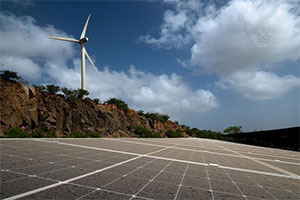 Renewable Energy in Cabo Verde. Credit: UN Photo/Mark Garten
A green economy is an economic model that aims to reduce environmental risks and build a sustainable future. Many of the UN SDGs seek to facilitate a green economy, such as ensuring access to affordable and reliable clean energy, building sustainable cities and communities, and implementing urgent action to combat climate change. Various key negotiations have strived to achieve a green economy, such as the Green New Deal and the Inflation Act of 2022. COP30, held in Belém, Brazil in 2025, agreed to mobilize $1.3 trillion annually for climate action and launched the Belém Mission to 1.5°C. However, the conference was not able to develop a fossil fuel reduction roadmap. Recent years have witnessed a sharp transformation in the geopolitical landscape of international sustainability cooperation. In March 2025, the United States stepped back from formal multilateral support for the SDGs, while China is on the rise as an international leader in renewable energy production. The actions of these global powers may shape shifting alliances on environmental governance. IPS is dedicated to sharing timely news on international developments in building a sustainable future.

The Week with IPS

NEXT STOP - SDGs
Tracking global progress towards a sustainable world
Tracking global progress towards a sustainable world
