Languages
Friday, September 25, 2026



News and Views from the Global South
Green Economy
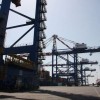
Africa and India – Sharing the Development Journey
Africa, like India, is a continent of rich and compelling diversity. Both continents share a similar landscape, a shared colonial history, and similar economic and demographic challenges. This helps both India and Africa work especially well with each other.
At the UN Oceans Forum in June, Will the US Play a Bit Part?
In just a few weeks, the United Nations is convening a world gathering to discuss the health of the world’s oceans and seas, with member states, government and nongovernmental organizations, corporations and members of the scientific community and academia signed up to take part.
World Lags on Clean Energy Goals
It may be the 21st century but more than three billion people still use fire for cooking and heating. Of those, one billion people have no access to electricity despite a global effort launched at the 2011 Vienna Energy Forum to bring electricity to everyone on the planet.
Caribbean Scientists Work to Limit Climate Impact on Marine Environment
Caribbean scientists say fishermen are already seeing the effects of climate change, so for a dozen or so years they’ve been designing systems and strategies to reduce the impacts on the industry.
Marching for a Green and Just Future
People around the world will be banding together to fight one of the world’s most pressing problems: climate change.
Caricom’s Energy-Efficient Building Code Could Be Tough Sell
Caribbean Community (Caricom) states are in the process of formulating an energy efficiency building code for the region that would help reduce CO2 emissions, but implementation of the code may depend heavily on moral suasion for its success.
“Imagine a World Where the Worst-Case Scenarios Have Been Realized”
The tiny island-nation of Antigua and Barbuda has made an impassioned plea for support from the international community to deal with the devastating impacts of climate change.
Caribbean Pursues Green Growth Despite Uncertain Times
Barbados and its Caribbean neighbours are continuing to press ahead with their climate change agenda and push the concept of renewable energy despite the new position taken by the United States.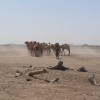
Climate Funds for World’s Poorest Slow to Materialise
Climate change is making poor countries poorer, yet funding meant to address its economic consequences has been slow to materialise. Instead funding bodies are choosing to invest in green energy projects in middle-income countries.
Green Power: Wave of the Future
The price of renewable energy — especially solar power — continues to tumble, and the result is more green power generating capacity for fewer dollars. That’s the bottom line message from the latest figures on world investment in clean technologies.
Climate Change Solutions Can’t Wait for U.S. Leadership
From tourism-dependent nations like Barbados to those rich with natural resources like Guyana, climate change poses one of the biggest challenges for the countries of the Caribbean.
How a Devastating Hurricane Led to St. Vincent’s First Sustainability School
In the 1980s, an institution for troubled Danish youth and a vocational school for Vincentians was built in Richmond Vale, an agricultural district on the northwestern tip of St. Vincent.
Trinidad Pushes for Shift to Cleaner Fuel
The Trinidad and Tobago government has invested about 74 million dollars in the first phase of a 295-million-dollar project to encourage more drivers to use Compressed Natural Gas (CNG), described by experts here as a preliminary step in the country’s transition to using more sustainable forms of energy.
A Carbon Law to Protect the Climate
The Carbon Law says human carbon dioxide (CO2) emissions must be reduced by half each decade starting in 2020. By following this “law” humanity can achieve net-zero CO2 emissions by mid-century to protect the global climate for current and future generations.
Caribbean Stakes Future on Climate-Smart Agriculture
As Caribbean Community (CARICOM) countries continue to build on the momentum of the 2015 Paris Climate Agreement and the 22nd Conference of the Parties (COP22) of the United Nations Framework Convention on Climate Change (UNFCCC) in Marrakech in 2016, special emphasis is being placed on agriculture as outlined in their Intended Nationally Determined Contributions (INDCs).
Guyana’s New Oil Fields Both Blessing and Curse
The recent discovery of large volumes of oil offshore of Guyana could prove to be a major headache for the country, as the Caribbean Community (CARICOM) and other Alliance of Small Island States (AOSIS) members press for keeping global temperature rise to 1.5 degrees C above pre-industrial levels as provided for in the historic Paris Climate Agreement.
Expansion of Renewable Energies in Mexico Has Victims, Too
The growing number of wind and solar power projects in the southern Mexican state of Yucatán are part of a positive change in Mexico’s energy mix. But affected communities do not see it in the same way, due to the fact that they are not informed or consulted, and because of how the phenomenon changes their lives.
Energy Access Builds Inclusive Economies and Resilient Communities
Jaipal Hembrum runs three one-man home enterprises - a bicycle repair shop, a tiny food stall and a tailoring unit in Kautuka, a remote village in eastern India. Sewing recycled clothes into mattresses late into the evening, the 38-year-old father of three girls says two light bulbs fed by a solar power system have changed his life.
Dubai Global Centre of Green Economy in UAE’s Vision 2021
When former UN Secretary-General Ban K-moon was in Abu Dhabi for the World Future Energy Summit last year, he singled out the key role played by the United Arab Emirates (UAE) in “safeguarding the future of our planet” by showcasing clean, sustainable energy --- a centre piece of the UN’s post-2015 development agenda.
Innovative Credit Model Holds Out Lifeline to Farmers in Honduras
In this village in southern Honduras, in one of the poorest parts of the country, access to credit is limited, the banking sector is not supportive of agriculture, and nature punishes with recurrent extreme droughts.
Ordinary Citizens Help Drive Spread of Solar Power in Chile
Chile, Latin America’s leader in solar energy, is starting the new year with an innovative step: the development of the country´s first citizens solar power plant.« Previous Page — Next Page »


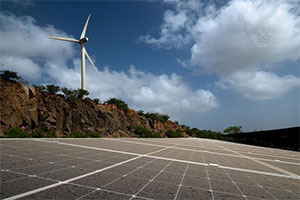 Renewable Energy in Cabo Verde. Credit: UN Photo/Mark Garten
A green economy is an economic model that aims to reduce environmental risks and build a sustainable future. Many of the UN SDGs seek to facilitate a green economy, such as ensuring access to affordable and reliable clean energy, building sustainable cities and communities, and implementing urgent action to combat climate change. Various key negotiations have strived to achieve a green economy, such as the Green New Deal and the Inflation Act of 2022. COP30, held in Belém, Brazil in 2025, agreed to mobilize $1.3 trillion annually for climate action and launched the Belém Mission to 1.5°C. However, the conference was not able to develop a fossil fuel reduction roadmap. Recent years have witnessed a sharp transformation in the geopolitical landscape of international sustainability cooperation. In March 2025, the United States stepped back from formal multilateral support for the SDGs, while China is on the rise as an international leader in renewable energy production. The actions of these global powers may shape shifting alliances on environmental governance. IPS is dedicated to sharing timely news on international developments in building a sustainable future.

The Week with IPS

NEXT STOP - SDGs
Tracking global progress towards a sustainable world
Tracking global progress towards a sustainable world
