Languages
Tuesday, October 27, 2026



News and Views from the Global South
Green Economy

How SADC is Fighting Wildlife Crime
"We are underpaid, have no guns and in most instances are outnumbered by the poachers," says Stain Phiri, a ranger at Vwaza Marsh Wildlife Reserve — a 986 km reserve said to have the most abundant and a variety of wildlife in Malawi — which also happens to be one of the country’s biggest game parks under siege by poachers.
U.N. Chief Eyes Upcoming Summits to Resolve Development Crisis
The continued widespread economic recession - aggravated by the recent Ebola outbreak in West Africa - is threatening to undermine the U.N.'s highly-touted post-2015 development agenda.
Why Are G20 Governments Subsidising Dangerous Climate Change?
Just a week after the Intergovernmental Panel on Climate Change (IPCC) gave its starkest warning yet that the vast majority of existing oil, gas and coal reserves need to be kept in the ground, a new report reveals that governments are flagrantly ignoring these warnings and continuing to subsidise exploration for fossil fuels.
A Fair Climate Treaty or None at All, Jamaica Warns
As the clock counts down to the last major climate change meeting of the year, before countries must agree on a definitive new treaty in 2015, a senior United Nations official says members of the Alliance of Small Island Developing States (AOSIS) “need to be innovative and think outside the box” if they hope to make progress on key issues.
OPINION: Bringing More International Pressure to Bear on Wildlife Crime
A surge in wildlife crime is fuelling criminal syndicates, perpetuating terrorism, and resulting in the loss of major revenues from tourism and industries dependent on iconic species while also endangering the livelihoods of the rural poor. But this surge in wildlife crime is not only threatening iconic species, which include elephants, rhinos and tigers, but also lesser-known animals that are also on the brink of extinction.
Responding to Climate Change from the Grassroots Up
As concern mounts over food security, two community groups are on a drive to mobilise average people across Antigua and Barbuda to mitigate and adapt in the wake of global climate change, which is affecting local weather patterns and by extension, agricultural production.
UNIDO Comes a Long Way
The United Nations Industrial Development Organisation (UNIDO) has come a long way since 1997, when it faced the risk of closure in the aftermath of the end of the Cold War.
El Salvador Restores Biodiversity in the Face of Climate Change
Carlos Menjívar has been ferrying people in his boat for 20 years in this fishing village in western El Salvador surrounded by ocean, mangroves and wetlands, which is suffering the effects of environmental degradation.
Dirty Energy, Dirty Tactics
“Greenhouse gas emissions from human activity are higher than ever, and we're seeing more and more extreme weather and climate events….We can't prevent a large scale disaster if we don't heed this kind of hard science.”
Using Phytotechnology to Remedy Damage Caused by Mining
Combating the negative effects of its own production processes is one of the challenges facing the mining industry, one of the pillars of the Chilean economy.
OPINION: The Pentagon Comes Up Short on Climate
The Pentagon recently released a new report sounding the alarm on the national security threats posed by climate change. Like previous reports on the subject, this one makes clear that Department of Defence (DoD) planners believe that global warming will seriously challenge our nation’s military forces.

Better Water Management Needed to Eradicate Poverty
It demands repetition: water is a precondition for all life. It keeps us alive – literally – while being a prerequisite for or integral part of most of our daily activities. Think hospitals without water, think farms, energy producers, industries, schools and homes without our most needed resource. All sectors, without exception, are dependent on water.
Fossil Fuels Won’t Benefit Africa in Absence of Sound Environmental Policies
Recent discoveries of sizeable natural gas reserves and barrels of oil in a number of African countries — including Uganda, Tanzania and Kenya — have economists hopeful that the continent can boost and diversify its largely agriculture-based economy.
OPINION: Towards an Inclusive and Sustainable Future for Industrial Development
As representatives of the United Nations Industrial Development Organization (UNIDO), we are sometimes asked whether industrial development is still relevant to a world which many observers have claimed over the past decades to have entered the “post-industrial age”. Our answer is always an emphatic “yes”, shaped both by the evidence of history and current events.
St. Vincent Takes to Heart Hard Lessons on Climate Change
Glenda Williams has lived in the Pastures community in eastern St. Vincent all her life. She's seen the area flooded by storms on multiple occasions.
Good Twins or Evil Twins? U.S., China Could Tip the Climate Balance
China and the United States are responsible for 35 percent of global carbon emissions but could do their part to keep climate change to less than two degrees C by adopting best energy efficiency standards, a new analysis shows.
OPINION: Where Governments Fail, It’s Up to the People to Rise
Pomerania in northern Poland is famous for its unpolluted environment, fertile soils and historic heritage. So far, these valuable farmlands have been free from heavy industry but that situation might change as a shadow looms over the lives of Pomeranians.
OPINION: Renewable Energies – a Double-Edged Sword
The United Nations Framework Convention on Climate Change has set a target of reducing emissions of greenhouse gases such as CO2. One way countries can meet their obligations is to switch energy production from the burning of fossil fuels to “renewables”, generally understood to include wind, wave, tidal, hydro, solar and geothermal power and biomass.
Kazakhstan’s Nazarbayev Signals U-Turn on Alternative Energy
From small villages to big cities, wherever you go in Kazakhstan these days, billboards offer reminders that Astana is gearing up to host Expo 2017, the next World’s Fair. Kazakhstan helped secure the right to host the event with a pledge to emphasise green energy alternatives. But now it appears that Kazakhstan is red-lighting its own green transition.Global South Brings United Front to Green Climate Fund
The United Nations’ key mechanism for funding climate change-related mitigation and adaptation in developing countries is now ready to receive funds, following a series of agreements between rich and poor economies.
Sustaining Africa’s Development by Leveraging on Climate Change
By leveraging knowledge about climate change, through adopting improved agriculture technologies and using water and energy more effectively, Africa can accelerate its march towards sustainable development.« Previous Page — Next Page »





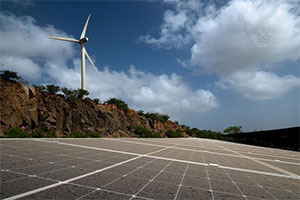 Renewable Energy in Cabo Verde. Credit: UN Photo/Mark Garten
A green economy is an economic model that aims to reduce environmental risks and build a sustainable future. Many of the UN SDGs seek to facilitate a green economy, such as ensuring access to affordable and reliable clean energy, building sustainable cities and communities, and implementing urgent action to combat climate change. Various key negotiations have strived to achieve a green economy, such as the Green New Deal and the Inflation Act of 2022. COP30, held in Belém, Brazil in 2025, agreed to mobilize $1.3 trillion annually for climate action and launched the Belém Mission to 1.5°C. However, the conference was not able to develop a fossil fuel reduction roadmap. Recent years have witnessed a sharp transformation in the geopolitical landscape of international sustainability cooperation. In March 2025, the United States stepped back from formal multilateral support for the SDGs, while China is on the rise as an international leader in renewable energy production. The actions of these global powers may shape shifting alliances on environmental governance. IPS is dedicated to sharing timely news on international developments in building a sustainable future.

The Week with IPS

NEXT STOP - SDGs
Tracking global progress towards a sustainable world
Tracking global progress towards a sustainable world
