Languages
Sunday, October 18, 2026



News and Views from the Global South
Child Labour
UN Special Rapporteur Urges the Protection of Children’s Rights Amid Deepening Conflict and Digital Threats
On July 7, the United Nations (UN) Secretary-General Antonio Guterres presented a report from the Special Rapporteur on the sale, sexual exploitation, and sexual abuse of children, Ai Kihara-Hunt, to the General Assembly, underscoring her goals and priorities for the implementation of protection measures for children worldwide.
In 2025, Government Forces were the Greatest Perpetrators of Violence Against Children in Armed Conflicts
A record number of children were subject to grave violations by parties to armed conflicts, the highest since the UN mandate for children and armed conflict (CAAC) was established in 1996.
Breaking Cultural Barriers to Equip Marginalised Kenyan Girls With Entrepreneurial Skills
For generations, communities in Kenya’s arid and semi-arid lands (ASAL) have viewed girls through the lens of marriage, with some being married at 11 in exchange for livestock or soon after secondary school, denying them opportunity for further education and skills training.
Before the Flood, Jannat Carried Books. After the Flood, She Carried Dirty Dishes
When catastrophic floods swept through the Haor wetlands of Sunamganj in 2022, they destroyed far more than homes and crops. They shattered childhoods.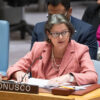
Escalating Violence and Influx of Returnees in DRC Fuel Regional Instability
In the month following the reopening of the Burundi-Democratic Republic of Congo (DRC) border, the humanitarian crisis in the DRC has deteriorated considerably, recently marked by an influx of Congolese refugees returning home, where they face overcrowded conditions and a severe shortage of essential services. This comes in the midst of escalating clashes between rebel groups AFC and M23, and forces affiliated with the Kinshasa government, with drone strikes causing widespread destruction and pushing violence closer to Burundi’s borders, where conditions are most dire.
80 Percent of Rural Households Without Direct Water Access – World Water Report
A new United Nations report has warned that global water inequality remains one of the most pressing development challenges of the decade, with billions still lacking safe drinking water and sanitation – while women and girls continue to bear the heaviest burden of water insecurity.
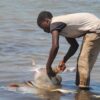
How Child Labour Persists Along Zanzibar’s Blue Economy
As the tide falls on Zanzibar’s western coast, 13-year-old Asha* moves across the reef, her gown flapping in knee-deep water. She carries a plastic basin and a knife. Since dawn, Asha has been prying octopus and scaling fish for drying and selling.
Maison des Talibés Confronts Abuse of ‘Talibé’ children in Senegal
When you walk through the streets of Senegal’s cities, you notice them almost immediately: young boys in worn clothes, clutching plastic cans or tin bowls, weaving between cars and pedestrians to ask for spare change or food. They are often barefoot, alone and hungry. These children are known as talibés.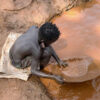
Africa at the Epicenter of Child Labour Crisis as Migration Fuels Exploitation
Although global rates of child labour have declined since 2020, the practice remains a serious and persistent violation of children’s rights, undermining their safety, social development, and long-term economic stability. These risks are intensified by structural pressures— poverty, climate shocks, protracted conflict, and unsafe migration— that continue to push vulnerable children into crisis, and in some cases, trafficking and exploitation. The United Nations Children’s Fund (UNICEF) warns that African countries remain among the most affected regions, underscoring the urgent need for coordinated policy action, cross-border cooperation, and sustained investment to protect children on the move and those at risk of labour exploitation.
‘Since the Coup, Factory Employers Have Increasingly Worked with the Military to Restrict Organising and Silence Workers’
CIVICUS speaks to the Business and Human Rights Centre (BHRC) about labour rights abuses in Myanmar’s garment industry since the 2021 military coup.

One Carries a Broom, the Other a Schoolbag
While other children her age prepared for school, eight-year-old Tania once began her workday. Each morning, she picked up a jharu—the household broom—and cleaned floors inside a private home. At the same time, another child of her age in that household lifted a schoolbag and left for class. One carried a broom. The other carried books.
Ending Child Marriage Needs a Culture of Accountability, Respect for the Rule of Law
Global leaders came together at the sidelines of this year’s UN General Assembly to commit to ending child marriage, calling on all world leaders to make concerted efforts to ensure accountability and enforce the laws that prohibit it.
From Haor to Brickfields
 Nikli Upazila, located in the Kishoreganj district of Bangladesh, is part of the haor region, a vast wetland ecosystem characterized by bowl-shaped depressions. This unique geography subjects the area to significant climatic challenges, particularly recurrent flooding. The haor region, including Nikli, experiences a subtropical monsoon climate with distinct wet and dry seasons. During the monsoon season, heavy rainfall often leads to extensive flooding. Flash floods have become increasingly unpredictable and severe in recent years, causing substantial damage to agricultural lands and affecting the livelihoods of local communities. These people, trapped by water and driven by poverty, journey from the Haor to brickfields, where their lives become an endless cycle of hardship.

Multi-Year Drought Gives Birth to Extremist Violence, Girls Most Vulnerable
While droughts creep in stealthily, their impacts are often more devastating and far-reaching than any other disaster. Inter-community conflict, extremist violence, and violence and injustice against vulnerable girls and women happen at the intersection of climate-induced droughts and drought-impoverished communities.
Increased Demand for Cobalt Fuels Ongoing Humanitarian Crisis in the Democratic Republic of the Congo
The demand for cobalt and other minerals is fueling a decades-long humanitarian crisis in the Democratic Republic of the Congo (DRC). In pursuit of money to support their families, Congolese laborers face abuse and life-threatening conditions working in unregulated mines.
Regaining Progress on Birth Registration Is Critical to Child Protection
Registering the birth of a newborn, which is taken for granted in many countries, has profound lifelong repercussions for a child’s health, protection, and well-being. But after initially increasing this century, the global birth registration rate has declined in the past ten years, with some countries in the Pacific and Sub-Saharan Africa facing significant challenges. Embracing new registration technologies, increasing political will, and increasing parents’ understanding of its importance are paramount to reversing the trend.
End Child Labour Forever through Education for All Children
As we mark today’s World Day Against Child Labour, we must confront an urgent global truth: over 160 million children around the world are engaged in child labour – many of them in the most dangerous, degrading and life-limiting conditions imaginable. These are children forced to work in fields, factories and conflict zones – deprived of their right to safety, to dignity and, above all, to an education.
Lawyer-Turned-Activist Bhuwan Ribhu Honored for Leading a Campaign to End Child Marriage
Bhuwan Ribhu didn’t plan to become a child rights activist. But when he saw how many children in India were being trafficked, abused, and forced into marriage, he knew he couldn’t stay silent.
The Gates to Paradise Are Closing
In 2020, a historic announcement emerged from the Global Trafficking in Persons Report, an annual assessment that evaluates human exploitation in 129 countries. For the first time, the world witnessed a 13% decrease in the number of victims. For those of us who fight against this heinous crime, it felt as if a door to paradise had opened—an Eden where no human being is for sale.
Future of Children in 2050 Will Be Shaped Through Global Trends
The future of childhood will be fundamentally shaped by the interventions taken in the present that can determine how children’s rights are protected amid compounding issues. As a new report from UNICEF shows, global trends that are already influencing children’s welfare and development will continue to shape them and be a further reflection of overall global development.
Uganda Coffee Smallholders Grapple With EU Regulations on Imports
In Kubewo village in eastern Uganda, children often go to work with their parents in the coffee gardens. Earnings from Arabica coffee are used, their parents and grandparents say, to pay for children’s education and other expenses for the family.Next Page »





The Week with IPS

NEXT STOP - SDGs
Tracking global progress towards a sustainable world
Tracking global progress towards a sustainable world
