Languages
Thursday, October 22, 2026



News and Views from the Global South
Natural Resources

Brazil Promotes a Freer Global Biofuels Market
Holding this year's presidency of the Group of 20 (G20) large industrial and emerging economies is allowing Brazil to push forward the dream of creating a global biofuels market without the current trade barriers.
Mexican Cooperative Promotes Energy Transition on Indigenous Lands
What began as a search for fair prices for indigenous handicrafts in 1985 has evolved into a women's organisation in Mexico that promotes climate justice while advocating for land and environmental rights.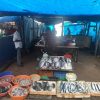
Voices from the Margins: Small-Scale Fishers Demand Rights, Recognition at COP16
Small-scale fishers play a fundamental role in feeding people—they use sustainable methods of catching and processing fish products and are a significant force in the employment and livelihoods of millions of people internationally—yet, until now, they have been excluded from climate and biodiversity conferences.
Diverse Diets Are Essential for Nourishing a Healthy Planet as Well as Healthy People
It’s often said that we are what we eat. However, our diets are also a reflection on the health of our food systems, the environment and agricultural biodiversity.
Defending Biodiversity in Armed Conflict: Can COP16 Meet the Expectations?
José Aruna, a forest defender from Sud Kivu province in the Democratic Republic of the Congo (DRC), remembers the night in September 2019 when a group of heavily armed men barged into his house in the middle of the night. Aruna and his wife—6 months pregnant at the time—were in bed when he heard sounds of boots on the front yard and quickly knew something was about to happen.
Small Farmers Reap Growing Benefits From Solar Energy in Chile
The production of solar energy by means of panels installed on small farmers' properties or on the roofs of community organisations is starting to directly benefit more and more farmers in Chile.
UNEP’s 2024 Emissions Gap Report Warns: ‘No More Hot Air, Please’
The United Nations Environment Programme’s (UNEP) Emissions Gap Report 2024 delivered a stark reminder that the world is still far from meeting its climate commitments.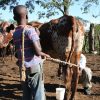
Capacity Building Is Key to Africa’s Digital Sequencing Success Story
Christian Tiambo has always wished to uplift local farmers’ communities through cutting-edge science. As climate change wreaked havoc on local agriculture, Tiambo, a livestock scientist at the Centre for Tropical Livestock Genetics and Health (CTLGH) and at the International Livestock Research Institute (ILRI), focused on conserving and developing livestock that could withstand environmental stress.
The Future of Food Security Lies Beyond COP29’s Negotiation Tables
Climate change has thrown our food systems into chaos. Extreme weather events and dramatic climate variations are hammering food production and supply chains across the world. As global leaders gear up for COP29, there’s plenty of buzz about climate action. But can we really expect these slow-moving, bureaucratic negotiations to deliver tangible and swift results to decarbonize and insulate our agri-food systems? Most likely not. But do not despair. While the COP29 talks unfold, crucial climate solutions for transforming food systems are already taking root on the ground.
Building Water Security for the Next Generation in the Pacific Territories
The Pacific Islands region is both the frontline of the wrath that climate change is lashing on the environment and human life and the drive for innovation and solutions to stem the destruction and strengthen island environments for the future. The survival of life, even nations, in the Pacific depends on it.
IPBES Calls for Holistic Solutions, Transformative Change in Tackling Biodiversity Loss
A holistic approach and transformative change of systems are needed to tackle biodiversity loss and to put the world on a sustainable path, an assessment by the Intergovernmental Science-Policy Platform on Biodiversity and Ecosystem Services (IPBES) has recommended. The world is facing an interconnected crisis of unprecedented biodiversity loss, food insecurity, and environmental degradation that can no longer be tackled through fragmented and piecemeal solutions, a forthcoming assessment by IPBES will show, calling for holistic approaches instead.
With Climate Change, Government Apathy, Who Should Kerala’s Fishworkers Turn To?
Every morning before dawn, fishworkers along the shores of Kochi, Kerala, head out to sea, casting their nets in the shadow of the iconic Cheenavala—the Chinese fishing nets that have become a symbol of their community. I witnessed this time-honored tradition, once a reliable means of survival, now a daily gamble, a fight against unpredictable seas and shrinking fish populations.
Agroecology: The Game-Changing Solution to Global Food, Climate and Conflict Crises
Edward Mukiibi, President of Slow Food, champions agroecology as a transformative answer to the world's most pressing crises: food insecurity, climate change, and violent conflicts. In a world where these challenges intersect, Mukiibi called for an urgent rethink of our approach to food systems.
Biogas, a Circular Energy, Advances in Brazil Thanks to Local Arrangements
“I don't know of a more sustainable technology for the transformation of society than biogas,” said Professor Alex Enrich-Prast, an activist for this energy alternative with a highly diversified and decentralised expansion in Brazil.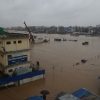
Nepal’s Deadly Flash Floods: What Went Wrong?
Nepal is trying to recover from recent flash floods and landslides caused by heavy rainfall over the last weekend of September, which claimed at least 226 lives. The mid- and eastern parts of the country, including the capital, Kathmandu, experienced the heaviest monsoon rains in two decades from September 26-28, leaving many parts of Kathmandu underwater. Experts say this is one of the deadliest and worst flash floods that impacted thousands of people in decades.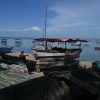
Cuba’s Coastal Dwellers Mitigate the Effects of Climate Change
Every time a hurricane clouds the skies over the city of Manzanillo, in the eastern Cuban province of Granma, the sea pounds the Litoral neighbourhood, forcing many of the 200 families who live there to evacuate inland because of flooding. When the weather is calm, the sea penetrates subtly and constantly, salinizing the water table and eroding the coast, affecting the foundations of houses and artesian wells.
Rejuvenating Tradition To Help Save Ancient Engineering Marvel—Dhamapur Lake
Dhamapur is a small village in Malvan taluka of west Sindhudurg district, housing the famous Dhamapur Lake. The Vijayanagar kings constructed an earthfill dam in 1530 A.D., creating a man-made lake surrounded by hills on three sides. Canals connect it to the Karli river, irrigating lush paddies and farms that grow the red Sorti and Walay rice varieties typical to the region.
Solar Panels Aim to Protect Mexican Family Farming
Verónica Molina, an indigenous Comcaac woman, first came into contact with solar energy in 2016, when she travelled to India for training on communal photovoltaic facilities. This later enabled her to take part in the installation of the first solar systems and family vegetable gardens in her community, Desemboque del Seri, in northern Mexico.
Tanzania’s Maasai Women Adopt Climate-Smart Solutions To Tame Drought
In the scorching sun of Mikese village in Tanzania’s eastern Mvomero district, 31-year-old Maria Naeku tirelessly tends to her small vegetable patch. Each time she pulls a weed, the red soil stains her hands as she guides the trickle of water from a maze of pipes through an elevated bed to nurture her plants. In a drought-stricken area, Naeku's small garden is a lifeline for her family, giving them food and income.
Mexican chinampas survive surrounded by threats
Mexican Crescencio Hernández orders radishes, herbs and lettuce for shipment to an alternative market in west-central Mexico City.
Small Glacial Lakes’ Mass Destruction in the Himalayan Community
Small glacial lakes can cause destruction, which may impact the livelihoods of entire communities. Now this is the harsh reality that the community of Thame village in the Mt. Everest region of Nepal now faces as they rebuild after the August 16 disaster.« Previous Page — Next Page »





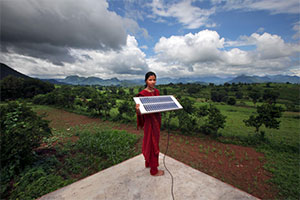 Bringing clean energy to rural India. Credit: Abbie Trayler-Smith / Panos Pictures / Department for International Development
Large reserves of oil, gas and minerals in developing countries generate opulent revenues. They could be used to stimulate economic growth and reduce poverty, but often result in environmental destruction and conflict, benefiting large companies and corrupt governments. Furthermore, competition over natural resources often manifests through geopolitical conflict. For example, before the US-Iraq war, Iraq’s domestic oil industry was nationalized. With US aggression came weakened Iraqi institutions and foreign intervention, thus eventually leading to the privatization of Iraqi oil, leaving the industry now largely dominated by Western companies. As another example, China’s rising investments within the lithium sector in South America are increasing the US-China rivalry across the Western Hemisphere. Notably, Bolivia has the largest reserves of lithium in the world, and the nation’s state-owned lithium extraction firm recently signed a contract with China’s CBC Consortium, while rejecting the entry of Western firms into the nation. In Bolivia’s case, rising Chinese investment in the nation’s lithium sector also raises concerns about environmental sustainability and the sociopolitical rights of Indigenous communities. More broadly, Sub-Saharan Africa holds nearly 30% of global reserves of critical minerals required for low-carbon technologies. Despite this, the region attracts less than 10% of global exploration investment, depicting a critical barrier to both the clean energy transitions and Sub-Saharan Africa’s economic development. Furthermore, resource wealth continues to fuel conflict like Sudan’s civil war, which has led to 9.1 million internally displaced people and is intensely connected to competition over gold, water, and agricultural land. IPS covers news about major oil, gas, and mining projects, their effects on the environment and local communities, and the ideas and actions of the interest groups involved.

The Week with IPS

NEXT STOP - SDGs
Tracking global progress towards a sustainable world
Tracking global progress towards a sustainable world
