Languages
Thursday, November 19, 2026



News and Views from the Global South
Economy & Trade

Caribbean Seeks to Climate-Proof Tourism Industry
The tourism industry is the key economic driver and largest provider of jobs in the Caribbean after the public sector. Caribbean tourism broke new ground in 2016, surpassing 29 million arrivals for the first time and once again growing faster than the global average.
Ending Child Marriage Could Add Trillions to World Economy
The benefits of ending child marriage are many—boosting a young girl’s morale and increasing her chances of education and work, and by that virtue, curbing high population rates in developing economies and boosting growth.
Southeast Asia: From Miracle To Debacle
The World Bank and other influential international financial institutions and development agencies have been touting Southeast Asian (SEA) newly industrializing countries as models for emulation, especially by African developing countries seeking to accelerate their development transformations. But these recommendations are usually based on misleading analysis of their rapid growth and structural transformation.
Insurance: A Valuable Incentive for Small Farmers’ Climate Resilience
Frequent extreme weather and climate shifts pose a challenge to already vulnerable groups such as smallholder farmers in the developing world. Between 2004 and 2014, farmers are said to have endured the brunt of the 100-billion-dollar cost of climate-related disasters.
China Drives Nuclear Expansion in Argentina, but with Strings Attached
Two new nuclear power plants, to cost 14 billion dollars, will give a new impetus to Argentina’s relation with atomic energy, which began over 60 years ago. President Mauricio Macri made the announcement from China, the country that is to finance 85 per cent of the works.
Any Way to Help Slow Down Climate Change… Individually?
 It is no secret that the biggest responsible for climate change is greed. The greed of the world’s largest private corporations, which blindly seek unlimited high financial benefits. And the greed of those politicians who are also blindly keen about holding their temporary power at any cost, thus not daring to challenge big business. Ordinary people can meanwhile help slow down such a hellish race.

Putting the Spotlight on Women Migrant Workers
Migrant workers, and their economic contribution to the development of both the country of origin and the host country, have caught the eye of governments and policymakers worldwide.
Rural Poverty? Cooperatives!
Humanity has had and has big projects. Mastery of nature is one, still going on. Middle range phenomena have been mastered, but not the micro level of viri–HIV is a current case–nor the macro level of climate–to the contrary, humanity is making it worse.
Global Devaluation of Work Drives Up Unemployment in Brazil
In addition to driving up the number of unemployed people to 14.2 million, the severe recession of the last two years led Brazil to join the global trend of flexibilisation of labour laws in order to further reduce labour costs.
The World Is Burning
Record high temperatures are gripping much of the globe and more hot weather are to come. This implies more drought, more food insecurity, more famine and more massive human displacements.
UN Response Teams Underfunded as Costs Hit Staggering $23.5 Billion
UN response teams that help the most vulnerable people in the world are still largely underfunded, a new status report has revealed. The funding available to the teams is no match for the record number of people—141 million—who need assistance today.
East Asia’s Real Lessons
International recognition of East Asia’s rapid economic growth, structural change and industrialization grew from the 1980s. In Western media and academia, this was seen as a regional phenomenon, associated with some commonality, real or imagined, such as a supposed ‘yen bloc’.
Children Now More Than Half of the 65 Million Displaced
Around 20 people are newly displaced every minute of the day, according to a new report. In its annual Global Trends report, the UN’s refugee agency UNHCR has recorded unprecedented and concerning levels of displacement around the world.
The World Society Needs to Express Greater Solidarity for Refugees Worldwide
The world is heading into troubled waters as we are witnessing an unprecedented movement of people – refugees, migrants and internally displaced persons (IDPs) alike – fleeing from misery, poverty and conflicts. The refugee crisis that has swept across Europe and the Middle East is becoming the 21st century’s most protracted crisis with no immediate solution in sight. The world has not witnessed a more complex movement of people since the end of the Second World War; thousands of human beings undertake perilous and treacherous journeys in hope for a better and a safer future. Many of them perish during these hazardous journeys.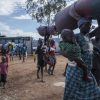
New Inhumane Record: One Person Displaced Every Three Second
Nearly 66 million people were forcibly displaced from their homes last year, the United Nation refugee agency has reported.
UN Work Stoppage in Geneva Halts Human Rights Meeting
As UN staffers in Geneva threaten a strike, protesting a proposed salary cut of over 7.5 percent, a token two-hour “work stoppage” last week forced the Human Rights Council to suspend its meeting.
Achieving Universal Health Coverage (UHC) in Kenya through Innovative Financing
Every year, one million Kenyans are driven below the poverty line by healthcare-related expenditures. Poverty predisposes them to disease and slows all aspects of growth in the economy.
Africa: Drought and Jobless, Hopeless Youth, Fertile Grounds for Extremism
Ignoring the plight of jobless young people in sub-Saharan Africa is a recipe for political instability and global insecurity, warned a high-level symposium of Africa’s interior, environment and foreign affairs ministers in Ouagadougou, Burkina Faso.
Safeguarding Precious Crop Genes in Trust for Humanity
A genetic resource centre run by the Nigeria-based International Institute for Tropical Agriculture (IITA) has banked thousands of crop varieties for disaster relief and research, holds the world’s largest and most diverse collection of cowpeas, and contains some of Africa’s rarest insect species.
Africa Could Help Feed the World – If Its Fertile Land Doesn’t Vanish
The 23rd World Day to Combat Desertification was celebrated in Burkina Faso’s capital of Ouagadougou on June 15 with a call to create two million jobs and restore 10 million hectares of degraded land.
IFAD’s President Houngbo Calls for Investment in Climate-Smart Agriculture for Poverty-Free Future
Implementing climate-smart agriculture is critical to reduce hunger and poverty, according to International Fund for Agricultural Development’s (IFAD) new president Gilbert Houngbo.« Previous Page — Next Page »


 UN Commission on International Trade Law Holds Colloquium on Harmonizing Law in Age of Digital Trade and Finance. Credit: UN Photo/Manuel Elías
Trade has historically been a geopolitical tool that can both be used to propel development as well as entrench inequalities. In various nations in East Asia and Latin America, increased trade, as often seen in export booms, has allowed them to achieve influential standings within the global economy. On the other hand, many low-income countries in Sub-Saharan Africa, Asia, and Latin America struggle to maintain a robust trade performance, and oftentimes are subjugated to exploitative trade dynamics through intense extraction of their natural resources. In recent decades, international trade has reached a new era as emerging economies across the world are rising in economic preeminence. Stable international trade is crucial to world peace as global interconnectedness facilitates reliable diplomacy. Nevertheless, significant challenges are on the rise. Notably, a major wave of United States tariff escalations in January 2025 lifted US import taxes to their highest level since the 1930s, changing market dynamics and forcing renegotiations with global trading partners.These articles are aimed at informing readers about the complexities of trade and its varying effects on development, with a special focus on the consequences of the global economic crisis, the potential of fair trade and the gender implications of trade policies.
Updated by Yilan Batista and Shuli Wong August 2026

The Week with IPS

NEXT STOP - SDGs
Tracking global progress towards a sustainable world
Tracking global progress towards a sustainable world
