Languages
Friday, November 20, 2026



News and Views from the Global South
Economy & Trade

The -Sad- US Nominations
The US mountain, so rich in human talent, labored and produced the two dwarfs for the huge job. A radical Republican strongman[i] and a conventional Democrat, disliked by 62% and 67%–bad for electing the president of a country that still puts some stamp on the world.
Lessons from Germany for Latin America’s Energy Transition
Germany has been undergoing an energy transition for over 20 years, and it can offer valuable lessons to Latin America with regard to promoting renewable energy and moving towards a low-carbon economy.
Mainstream Media Are Betraying Humanity
Physicians have a sacred duty to their patients, whose lives are in their hands. The practice of medicine is not a business like any other business. There are questions of trust and duty involved. The physician’s goal must not be to make as much money as possible, but rather to save lives.
There Is No Substitute
To observe the World Breastfeeding Week, which is marked around the world from August 1-7 since 1992, the World Alliance for Breastfeeding Action (WABA) has declared this year's theme to be "Breastfeeding: a key to sustainable development" August 1-7.Attacks Take Toll on French Tourism
PARIS: France’s already-battered tourism industry took a further hit in late July during what should have been the height of the season as foreign visitors stayed away after 84 people were killed in Nice on Bastille Day.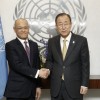
Q&A: Representing Developing Countries at the United Nations in New York
IPS spoke with the Virachai Plasai, Ambassador and Permanent Representative of the Kingdom of Thailand to the United Nations and Chair of the Group of 77 about what it’s like to represent 134 developing countries, including China, at UN meetings in New York. Plasai spoke about some of the group’s priorities for 2016, including the selection of the ninth UN Secretary-General, the 2030 Development Agenda, including the 17 Sustainable Development Goals, and the implementation of the Paris Climate Change Agreement.
Newly Empowered Black Farmers Ruined by South Africa’s Drought
Almost half a decade of drought across most of South Africa has led to small towns in crisis and food imports for the first time in over 20 years, as well as severely hampering the government’s planned land redistribution programme.
UN Trade and Development Conference a “Big Win” for Multilateralism
The UN Conference on Trade and Development (UNCTAD) concluded its five-day meeting in Nairobi on a positive note—the launch of a new e-trade initiative and a multi-donor trust fund on trade and productive capacity.
Feed the Children
Hunger still stalks many of our countrymen. It is particularly destructive with our children who, because of poverty, do not get enough to eat, become vulnerable to disease and exploitation and end up unhealthy, uneducated and unhappy. Uneducated because the need to eat superimposes itself over everything, so that all their waking hours are spent looking to satisfy hunger, eschewing going to school. Unhappy because in the long run, without education, there will be a long, hard climb to get a job; most of all, a job that will provide a decent livelihood.
Chronic Hunger Lingers in the Midst of Plenty
In a fraught global economic environment, exacerbated by climate change and shrinking resources, ensuring food and nutrition security is a daunting challenge for many nations. India, Asia's third largest economy and the world's second most populous nation after China with 1.3 billion people, is no exception.
US Government Report Exposes Exaggerated TPPA Growth Claims
A US government agency acknowledges that the Trans-Pacific Partnership (TPP) will not deliver many economic benefits promised by its cheerleaders. The 2016 report by the United States International Trade Commission (ITC) acknowledges that the TPP will not deliver many gains claimed by the US Trade Representative (USTR) and the Peterson Institute of International Economics (PIIE) although it uses similar methodology and assumes that the TPP will not change the US trade deficit as a share of GDP.
African Leaders Driving Push for Industrialisation: UN Official
Industrialisation in Africa is being driven by African leaders who realise that industries as diverse as horticulture and leather production can help add value to the primary resources they currently export.List of Acts President Must Do for Disaster Risk Reduction and Management
President Rody Dutuerte’s SONA could not possibly give details about every important program of his administration. But a SONA does mark for the people which activities a president thinks should be given top priority.
Climate Migrants Lead Mass Migration to India’s Cities
Deepa Kumari, a 36-year-old farmer from Pithoragarh district in the Himalayan state of Uttarakhand, lives in a one-room tenement in south Delhi's Mongolpuri slum with her three children. Fleeing devastating floods which killed her husband last year, the widow landed up in the national capital city last week after selling off her farm and two cows at cut-rate prices.
Forests and Crops Make Friendly Neighbors in Costa Rica
While Latin America keeps expanding its agricultural frontier by converting large areas of forest, one country, Costa Rica, has taken a different path and is now a role model for a peaceful coexistence between food production and sustainable forestry.
How Did We Arrive at This Chaos?
A Chinese curse is “May you live in interesting times”. That meant that too many events would disrupt the essential elements of harmony, on which the Chinese pantheon is based. We certainly live in very interesting times where every day dramatic events pile on us, from terrorism to coup d’etat, from climate disaster to the decline of institutions and ever increasing social turmoil. It would be important, even if very difficult, to look in a nutshell why we are in this situation now - "lack of harmony" . So here goes a dramatically compressed explanation.
Fertilizer Access Grows Farmers, Food and Finance
Brightly coloured cans, bags of fertilizer and packets containing all types of seeds catch the eye upon entering Nancy Khorommbi’s agro dealer shop tucked at the corner of a roadside service station.
100-year-old Boat Market in Pirojpur
 The use of traditional boats may be disappearing fast, but there is one place in Nesarabad upazila (formerly Swarupkathi) in Pirojpur, where you can still buy newly made boats for a trifle amount.

Modern-day Slavery in Oman? Domestic Workers in Peril
In order to escape poverty and support their families back home, thousands of domestic workers from South and South-East Asia migrate to Oman with the promise of stable employment in local households.
Enemy Images
Members of Congress have embarrassed themselves, this time by a joint subcommittee hearing on whether Pakistan is a friend or foe. Framing a congressional hearing in this binary way reflects the sad state of political discourse on Capitol Hill, where complex issues are boiled down to ‘yes’ or ‘no’ answers. Members of Congress dress themselves in righteous indignation and confuse leadership with generating headlines.
Biswal’s Dreams Just Pretentious Prattle
So Nisha Biswal, the US State Department’s point person on Sri Lanka, says that Sri Lanka could be another Singapore. That will be the day. If after six visits to the country in 20 months she has still not grasped the basics of Sri Lanka’s socio-political culture and mores, the lack of respect for law and order and the rule of law infused by political interference and intimidation, she could hardly be a messenger of hope and good sense.« Previous Page — Next Page »


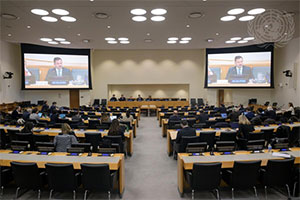 UN Commission on International Trade Law Holds Colloquium on Harmonizing Law in Age of Digital Trade and Finance. Credit: UN Photo/Manuel Elías
Trade has historically been a geopolitical tool that can both be used to propel development as well as entrench inequalities. In various nations in East Asia and Latin America, increased trade, as often seen in export booms, has allowed them to achieve influential standings within the global economy. On the other hand, many low-income countries in Sub-Saharan Africa, Asia, and Latin America struggle to maintain a robust trade performance, and oftentimes are subjugated to exploitative trade dynamics through intense extraction of their natural resources. In recent decades, international trade has reached a new era as emerging economies across the world are rising in economic preeminence. Stable international trade is crucial to world peace as global interconnectedness facilitates reliable diplomacy. Nevertheless, significant challenges are on the rise. Notably, a major wave of United States tariff escalations in January 2025 lifted US import taxes to their highest level since the 1930s, changing market dynamics and forcing renegotiations with global trading partners.These articles are aimed at informing readers about the complexities of trade and its varying effects on development, with a special focus on the consequences of the global economic crisis, the potential of fair trade and the gender implications of trade policies.
Updated by Yilan Batista and Shuli Wong August 2026

The Week with IPS

NEXT STOP - SDGs
Tracking global progress towards a sustainable world
Tracking global progress towards a sustainable world
