Languages
Friday, November 20, 2026



News and Views from the Global South
Economy & Trade

The Wild Cards
The Rio Olympics began with the signature fanfare that accompanies the Games every four years. However, unlike every year, the nature and size of the spectacle, the synchronised dancers, over-the-top fireworks and the millions spent brought a new set of disappointments with them.
The UN Steps up Efforts to End Child Marriage
Barely 17 years old and from the Gajapati district in Odisha, India, Susmita has never gone to school. She rears the few animals her family owns, and this is her primary duty besides attending to household chores.
Kenya’s Health Sector Challenges Present the Ideal Setting for Creating Shared Value
The increased budgetary allocations to the health sector by county governments point to an acknowledgement not only of the enormous challenges facing the sector, but also of good health as a prerequisite to overall development.
Don’t Bash the Games
There have been few moments in my life as memorable as competing in the 1984 Olympic Games in Los Angeles. The chance to represent my country was a distinct honor, as was being part of the community of the Olympics — an event with the rare power to unite the world in the common spirit of competition and athletic excellence.An Unequal Country
One of the world’s great achievements of the past decades has been the significant fall in global poverty. Between 1990 and 2012, the proportion of humanity living under $1.90 a day fell from 37 per cent to only 13pc, driven in large part by the efforts of China. South Asia also witnessed a major decline in poverty, from 51pc to 19pc, with unequal progress across countries.
Native Plants Boost Local Diets in El Salvador
Juana Morales is cooking one of the most popular dishes in El Salvador: pupusas, corn tortillas with different fillings. But hers are unique: they are not made with the traditional corn tortillas, but use Maya nuts, a highly nutritional seed that has fallen out of use but whose consumption is being encouraged in rural communities.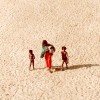
War on Climate Terror (I): Deserts Bury Two Thirds of African Lands
Two-thirds of the African continent is already desert or dry-lands. But while this vast extension of the second largest continent on Earth after Asia is “vital” for agriculture and food production, nearly three-fourths of it is estimated to be degraded to varying degrees.
Education: An Elusive Dream for Cameroon’s Indigenous Peoples
It is a sunny afternoon in Boui, a small village in the Boumba and Ngoko Division of Cameroon’s South East Region. A primary school teacher is drawing some wild animals on the blackboard. Then she turns to the class of fifteen pupils.
Blame It on Cronyism, Not the Free Market
The current condition of global economic inequality should be of concern to all. An Oxfam report published this year titled, An economy for the 1%, revealed that “the richest 1% now have more wealth than the rest of the world combined.” It also said that "62 of the richest people now own more wealth than the bottom half of the world's population. In 2015 it was the 80 richest, in 2014 it was 85 and in 2010, only six years back, it was 388 richest that owned similar wealth”, showing that inequality is actually growing at an increasing rate. This is also made evident by the fact that “the wealth of the poorest half of the world's population has fallen by a trillion dollars since 2010, a drop of 38 percent" while “the wealth of the richest 62 has increased [during the same period] by more than half a trillion dollars to $1.76 trillion.”
Thinking Global? Act Provincial
The least populated, northernmost province in North America even its own citizens dread to go has a per capita GDP of C$58,452 compared with C$3,439.28 for the entire Philippines.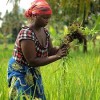
African Farmers Can Feed the World, If Only…
Can African farmers feed the world?. Apparently the answer is “yes.” Bold as it may sound, this statement is based on specific facts: Africa is home to 60-65 per cent of the world’s uncultivated arable land and 10 per cent of renewable freshwater resources, and it has registered a 160 per cent increase in agricultural output over the past 30 years.
Developing Nations Seek Tax Body to Curb Illicit Financial Flows
Despite Western opposition, the 134-member Group of 77 is continuing to pursue a longstanding proposal for an inter-governmental UN-affiliated tax body aimed at combating corporate tax dodging and curbing illicit financial flows, including money laundering and off-shore banking.
Sustainable Development in Africa Will Not Be Achieved Without Women’s Full Participation
In some parts of the world, the proverbial “glass ceiling” is shattering. As Theresa May and, most likely, Hillary Clinton join Angela Merkel at the leadership of three major world powers, women’s leadership in politics is on the ascent.
The Devil in Development
The word “development” - eliciting as it does grandiloquent notions of progress - has become, at least in Bangladesh, something of a red herring. It is used as a catch-all phrase to justify just about anything — from eviction of slum-dwellers to make way for high-rise housing projects to forceful grabbing of ancestral lands to build eco-parks and tourism spots, from rampant deforestation of our woodlands to unapologetic pollution of our rivers, from undemocratic and top-down imposition of anti-people projects to suppression of dissent through violence both sponsored or otherwise. It matters little that such so-called development only exacerbates the extreme vulnerabilities of people already on the margins, destroys scarce natural resources and intensifies the ever-widening gap between the haves and the have-nots; that it does precisely the opposite of what “development”—real, pro-people development—ought to do. If one protests these actions as unjust, undemocratic or inequitable, one can be easily dismissed as being “anti-development”, and by extension, “unpatriotic”, making it ever more difficult to have any sort of constructive conversation about Bangladesh's development priorities (or the lack thereof).
Climate-Smart Agriculture for Drought-Stricken Madagascar
Mirantsoa Faniry Rakotomalala is different from most farmers in the Greater South of Madagascar, who are devastated after losing an estimated 80 percent of their crops during the recent May/June harvesting season to the ongoing drought here, said to be the most severe in 35 years.
Poverty, Vulnerability and Social Protection
According to the World Bank, the MDG target of halving the share of the poor was achieved by 2008, well in advance of 2015, the target year. However, increased unemployment and lower incomes in recent times remind us that poverty is not an unchanging attribute of a shrinking group, but rather, a condition that billions of vulnerable persons risk experiencing.
Olympic Games End Decade of Giant Mega-projects in Brazil
An era of mega-events and mega-projects is coming to a close in Brazil with the Olympic Games to be hosted Aug. 5-21 by Rio de Janeiro. But the country’s taste for massive construction undertakings helped fuel the economic and political crisis that has it in its grip.
Nutrition – Small Investments Can Make a Huge Impact
Bangladesh has made great strides in many areas, including poverty eradication and life expectancy. There are still many opportunities for investments that improve the nation's future and transform lives.
Preventing the Next Panic
The hostility toward Wall Street remains so great that both political parties say, in their platforms, that they’d like to break up America’s biggest banks. But before engaging in this drastic economic surgery, it’s worth examining whether Dodd-Frank is working. Recall that the law, named after its congressional sponsors, former Sen. Senator Christopher Dodd and former Rep. Barney Frank, overhauled the financial system to make it more panic proof. Is it? The answer may surprise.
New Alliance to Shore Up Food Security Launched in Africa
As over 20 million sub-Saharan Africans face a shortage of food because of drought and development issues, representatives of the U.N. Food and Agriculture Organisation (FAO) and the Pan African Parliament (PAP) met in Johannesburg to forge a new parliamentary alliance focusing on food and nutritional security.
The -Sad- US Nominations
The US mountain, so rich in human talent, labored and produced the two dwarfs for the huge job. A radical Republican strongman[i] and a conventional Democrat, disliked by 62% and 67%–bad for electing the president of a country that still puts some stamp on the world.« Previous Page — Next Page »


 UN Commission on International Trade Law Holds Colloquium on Harmonizing Law in Age of Digital Trade and Finance. Credit: UN Photo/Manuel Elías
Trade has historically been a geopolitical tool that can both be used to propel development as well as entrench inequalities. In various nations in East Asia and Latin America, increased trade, as often seen in export booms, has allowed them to achieve influential standings within the global economy. On the other hand, many low-income countries in Sub-Saharan Africa, Asia, and Latin America struggle to maintain a robust trade performance, and oftentimes are subjugated to exploitative trade dynamics through intense extraction of their natural resources. In recent decades, international trade has reached a new era as emerging economies across the world are rising in economic preeminence. Stable international trade is crucial to world peace as global interconnectedness facilitates reliable diplomacy. Nevertheless, significant challenges are on the rise. Notably, a major wave of United States tariff escalations in January 2025 lifted US import taxes to their highest level since the 1930s, changing market dynamics and forcing renegotiations with global trading partners.These articles are aimed at informing readers about the complexities of trade and its varying effects on development, with a special focus on the consequences of the global economic crisis, the potential of fair trade and the gender implications of trade policies.
Updated by Yilan Batista and Shuli Wong August 2026

The Week with IPS

NEXT STOP - SDGs
Tracking global progress towards a sustainable world
Tracking global progress towards a sustainable world
