Languages
Sunday, October 18, 2026



News and Views from the Global South
Economy & Trade

Food, Water, Crime, Climate Change: CARICOM Leaders Begin 48th Conference with Commitment to Joint Action on Critical, Common Concerns
Leaders of the Caribbean Community (CARICOM) are meeting in Bridgetown from Feb. 19-21, as the world grapples with multiple crises, including escalating geopolitical conflicts, climate change and rising food insecurity.
Shaping AI Rules Through Trade Agreements
The inclusion of AI provisions in preferential trade agreements (PTAs) has been steadily rising. Since 2019, when the China-Mauritius Free Trade Agreement first mentioned AI, PTAs have progressively evolved to include elements addressing the broader implications of emerging technologies.
Only Political Will Can End World Hunger: Food Isn’t Scarce, but Many People Can’t Access It
History has shown us again and again that, so long as inequality goes unchecked, no amount of technology can ensure people are well fed.
The Land of Immigration: America’s Demographic Past, Present and Future
Of the approximately 280 million immigrants in the world, the country hosting the largest number is America, the land of immigration. One-fifth of the world’s international migrants reside in the US, with those migrants arriving from nearly every country in the world.
A Global Retreat from Solidarity
The world is witnessing a dangerous retreat from international solidarity by Global Minority countries. From Washington to Brussels, governments are slashing funds that sustain human rights, democracy, and humanitarian initiatives.
Human Insecurity from Climate Change on Vanuatu and Guam
The climate crisis is severely endangering human well-being. While the climate security nexus is omnipresent in national security strategies and on international institutions’ agendas, political responses remain insufficient and are often problematic. Among other issues, related policies often struggle with siloization or a focus on symptoms instead of root causes.

From Recovery to Resilience: Transforming Tourism for a Sustainable Future
Tourism is back – and stronger than ever. With 1.4 billion international tourist arrivals recorded globally in 2024, the sector has bounced back to pre-pandemic levels, signalling a recovery from its worst crisis.
Race Against Time as Hunger, Poverty Rise Amid Growing Global Uncertainties
Nearly one in 11 people in the world and one in five people in Africa go hungry every day, a crisis primarily driven by chronic inequality, climate change, conflict and economic instability. At the current pace, hunger and extreme poverty rates show little sign of drastically receding by 2030.
Climatic Change Pushes Pakistan’s Promising Trout Fish Farming Towards Brink of Collapse
Pakistan’s once-thriving trout fish farming industry, a vital source of livelihood for communities in the country’s mountainous northern region, is now on the verge of collapse due to the devastating impacts of climate change.
Imperialism (Still) Rules
Many in the West, of the political right and left, now deny imperialism. For Josef Schumpeter, empires were pre-capitalist atavisms that would not survive the spread of capitalism. But even the conservative Economist notes President Trump’s revival of this US legacy.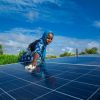
Decoding Africa’s Energy Journey: Three Key Numbers
At night, when the world lights up, large swathes of Africa remain cloaked in darkness—a stark reminder of the continent’s lack of reliable access to electricity.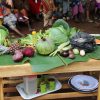
WFP, FAO Warn of the Severity of the Climate Crisis and Food Insecurity
Over the past few years, climate shocks have become more frequent and have devastated economies and agriculture systems, exacerbating widespread malnutrition and hunger. It has become increasingly apparent that the utilization of sustainable agriculture practices and disaster risk management systems are crucial to fulfill growing needs as natural resources continue to dwindle.
Tax the Super-Rich. We have a World to Win
Why can’t there be education for every child? Why can’t there be healthcare for everyone who needs it? Why can’t everyone be freed from hunger and deprivation? Though these are promised to all as rights, people are repeatedly told that there is no money.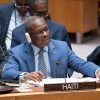
Haitian Government Faces Criticism for its Response to Gang Attack in Kenscoff
The humanitarian situation in Haiti continues to deteriorate as armed gangs expand their control in Port-Au-Prince and escalate acts of violence throughout the nation. Due to heightened insecurity, civilian displacement has reached new peaks, with hunger, disease, and the economic crisis having grown worse. With access to basic services diminished, approximately 5.5 million Haitians are dependent on humanitarian aid for survival. However, relief efforts have been severely hampered due to safety risks, restricted mobility and the vast scale of needs.
Why Trump’s Tariffs Can’t Solve America’s Fentanyl Crisis
Americans consume more illicit drugs per capita than anyone else in the world; about 6% of the U.S. population uses them regularly. One such drug, fentanyl – a synthetic opioid that’s 50 to 100 times more potent than morphine – is the leading reason U.S. overdose deaths have surged in recent years. While the rate of fentanyl overdose deaths has dipped a bit recently, it’s still vastly higher than it was just five years ago.
Benin: An African Pioneer
Benin faced a number of negative spillovers in 2022: a deteriorating regional security situation at its northern border, the lingering scars of COVID-19, and higher living costs amid the war in Ukraine.
Afghanistan’s Humanitarian Crisis Expected to Worsen in 2025
The humanitarian crisis in Afghanistan has deteriorated significantly since the 2021 Taliban Offensive, an insurgency that resulted in the Taliban’s reclamation of power and the fall of the nation’s republic. In 2024, the Taliban issued further restrictions on human rights in Afghanistan, particularly for women and girls. These restrictions caused the country to enter a state of economic emergency. This, compounded with heightened insecurity and limited access to basic services, has left over 23 million people in dire need of humanitarian assistance.
Venezuela: The Democratic Transition That Wasn’t
Venezuela stands at a critical juncture as Nicolás Maduro begins a controversial third term as president. His 10 January inauguration, following a post-election period marked by widespread protests against election fraud and heightened repression, represents a significant setback for democratic aspirations in a country devastated by years of economic collapse and political oppression. Maduro’s confirmation at the helm is the latest chapter in a decades-long process that has transformed Venezuela from a beacon of leftist democratic aspirations into a full-blown authoritarian regime, where the last shred of legitimacy – popular election – has now vanished.
America’s Scourge: An Ageing Elderly Population
Many Americans, especially the wealthy and successful, have discovered that the US is facing the scourge of an ageing elderly population that is seriously threatening the nation’s prosperity, economic growth and international standing.
Mexico’s New Economic Plan Lacks Energy
This January, Mexico has embarked on a new industrial path for the next six years, where the viability of its energy component faces fundamental challenges that put it at risk.
‘Areas Essential to the Global Climate Are Being Threatened by Economic Projects’
CIVICUS discusses activism against oil auctions in the Democratic Republic of the Congo (DRC) with François Kamate, founder and coordinator of the young environmental volunteer movement Extinction Rebellion Rutshuru.
« Previous Page — Next Page »





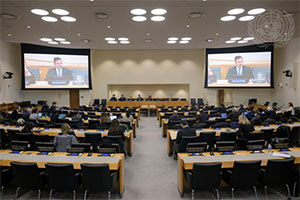 UN Commission on International Trade Law Holds Colloquium on Harmonizing Law in Age of Digital Trade and Finance. Credit: UN Photo/Manuel Elías
Trade has historically been a geopolitical tool that can both be used to propel development as well as entrench inequalities. In various nations in East Asia and Latin America, increased trade, as often seen in export booms, has allowed them to achieve influential standings within the global economy. On the other hand, many low-income countries in Sub-Saharan Africa, Asia, and Latin America struggle to maintain a robust trade performance, and oftentimes are subjugated to exploitative trade dynamics through intense extraction of their natural resources. In recent decades, international trade has reached a new era as emerging economies across the world are rising in economic preeminence. Stable international trade is crucial to world peace as global interconnectedness facilitates reliable diplomacy. Nevertheless, significant challenges are on the rise. Notably, a major wave of United States tariff escalations in January 2025 lifted US import taxes to their highest level since the 1930s, changing market dynamics and forcing renegotiations with global trading partners.These articles are aimed at informing readers about the complexities of trade and its varying effects on development, with a special focus on the consequences of the global economic crisis, the potential of fair trade and the gender implications of trade policies.
Updated by Yilan Batista and Shuli Wong August 2026

The Week with IPS

NEXT STOP - SDGs
Tracking global progress towards a sustainable world
Tracking global progress towards a sustainable world
