Languages
Tuesday, October 13, 2026



News and Views from the Global South
Economy & Trade

The Gates to Paradise Are Closing
In 2020, a historic announcement emerged from the Global Trafficking in Persons Report, an annual assessment that evaluates human exploitation in 129 countries. For the first time, the world witnessed a 13% decrease in the number of victims. For those of us who fight against this heinous crime, it felt as if a door to paradise had opened—an Eden where no human being is for sale.
Looming Tariffs Threaten Food Supplies
Who bears the brunt in trade wars? The answer is absolutely everyone. Not just the countries enacting or retaliating with tariffs and export bans, and not just the citizens of those countries. It’s everyone.
U.S. Passes on UN Ukraine Resolution amid the Humanitarian Crisis
From late 2024 to early 2025, the humanitarian situation in Ukraine has taken a turn for the worst, with poverty, violence, displacement, and damage to critical infrastructures having grown in intensity. Following the 2022 invasion of Ukraine by Russia, tensions have grown among member states of the United Nations (UN) on how to resolve the Russo-Ukrainian War.
African Leaders Challenged To Unite Against Energy Transition Mineral Oppressors
Renewable energy and climate change activists have challenged African heads of state to take a united stance to safeguard essential mineral resources, particularly in the Democratic Republic of the Congo (DRC) and other parts of the continent, which are selfishly exploited by foreign miners with disregard for poverty-stricken local communities.
Hortolandia Emerges as an Energy and Environmental City in Brazil
Almost everything seems new or under construction in the southern Brazilian city of Hortolandia, from its wide avenues and cable-stayed bridge to its large buildings and riverside parks.
Life-Changing Quarry Mining Shatters Lives in Zimbabwe
On Christmas Day in 2022, 27-year-old Thabani Dlodlo’s eight-year-old son drowned in a flooded pit dug up by quarry miners in the vicinity of Pumula North, a high-density suburb in Bulawayo, Zimbabwe’s second-largest city. As if that was not enough, just a week after New Year’s Day the following year, Dlodlo’s neighbor, 36-year-old Sethule Hlengiwe, also lost her six-year-old daughter after she drowned in another pit flooded with rainwater near her home in Bulawayo.
Mexican Electric Vehicles Struggle to Accelerate
Mexico has seen several attempts at assembling electric vehicles (EVs), powered by rechargeable batteries, which have faced challenges related to industrial scale, supply chains, and competitiveness
Outlook for 2025: Strengthening the Foundations of Children’s Futures
In 2025, the world is facing a new and intensifying era of crisis for children. Climate change, economic instability, and conflict are hitting harder and more often, intersecting in ways that make the challenges of addressing them even more severe.
America First Deepens World Stagnation
Donald Trump’s Make America Great Again (MAGA) appeal captured US mass discontent against globalisation. In recent decades, variations of America First have reflected growing ethnonationalism in the world’s presumptive hegemon.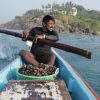
Mussel Divers in Kerala Face Livelihood Loss, with Species Habitat Under Threat
Ibrahim Basheer plunges into the sea and disappears. He remains gone for a couple of minutes before resurfacing for a deep breath of air, repeating this for the next half an hour. When he finally climbs aboard his boat, the net sack around his neck is filled with mussels—his catch for that diving trip. He rests for a short while before diving into the sea again—needing one more such trip to fill the basket he has brought along.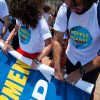
Civil Society at the Finance in Common Summit Calls for Community-led, Equitable, and Human Rights-based Development
As public development banks gather for the Finance in Common Summit (FiCS) in Cape Town, South Africa, civil society and community activists from across the world are demanding a shift to a community-led, equitable, and human rights-based development approach, that prioritise people and planet over profit, and a reform of the global financial architecture.
CARICOM Leaders Take Steps to Tackle Crime, Climate, Trade and Food Crises
CARICOM leaders wrapped up a crucial meeting on February 21, reaffirming their commitment to tackling pressing regional challenges with unity and resolve. From crime and security to education, trade and climate change, the leaders highlighted the need for decisive action amid global uncertainties.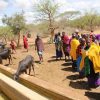
How Tanzania’s Farmers, Pastoralists Paid the Price for a World Bank Project
A hush had fallen over Mbarali District, but it was not the quiet of peace—it was the silence of uncertainty. Just months ago, the rolling plains were gripped by fear as government-backed rangers, dressed in olive green fatigues, roamed through villages, seizing cattle, torching homes, and forcing entire communities to the wobbly edge of survival. The REGROW project, a USD 150 million initiative funded by the World Bank to expand Ruaha National Park (RUNAPA), had promised tourism growth and environmental conservation. What it delivered was a brutal campaign of state-sanctioned land grabbing under the guise of protecting nature.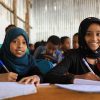
World Day of Social Justice Statement by Education Cannot Wait Director Yasmine Sherif
The central theme of this year’s World Day of Social Justice is to “strengthen a just transition for a sustainable future.” Education is the very foundation for achieving social justice. Without an education we cannot end extreme poverty and advance economic growth. Without an education we cannot empower young girls to become teachers, doctors, nurses, lawyers, engineers, let alone financially self-reliant. Without an education we cannot achieve good governance, the rule of law and peaceful co-existence.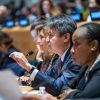
Social Media in the Global South Needs More Protections
In the western world, numerous studies over the past two decades have shown that the rise of social media in popularity has been linked to negative mental health symptoms, especially among young people. Platforms such as Instagram, Facebook, X (formerly known as Twitter), and TikTok have been criticized for fostering competitive and toxic environments, which contribute to higher rates of anxiety, cyber-bullying, depression, disordered eating, and low self-esteem. While the use of social media in the Global South has skyrocketed in the late 2010s, the ramifications on people in those regions has received much less coverage in mainstream media.
Food, Water, Crime, Climate Change: CARICOM Leaders Begin 48th Conference with Commitment to Joint Action on Critical, Common Concerns
Leaders of the Caribbean Community (CARICOM) are meeting in Bridgetown from Feb. 19-21, as the world grapples with multiple crises, including escalating geopolitical conflicts, climate change and rising food insecurity.
Shaping AI Rules Through Trade Agreements
The inclusion of AI provisions in preferential trade agreements (PTAs) has been steadily rising. Since 2019, when the China-Mauritius Free Trade Agreement first mentioned AI, PTAs have progressively evolved to include elements addressing the broader implications of emerging technologies.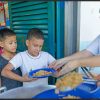
Only Political Will Can End World Hunger: Food Isn’t Scarce, but Many People Can’t Access It
History has shown us again and again that, so long as inequality goes unchecked, no amount of technology can ensure people are well fed.
The Land of Immigration: America’s Demographic Past, Present and Future
Of the approximately 280 million immigrants in the world, the country hosting the largest number is America, the land of immigration. One-fifth of the world’s international migrants reside in the US, with those migrants arriving from nearly every country in the world.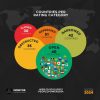
A Global Retreat from Solidarity
The world is witnessing a dangerous retreat from international solidarity by Global Minority countries. From Washington to Brussels, governments are slashing funds that sustain human rights, democracy, and humanitarian initiatives.
Human Insecurity from Climate Change on Vanuatu and Guam
The climate crisis is severely endangering human well-being. While the climate security nexus is omnipresent in national security strategies and on international institutions’ agendas, political responses remain insufficient and are often problematic. Among other issues, related policies often struggle with siloization or a focus on symptoms instead of root causes.
« Previous Page — Next Page »





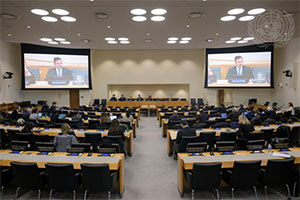 UN Commission on International Trade Law Holds Colloquium on Harmonizing Law in Age of Digital Trade and Finance. Credit: UN Photo/Manuel Elías
Trade has historically been a geopolitical tool that can both be used to propel development as well as entrench inequalities. In various nations in East Asia and Latin America, increased trade, as often seen in export booms, has allowed them to achieve influential standings within the global economy. On the other hand, many low-income countries in Sub-Saharan Africa, Asia, and Latin America struggle to maintain a robust trade performance, and oftentimes are subjugated to exploitative trade dynamics through intense extraction of their natural resources. In recent decades, international trade has reached a new era as emerging economies across the world are rising in economic preeminence. Stable international trade is crucial to world peace as global interconnectedness facilitates reliable diplomacy. Nevertheless, significant challenges are on the rise. Notably, a major wave of United States tariff escalations in January 2025 lifted US import taxes to their highest level since the 1930s, changing market dynamics and forcing renegotiations with global trading partners.These articles are aimed at informing readers about the complexities of trade and its varying effects on development, with a special focus on the consequences of the global economic crisis, the potential of fair trade and the gender implications of trade policies.
Updated by Yilan Batista and Shuli Wong August 2026

The Week with IPS

NEXT STOP - SDGs
Tracking global progress towards a sustainable world
Tracking global progress towards a sustainable world
